
I enjoy writing about events that happened on specific days of the year. There’s something fascinating to me about the idea that every date carries its own story—moments when history quietly turned a corner or suddenly exploded into something unforgettable. I don’t focus on famous people as much as I focus on the moments themselves. I like digging into what was happening on that particular day, what led up to it, and what followed after. When I write, I try to bring readers into the moment, to capture what it might have felt like as events were unfolding in real time, before anyone knew how things would turn out. For me, history isn’t just a list of dates and facts. It’s a collection of lived moments that still ripple into the present. My goal is to turn calendar dates into stories that feel real, relatable, and worth remembering.
Author's posts
Laika’s Lonely Journey: The Dog Who Became a Star
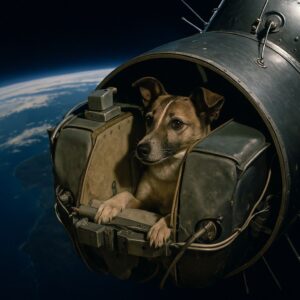
On November 3, 1957, the world looked up and gasped as a tiny speck of light passed silently across the night sky. That speck was Sputnik II, a metal capsule launched by the Soviet Union, carrying not only instruments and technology but a small, trembling life: Laika, a stray dog from the streets of Moscow …
A New World Seen Anew: Columbus, Dominica, and the Echo of Discovery

On November 3, 1493, the sails of Christopher Columbus’s ships caught the winds of destiny as they crested the Caribbean horizon, and before his eyes rose the lush green mountains of an island that would be named Dominica. It was not the first island he had seen, nor would it be the last, but this …
A Dream Signed Into Law: How Martin Luther King Jr. Day Became America’s Promise

On November 2, 1983, the weight of history settled onto the Resolute Desk in the Oval Office as President Ronald Reagan bent forward to sign a piece of legislation that was more than just ink on parchment. With one stroke of the pen, he declared that the third Monday in January would forever be recognized …
Lion of Judah: The Crowning of Haile Selassie and the Birth of a Legend

On November 2, 1930, the world’s eyes turned to Addis Ababa, the capital of Ethiopia, where a ceremony unfolded with such grandeur and symbolism that it reverberated far beyond the borders of Africa. It was the coronation of Ras Tafari Makonnen, who would henceforth be known as Emperor Haile Selassie I, King of Kings, Lord …
Ink on Paper, Fire in History: The Balfour Declaration and the Birth of a Promise

On November 2, 1917, the world changed with the stroke of a pen. A letter, deceptively brief, issued by Britain’s Foreign Secretary Arthur Balfour to Lord Rothschild, a leader of the British Jewish community, declared that His Majesty’s Government viewed with favor the establishment of a “national home for the Jewish people” in Palestine. To …
When the Earth Shook the World: The Lisbon Earthquake of 1755

The morning of November 1, 1755, dawned with deceptive tranquility over Lisbon. The Portuguese capital stirred awake as church bells rang for All Saints’ Day, a solemn Christian holiday that drew thousands into cathedrals and chapels across the city. Families dressed in their finest clothes, candles flickered in prayerful devotion, and the cobblestone streets buzzed …
Ink, Taxes, and Rebellion: How the Stamp Act Sparked a Revolution

On November 1, 1765, the American colonies awoke to a new reality. What had once seemed like a distant rumble of imperial authority suddenly thundered into daily life with the arrival of the Stamp Act, a law passed by the British Parliament that required nearly every piece of paper in the colonies to bear a …
Fire From the Sky: The Day Humanity Lit the Hydrogen Sun

On November 1, 1952, before dawn broke across the Pacific, a new kind of sun was born — one not crafted by nature but by human hands. On a tiny speck of land known as Eniwetok Atoll, part of the Marshall Islands, the United States detonated the first hydrogen bomb, code-named “Ivy Mike.” It was …
When the Skies Held the Future: The End of the Battle of Britain

On October 31, 1940, the skies above England fell silent after months of thunder. It was the day the Battle of Britain officially ended—a clash not fought over fields or trenches, but in the air, where the very survival of a nation hung in the balance. For 16 brutal weeks, the Royal Air Force (RAF) …
The Night the Lion Slept: Muhammad Ali and the Rumble in the Jungle

On October 30, 1974, the world witnessed not just a boxing match but the transformation of sport into myth, poetry, and revolution. In Kinshasa, Zaire—what is now the Democratic Republic of Congo—Muhammad Ali, the most charismatic and controversial boxer in history, stepped into the ring against George Foreman, the undefeated heavyweight champion whose punches were …
When the Market Fell and the World Trembled: Black Tuesday and the Great Depression

On October 29, 1929, the heartbeat of Wall Street collapsed into panic. The day would be remembered forever as “Black Tuesday,” the stock market crash that marked the beginning of the Great Depression. In just a few hours of chaos, fortunes were destroyed, optimism evaporated, and an entire era of roaring prosperity ground to a …
The Blackshirts on the Road to Power: Mussolini’s March on Rome

On October 28, 1922, Italy stood at a crossroads. The First World War had left the nation battered and disillusioned, its economy shattered, its people restless, and its politics fractured. In the vacuum of chaos, Benito Mussolini—a fiery journalist turned political agitator—saw his chance. With his paramilitary Blackshirts, he launched what became known as the …
The Day the City Moved Underground: New York’s Subway Opens

On October 27, 1904, New York City changed forever. That evening, with fanfare and excitement, the city opened its very first underground subway line, ushering in a new era of speed, mobility, and modernity. From City Hall in lower Manhattan, trains roared uptown beneath the bustling streets, carrying thousands of passengers on a ride that …
The Day the West Stood Still: The Shootout at the O.K. Corral

On October 26, 1881, in the dusty frontier town of Tombstone, Arizona, the gunfire lasted only about 30 seconds. Yet in that half a minute of smoke, shouting, and bullets, a legend was born. The shootout at the O.K. Corral became the most famous gunfight in the history of the American West—a moment that captured …
Swift Unleashes Gulliver’s Travels, World Reacts
Swift Unleashes Gulliver’s Travels, World Reacts On October 28, 1726, Jonathan Swift, a renowned Irish writer and satirist, published one of the most influential works in literary history: “Gulliver’s Travels.” This masterpiece of satire, which would go on to become a timeless classic, was not only a reflection of the societal issues of its time …
Imelda Marcos Escapes Assassination Plot, Survives Shocking Attack
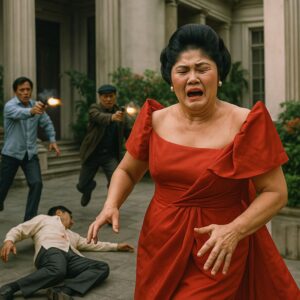
In the tumultuous world of international politics, few figures have captured the imagination of the global community like Imelda Marcos. As the wife of Philippine President Ferdinand Marcos, she had become synonymous with extravagance and controversy. Her reputation as a patron of the arts, a devoted mother, and a stalwart supporter of her husband’s regime …
Mud, Arrows, and Destiny: The Battle of Agincourt

On October 25, 1415, in a sodden field in northern France, a weary English army faced annihilation. Outnumbered by French forces that outshone them in armor, wealth, and reputation, King Henry V’s men had every reason to despair. And yet, by the day’s end, the improbable had happened: the English, hungry, sick, and exhausted, had …
Smashing Pumpkins Illuminate Bahrain with Timeless Sound

The night was warm, humid, and heavy with the scent of salt carried on a faint sea breeze. Above, the full moon hung low and luminous, watching over the thousands who gathered, its pale light washing over the stage like a celestial spotlight. The temperature didn’t seem to bother anyone — sweat clung to faces, …
The Day Humanity Reached for Unity: Founding of the United Nations

On October 24, 1945, in the aftermath of the deadliest war the world had ever endured, humanity dared to dream of peace. The United Nations was officially born, an organization built not on the illusions of perfection but on the desperate need to prevent the horrors of World War II from ever repeating. On that …
Beirut, 1983: The Morning the World Shook

On October 23, 1983, at precisely 6:22 a.m., Beirut was shattered by the roar of an explosion so powerful it was felt miles away. A suicide bomber drove a truck packed with explosives into the U.S. Marine barracks near the Beirut International Airport, killing 241 American servicemen—most of them sleeping in their bunks. Just minutes …
Thirteen Days on the Edge: The Peak of the Cuban Missile Crisis
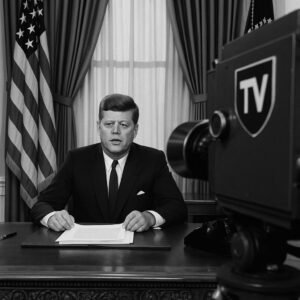
On October 22, 1962, the world stood closer to nuclear war than ever before in history. For thirteen days in October, humanity stared into the abyss of annihilation, as the United States and the Soviet Union engaged in a deadly game of brinkmanship over Soviet nuclear missiles in Cuba. On that evening, President John F. …
Trafalgar: The Day Nelson Redefined the Seas
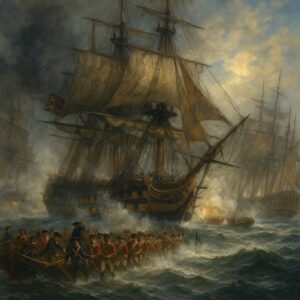
On October 21, 1805, off the southern coast of Spain near Cape Trafalgar, the world’s oceans became a stage for one of the most decisive naval battles in history. The British Royal Navy, under the command of Vice Admiral Horatio Nelson, faced the combined fleets of France and Spain in a struggle that would determine …
The Gamble That Doubled a Nation: The Louisiana Purchase Ratified
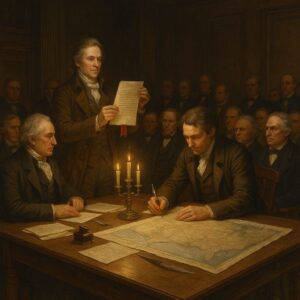
On October 20, 1803, the U.S. Senate cast a vote that would forever reshape the destiny of a young republic. With the ratification of the Louisiana Purchase treaty, America suddenly doubled in size, acquiring over 828,000 square miles of land from France at a cost of $15 million—just four cents an acre. At the time, …
The Day an Empire Fell: Yorktown and the Birth of a Nation

On October 19, 1781, in a quiet Virginia field, the mightiest empire in the world bent its knee to a ragtag army of farmers, tradesmen, and dreamers. The British surrender at Yorktown was more than just a military defeat—it was the moment the American Revolution transformed from rebellion into reality, from fragile hope into tangible …
From Russia with Ice: How Alaska Became America’s Last Frontier

On October 18, 1867, in the foggy port town of Sitka, a small crowd gathered as the Russian flag was lowered and the Stars and Stripes were raised over a vast wilderness that few Americans had ever seen. The transfer was quiet, ceremonial, almost anticlimactic. Yet the moment marked the birth of a geopolitical gamble …
When the Oil Stopped: The 1973 OPEC Embargo and the Crisis That Shook the World

On October 17, 1973, a group of nations pulled a lever that would send shockwaves around the globe. The Organization of Arab Petroleum Exporting Countries (OAPEC), led by Saudi Arabia, announced an oil embargo against nations perceived as supporting Israel during the Yom Kippur War. What seemed like a regional dispute exploded into a global …
The Last Queen: Marie Antoinette and the Fall of a Dynasty

On October 16, 1793, the blade of the guillotine fell in Paris, severing not only the head of Marie Antoinette but also the last vestiges of France’s ancien régime. The queen who had once dazzled Europe with her beauty, extravagance, and seeming detachment from the struggles of her people became, in death, a symbol of …
Mata Hari: The Dancer Who Died a Spy

On October 15, 1917, in the chill of a Parisian morning, a woman stood before a firing squad at the Vincennes barracks. She did not plead, she did not cry, and according to witnesses, she refused a blindfold. Her name was Margaretha Geertruida Zelle, but the world knew her by a stage name that shimmered …
Faster Than Fear: Chuck Yeager and the Day Humanity Broke the Sound Barrier

On October 14, 1947, high above the Mojave Desert, a man strapped himself into a bright orange rocket plane, took a deep breath, and pushed beyond what many believed was impossible. His name was Chuck Yeager, a World War II fighter ace with nerves of steel and the heart of a daredevil. That day, in …
The Miracle in the Andes: Survival Beyond Imagination
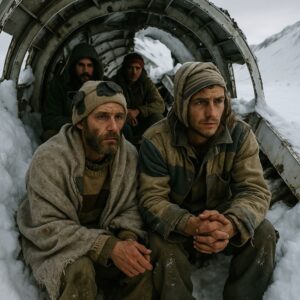
On October 13, 1972, the Andes Mountains bore witness to one of the most harrowing survival stories in human history. Uruguayan Air Force Flight 571, carrying 45 people—including a rugby team, their friends, and family—vanished into the snowy peaks between Chile and Argentina. The crash itself was horrific, but it was only the beginning. For …
When the Old World Met the New: Columbus and the Arrival in the Americas
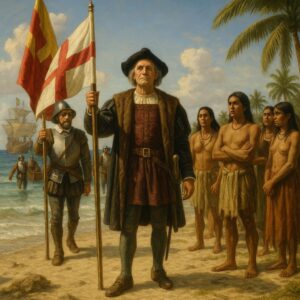
On October 12, 1492, a cry rang out from the deck of the Pinta: “Tierra! Tierra!” After more than two months at sea, after storms, mutiny threats, and dwindling hope, Christopher Columbus and his small fleet had sighted land. What unfolded in the days and centuries after that sighting would alter the course of human …