

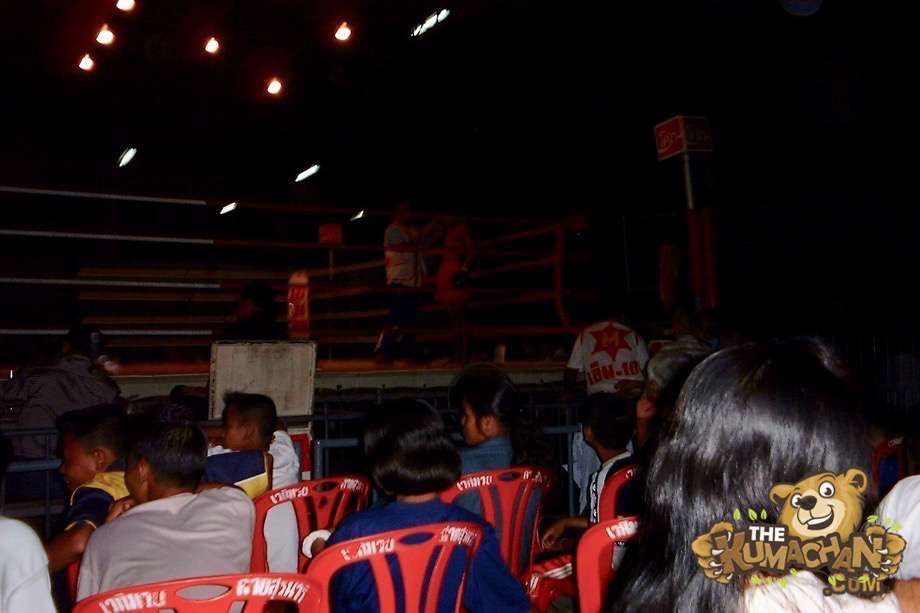
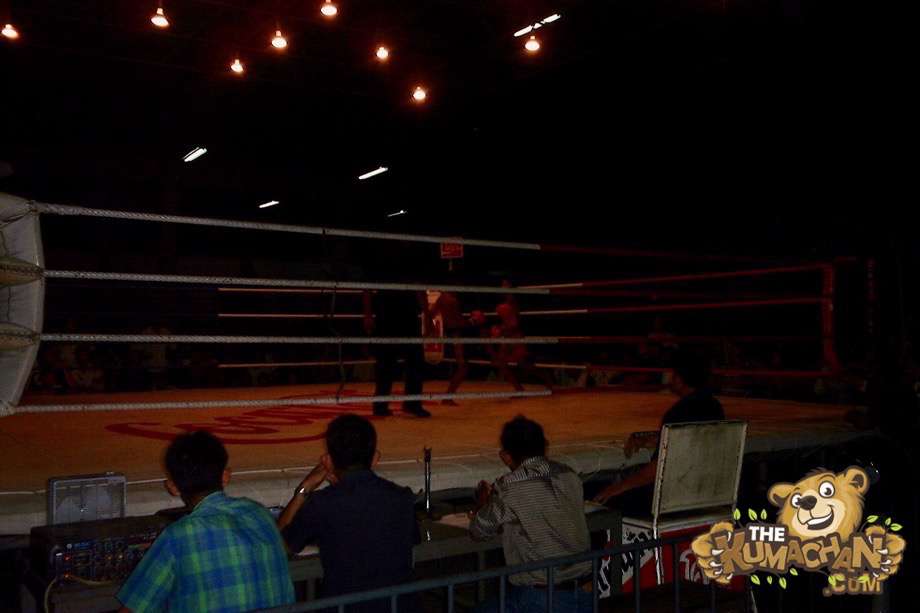
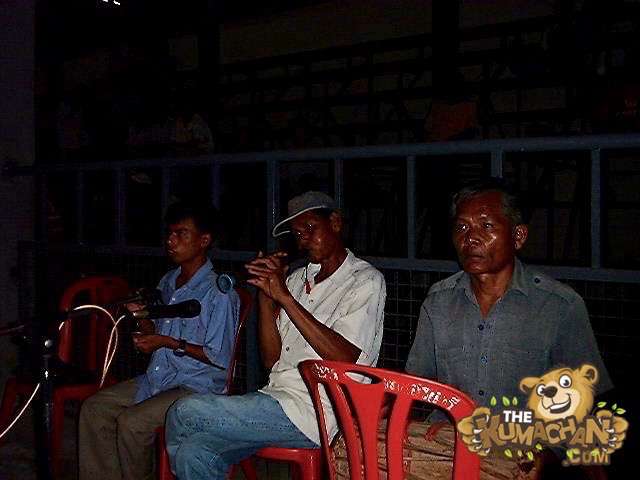
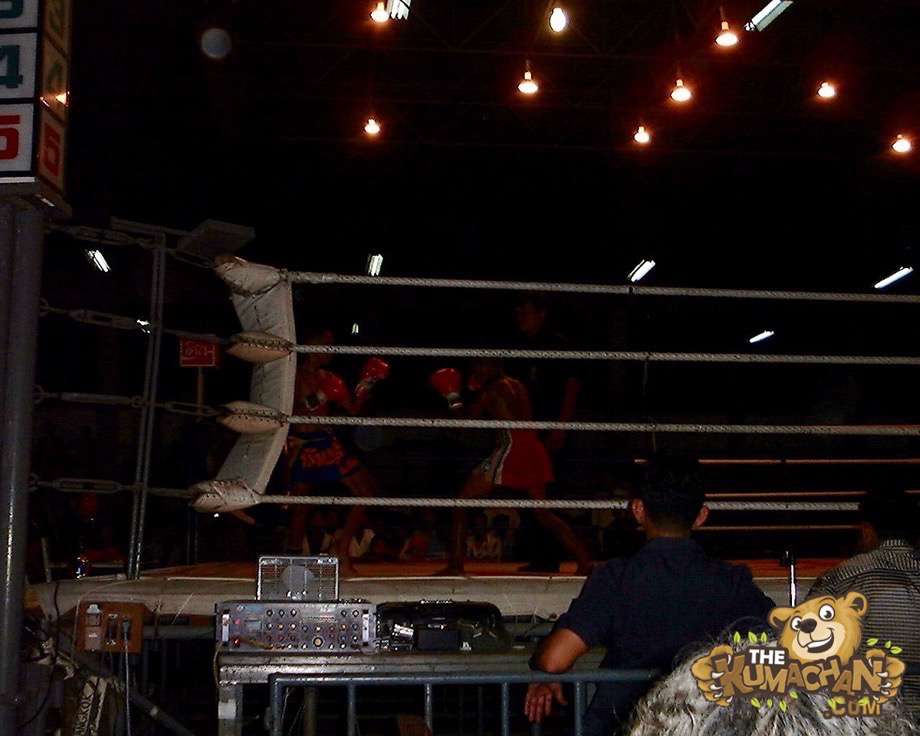
While in Thailand for joint military exercise Cobra Gold I took the opportunity to see a live Muay Thai kickboxing event. During the event they started out with the lower weight classes and worked their way up to the main event fight. From my observations the lower age and weight class fighters were primarily just trying to get points, but as the skill level got higher you could clearly see the fighters were trying to knock each other out. It was a really neat experience to take in the Thai culture through this sporting event. Unfortunately at the time I did not have a high quality digital camera, so these are the best photos I was able to take.
First Thai Kickboxing Experience
Deutsches Haus
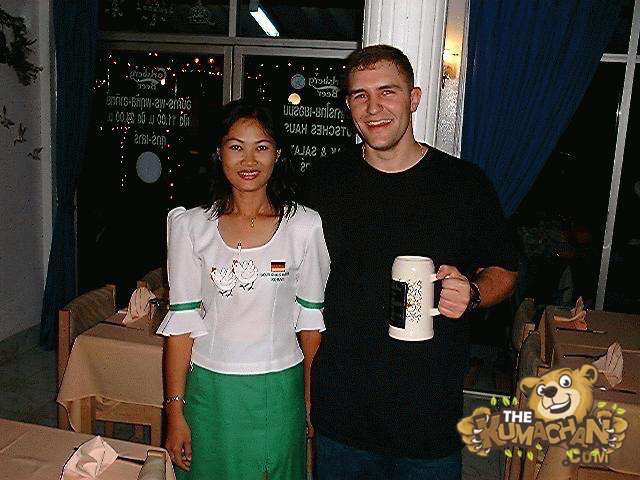
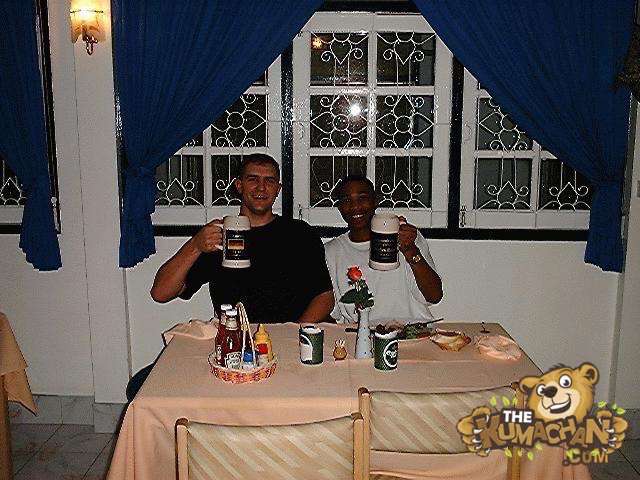
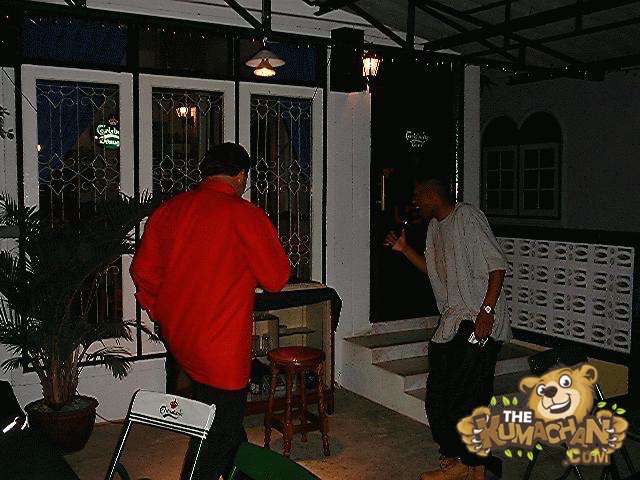
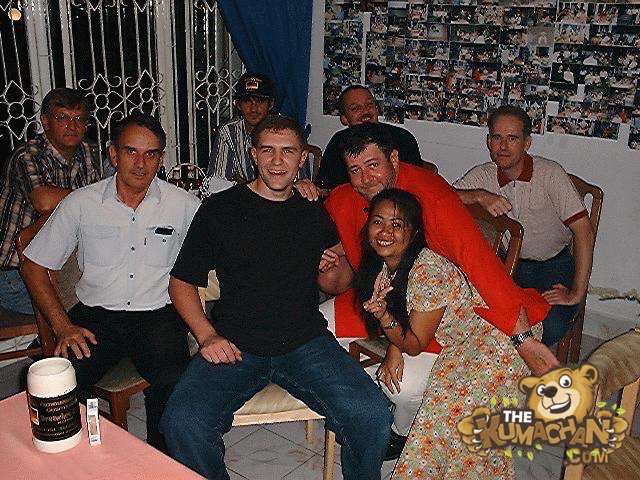
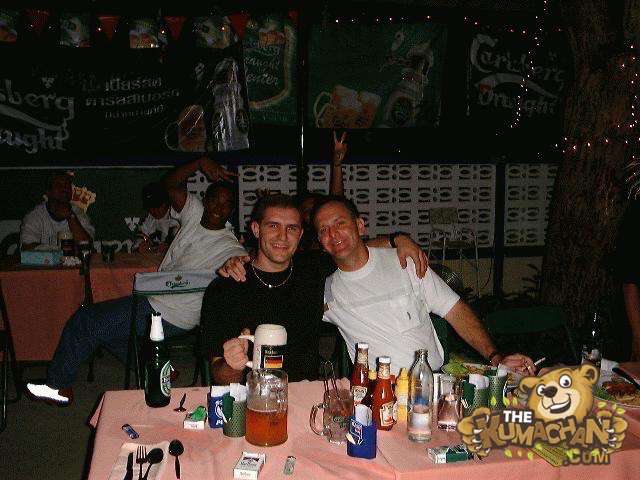
After a 12 hour shift and then a 1 hour bus ride back to the hotel, during Cobra Gold 2000 in Nakhon Ratashima, Thailand I enjoyed going out to a local restaurant called the Deutsches Haus. It was owned by the nicest German man named George. George would cook up some good food, sing karaoke, and he always kept the beer cold.
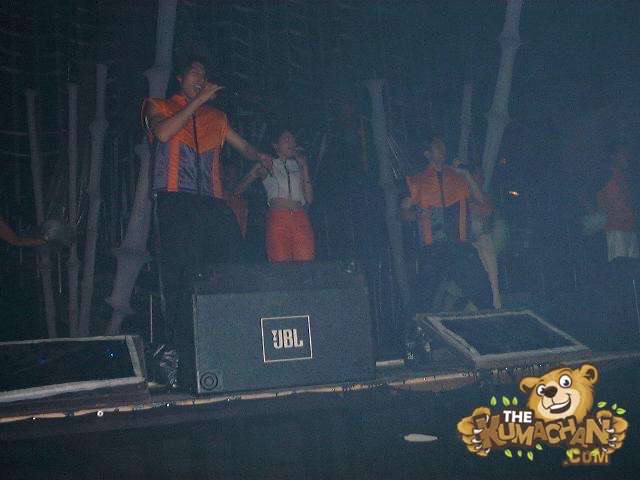
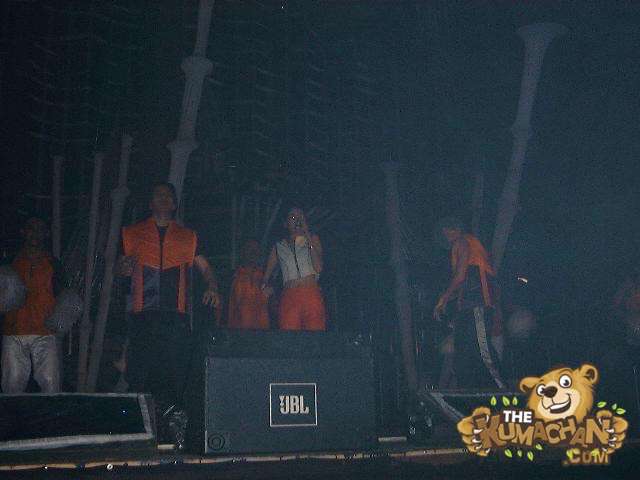
One night George even closed down his shop to go out to a popular local establishment called “Unique” and have some fun and watch the entertainment.
Related Posts
Navy F-18’s at Cobra Gold 2000
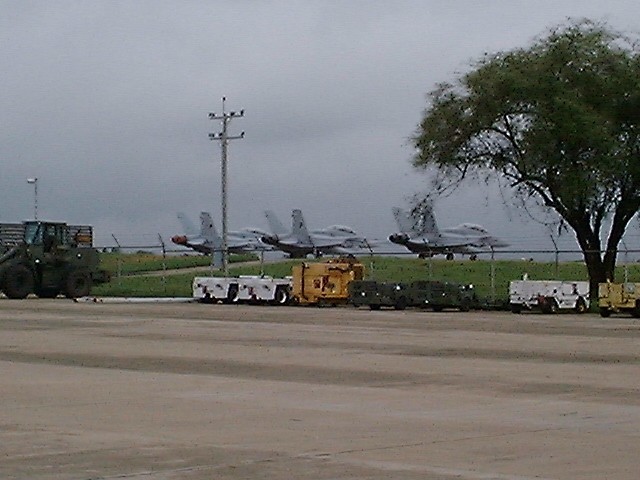
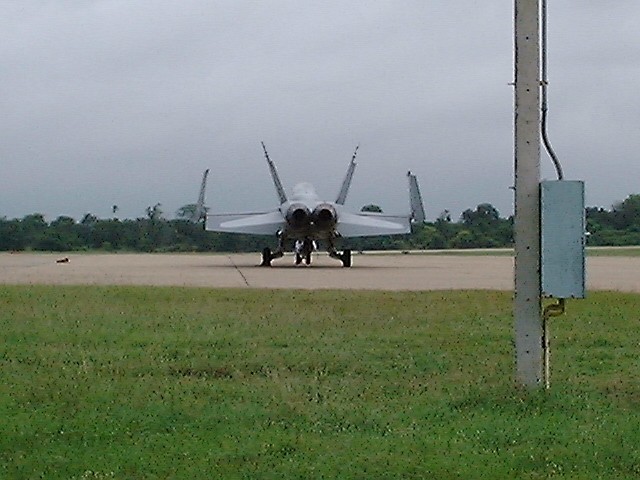
During Joint Military exercise Cobra Gold 2000 the U.S. Navy had some F-18 hornet’s on the flight line at Wing 1 of Korat air base in Nakhon Ratchasima, Thailand.
Related Posts
Cobra Gold 2000 Technical Control
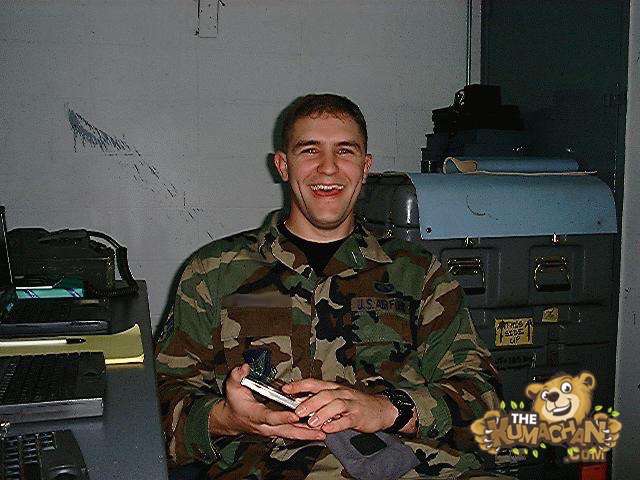
After a 12 hour shift this Technical Control airman is waiting to go back to the hotel during Cobra Gold 2000 in Nakhon Ratchasima, Thailand.
Related Posts
Welcome to Thailand
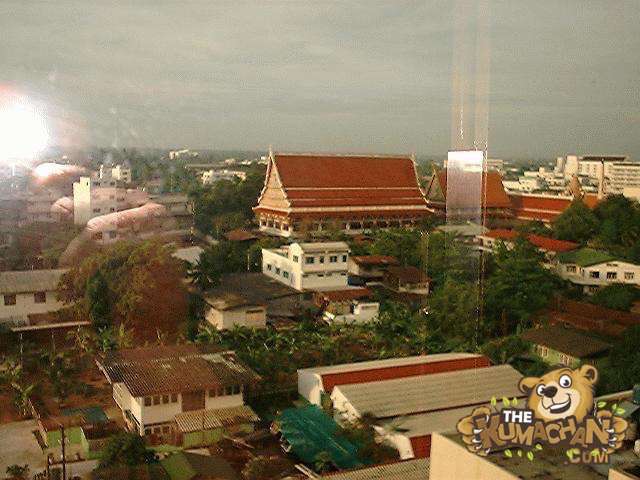
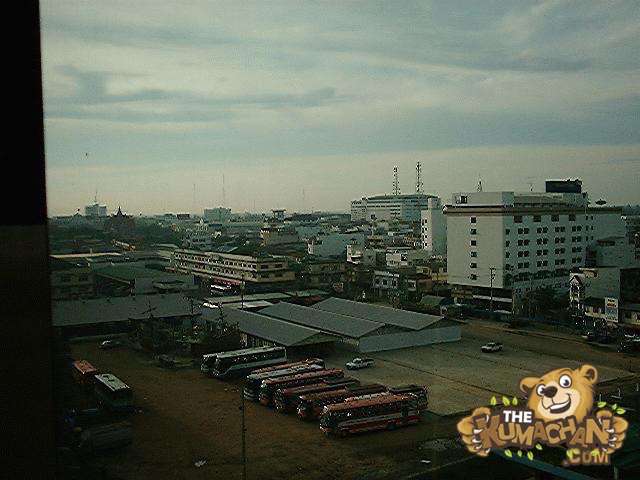
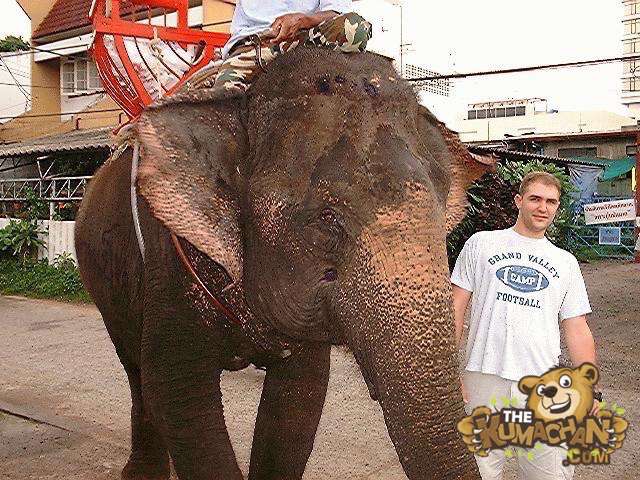
This is my first time ever to Nakhon Ratchasima, Thailand I took a couple photos looking out of my hotel room window to see what Korat had to offer. Then I decided to go for a walk to see for myself. While walking down the street there was a guy riding an elephant, so I asked him if I could take photo.
Related Posts
Joint Military Exercise Cobra Gold
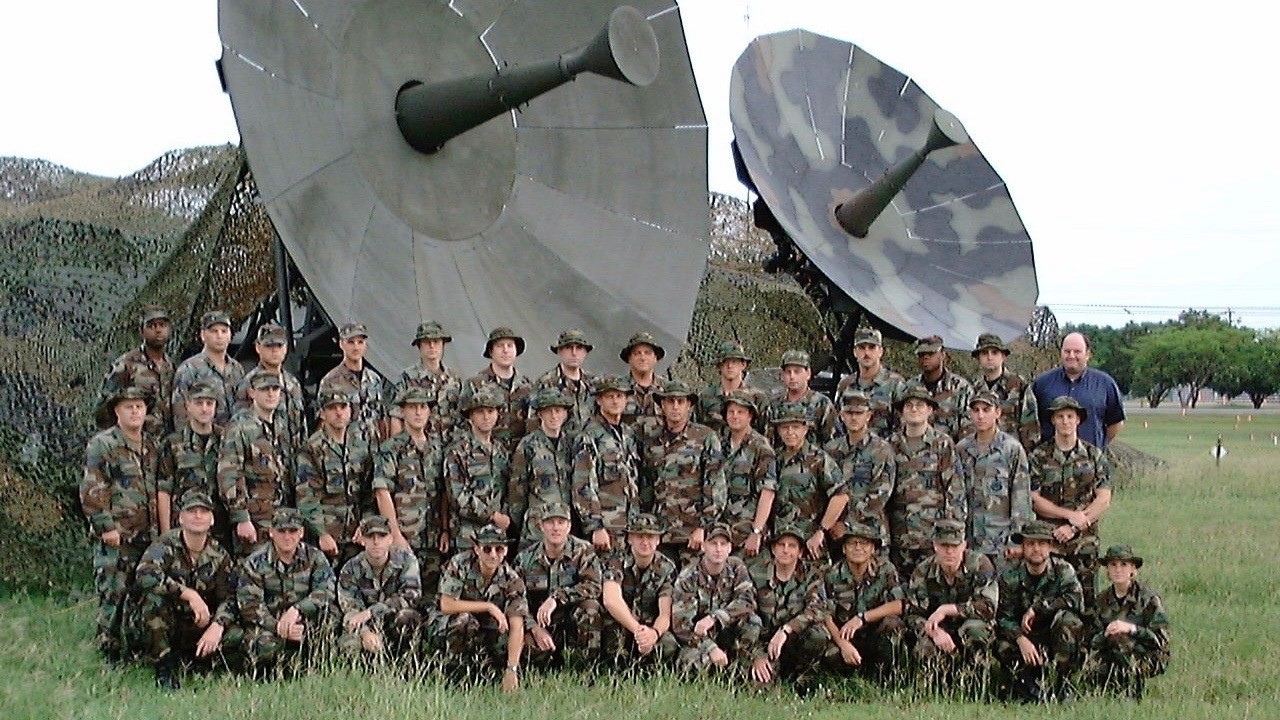
Here is a group photo of the communications team that was taken during the joint military exercise Cobra Gold that was held in the kingdom of Thailand.
Related Posts
DISN Data Services Course

While in the Air Force I was sent to the DISN Data Services Course. Here is the manual from that Air Force training.
Related Posts
Power Machines
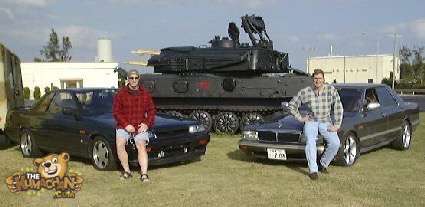
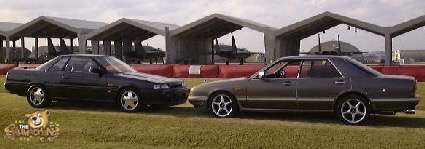
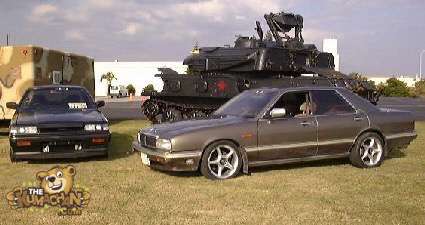
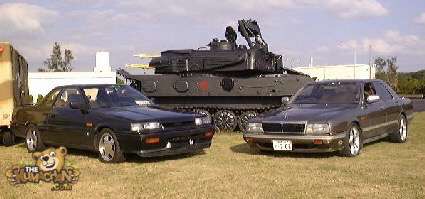
Drove over to the flight line with a friend on Kadena Air Base and snapped some photos of his Nissan Skyline and my Nissan Cima with some Air Force muscle in the background…and a tank.
Related Posts
F-15 Versus Air Force Security Forces
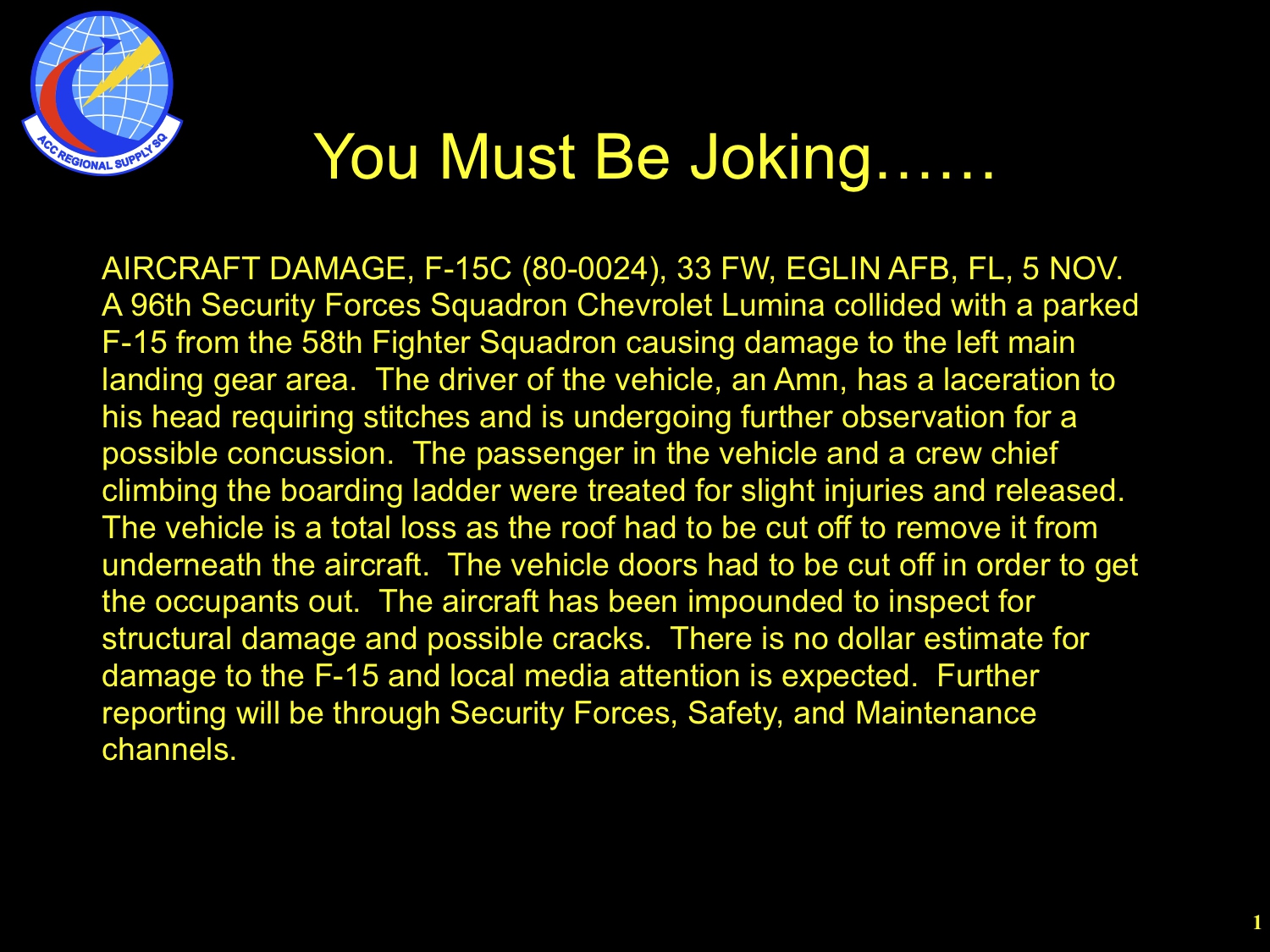
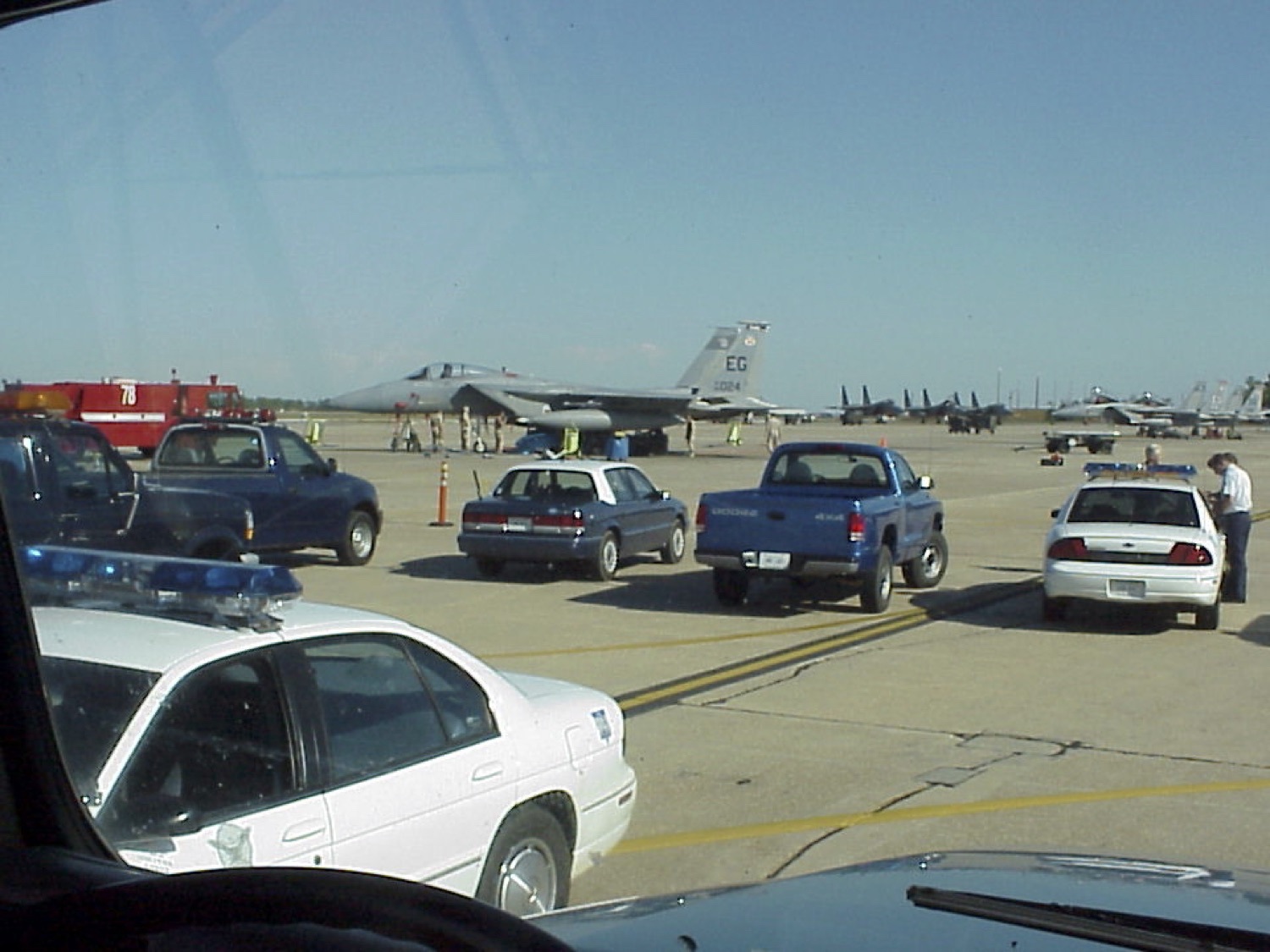
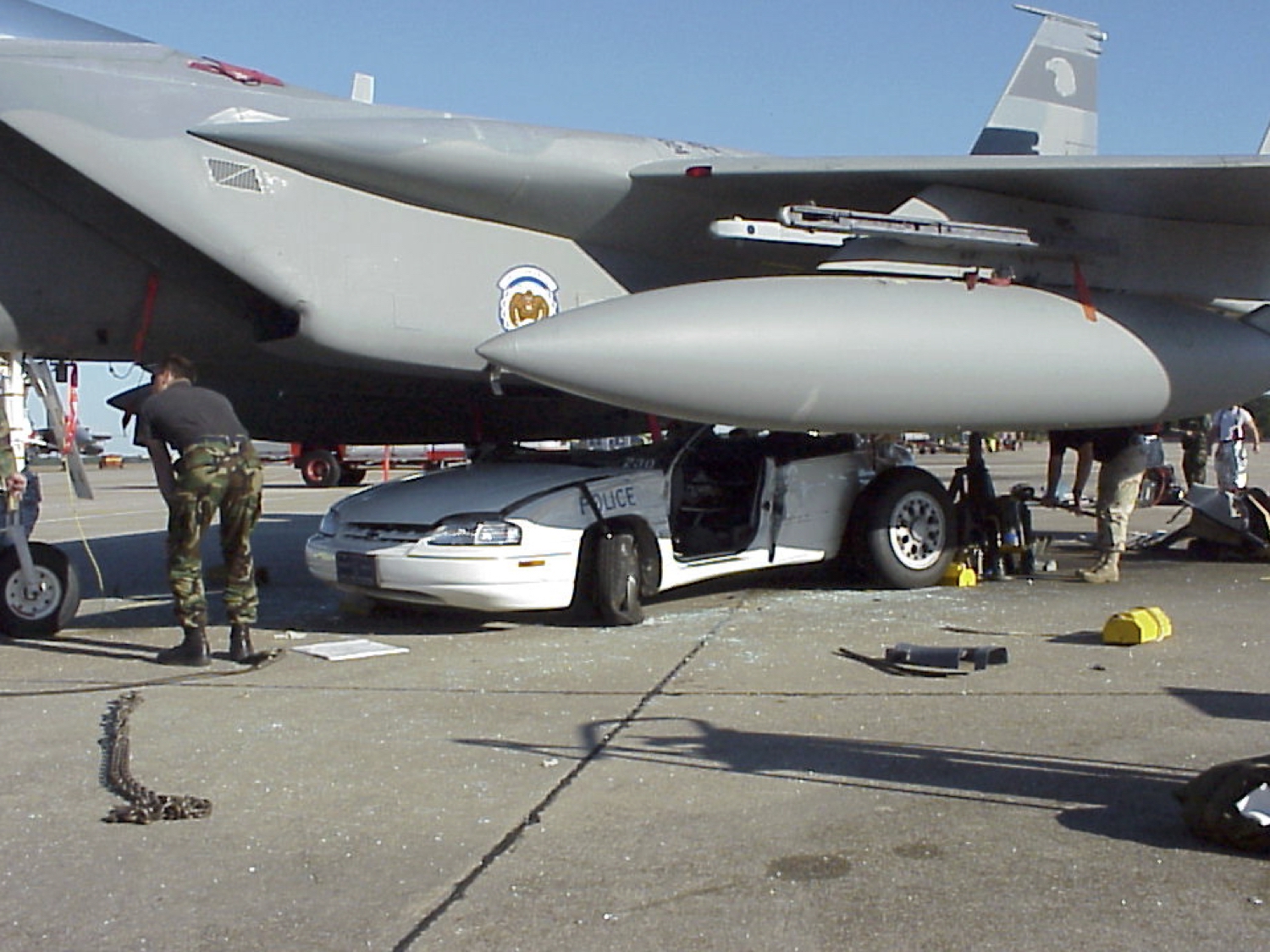
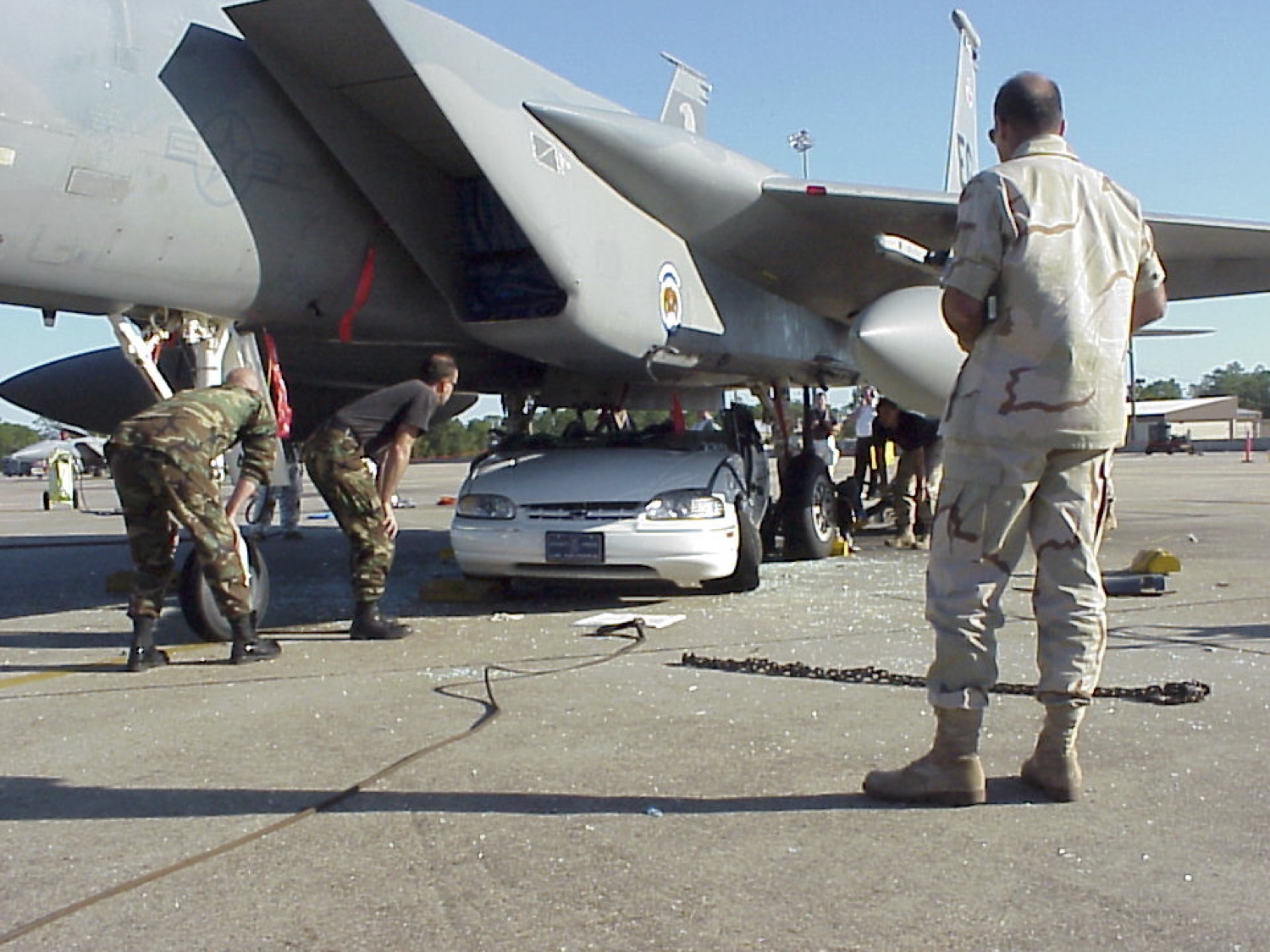
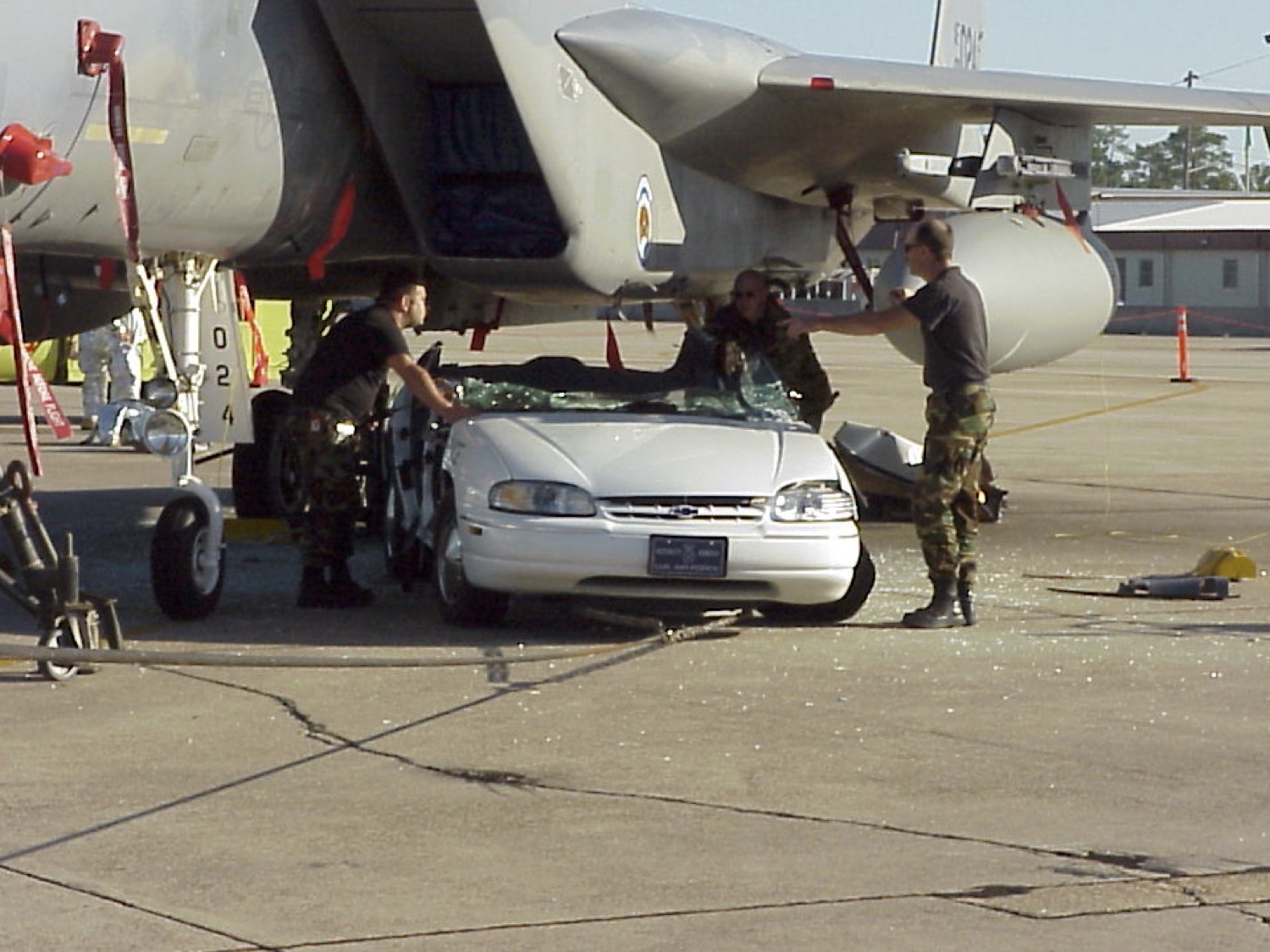

While serving in the Air Force I received an e-mail with this safety briefing about an accident that happened at Eglin Air Force base in Florida. Even though they say it was an accident, every part of this looks like people were screwing around.
Related Posts
White’s Bridge
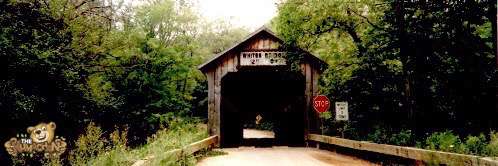
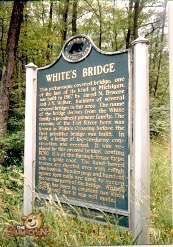
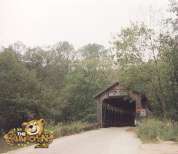
Went over to White’s Bridge near Lowell, Michigan to see the historic covered bridge.
Related Posts
Ali Al Salem Air Base Facilities
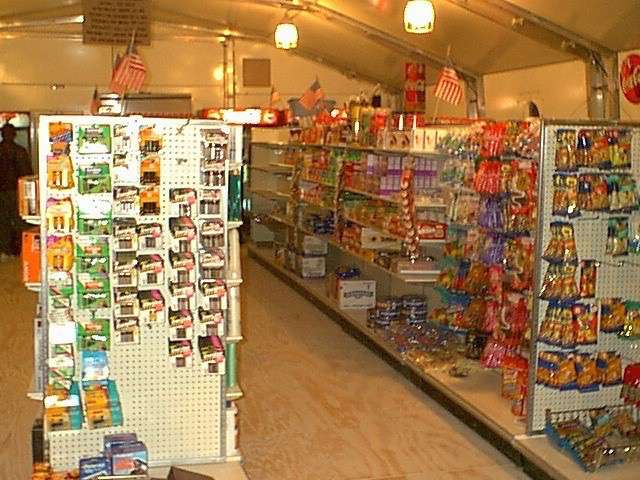
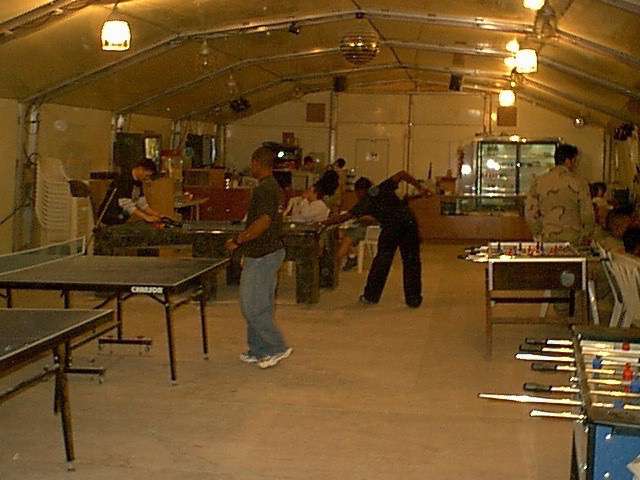
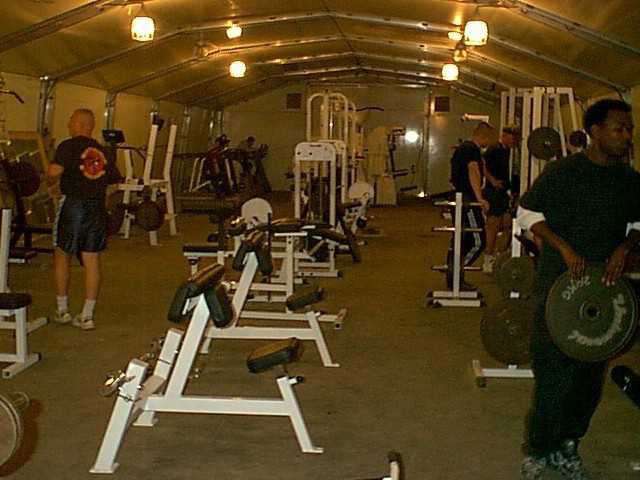
Here are some of the facilities at Ali Al Salem air base in Kuwait. You can see the base exchange, the recreation center, and the gym in the photos above.
Related Posts
Explosive Ordinance Disposal
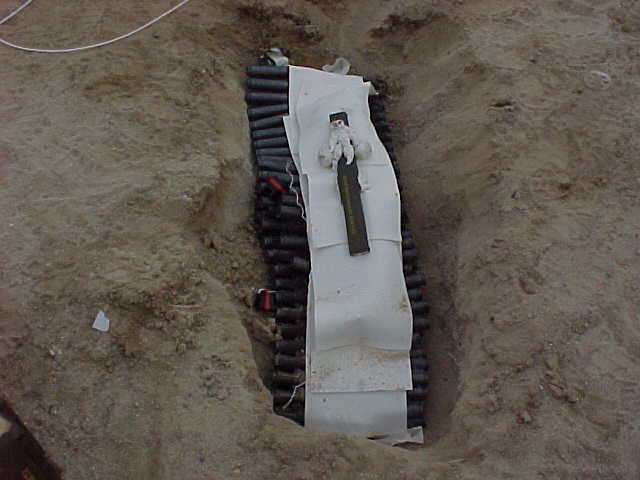
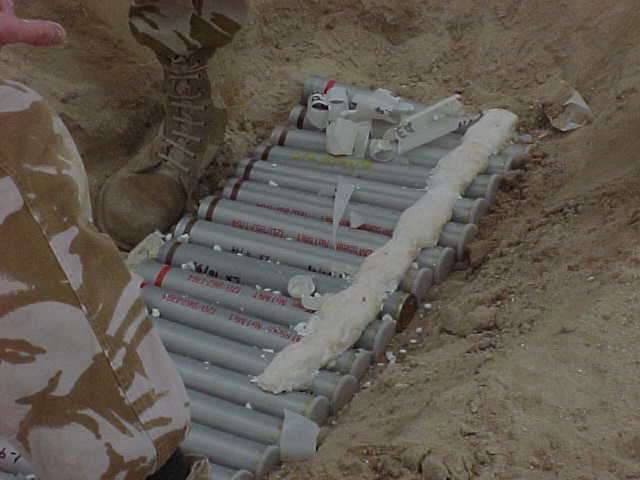
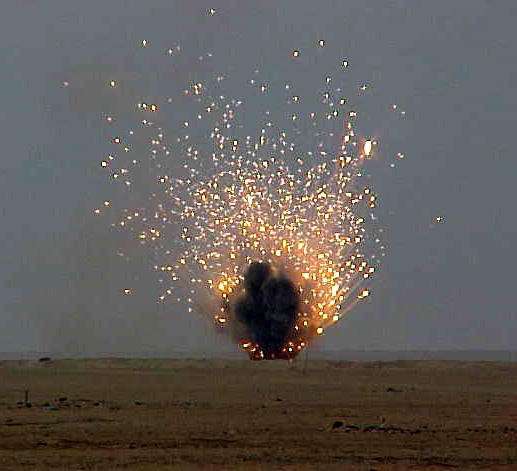
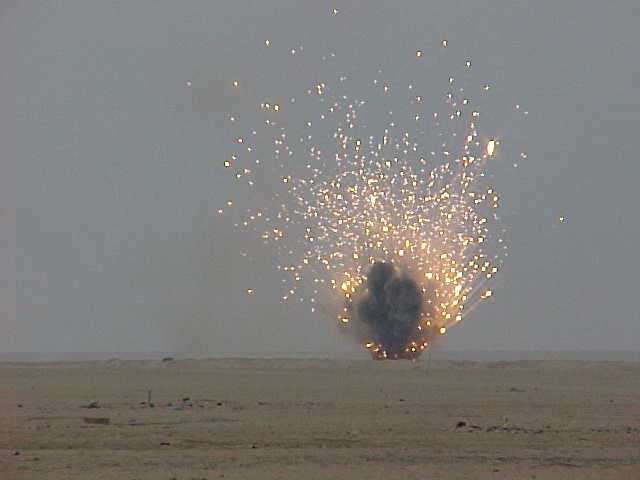
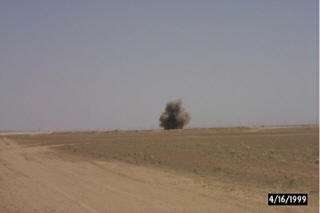
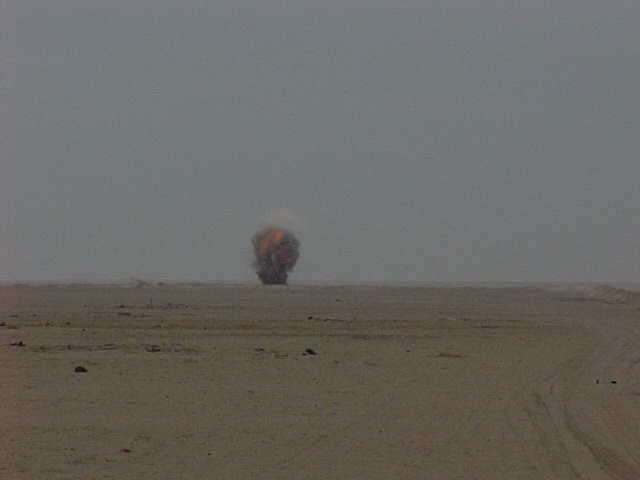
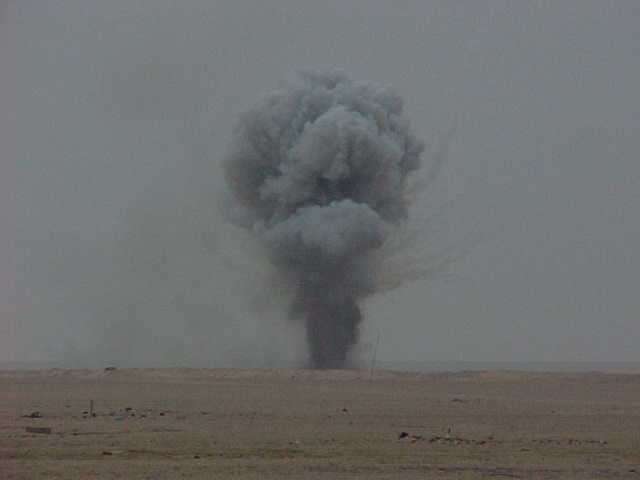
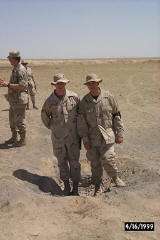
While at Ali Al Salem air base in Kuwait my commander was an ex-Explosive Ordinance Disposal (E.O.D.) person so he asked me if I wanted to go out and watch EOD blow some things up. That’s how I was afforded the opportunity to go out with EOD and watch them blow up 24 sticks of C4. They also used a thermite grenade on some classified computer systems and disposed of some British flares. It was a pretty cool experience.
Related Posts
Digging Cable Trenches
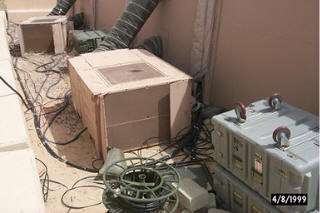
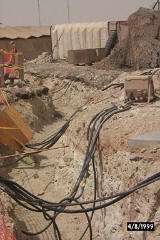
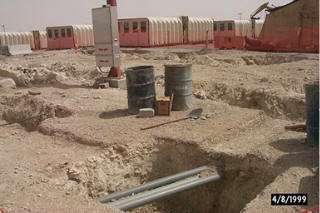
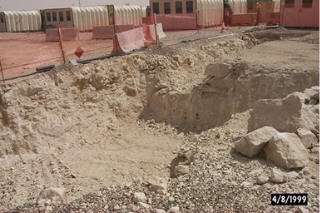
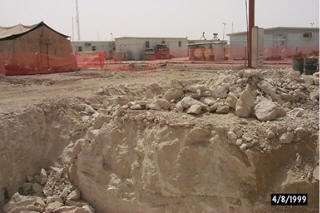
Ali Al Salem air base was a tactical base that was quickly setup and it has a mess of cables all over the place. To try to clean the cables up and run them neatly through trenches. The biggest problem though was that it was all rock and digging through that was not easy.
Related Posts
Radio Tower View of Ali Al Salem Air Base
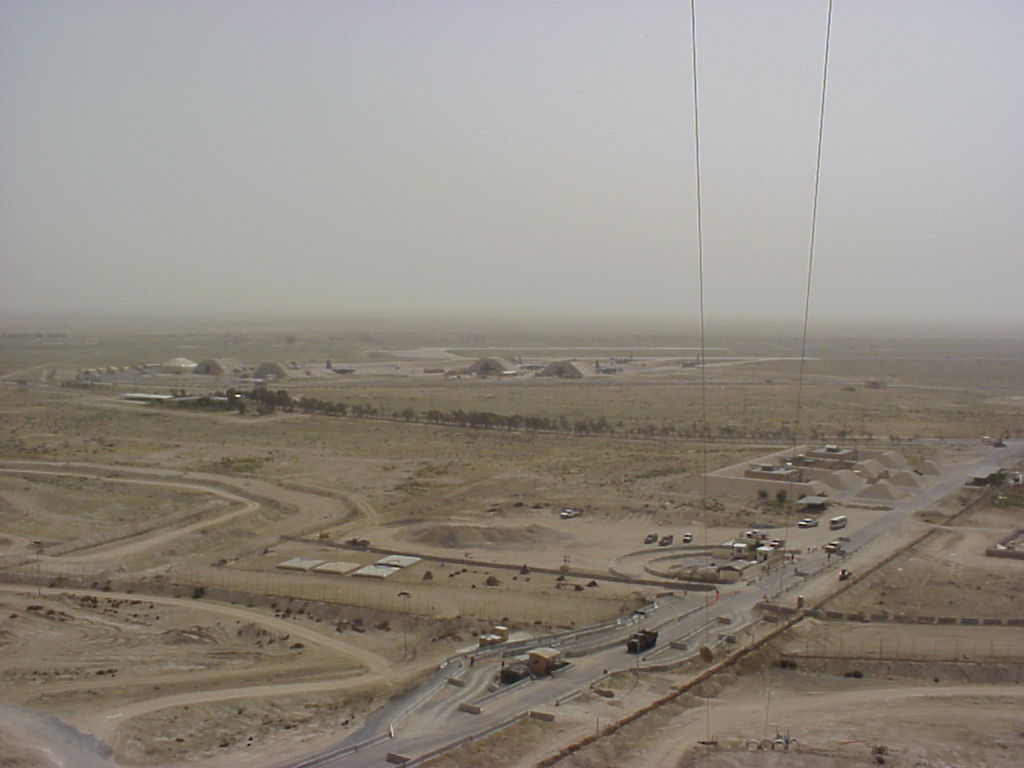
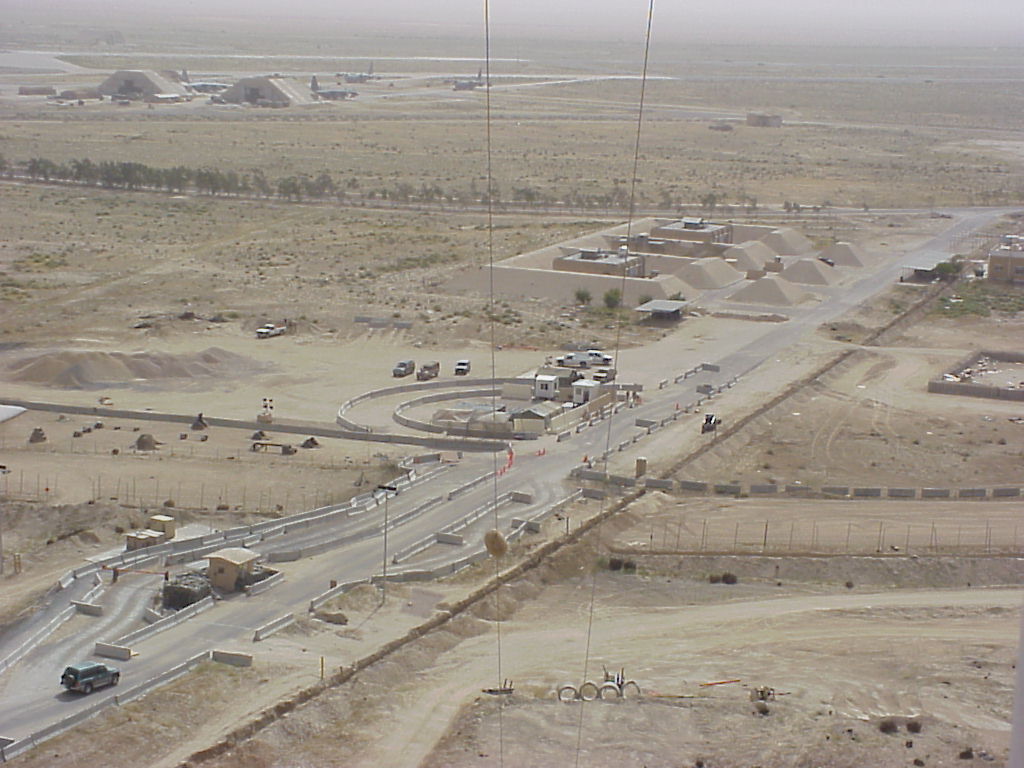
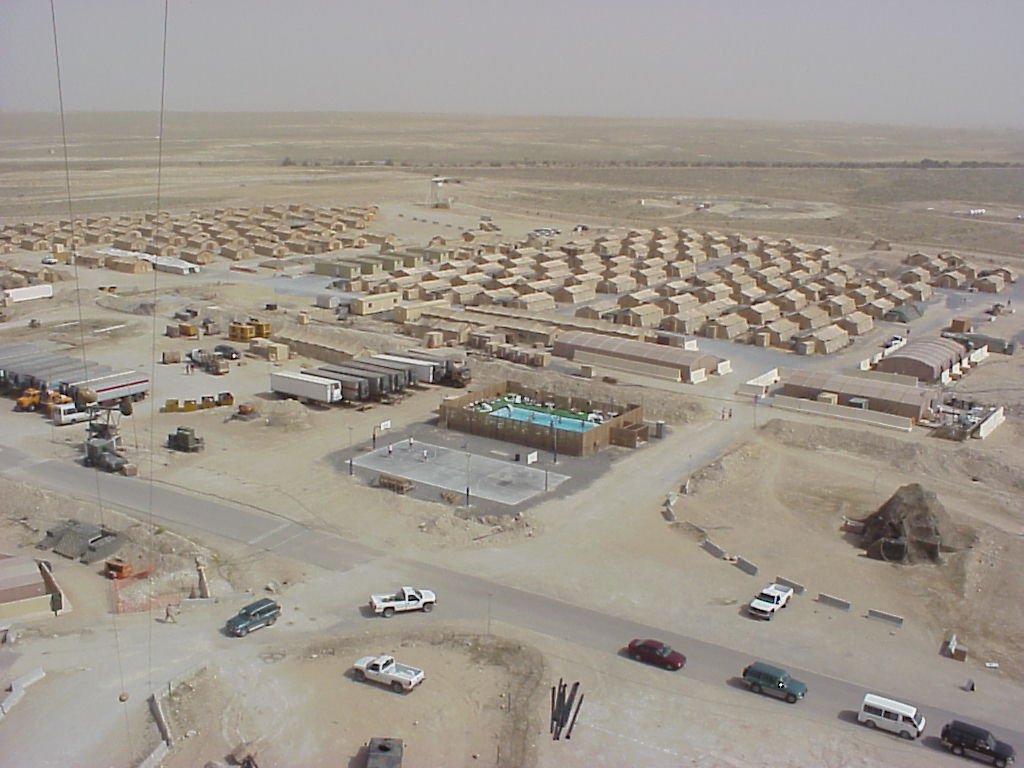
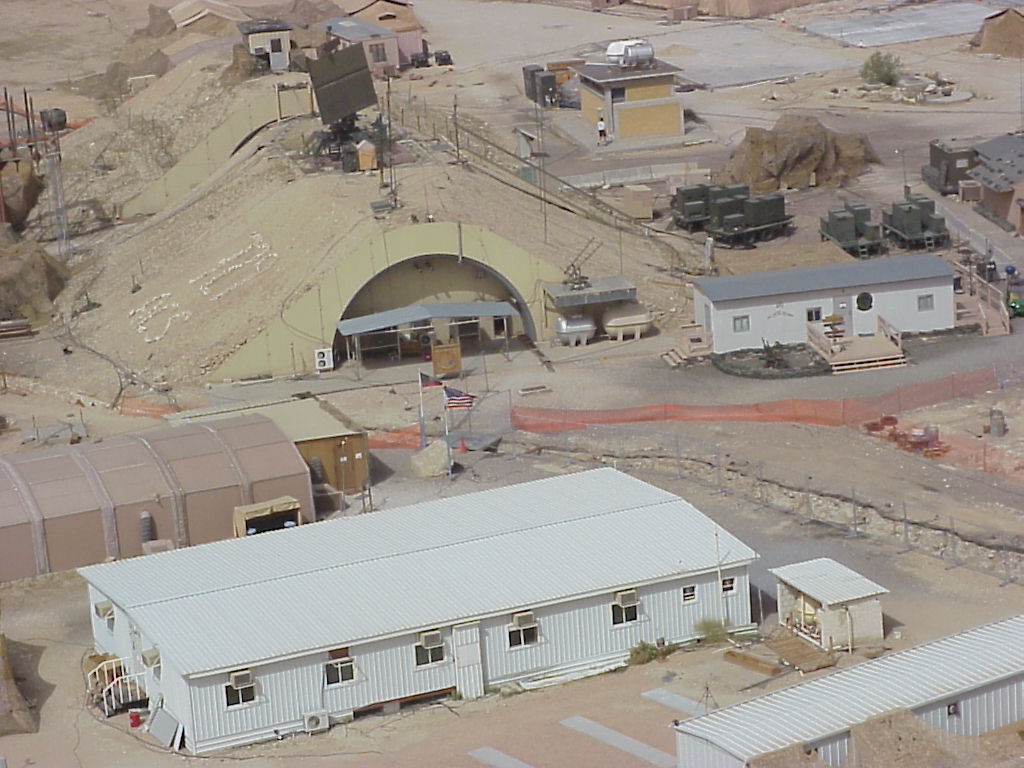
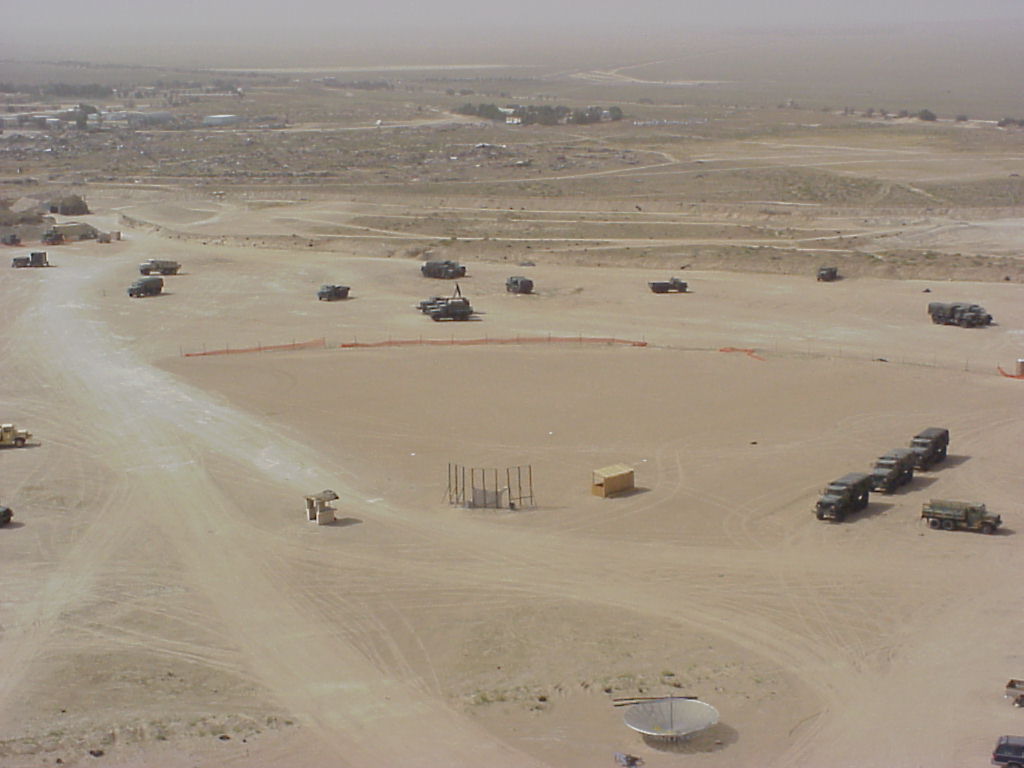
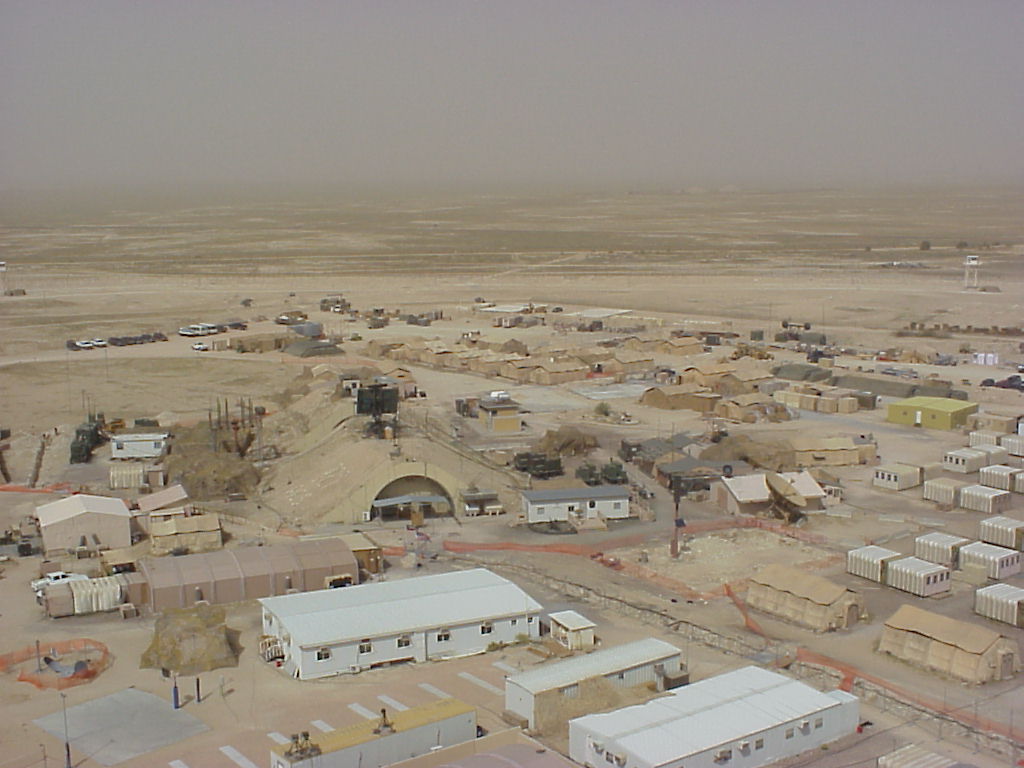
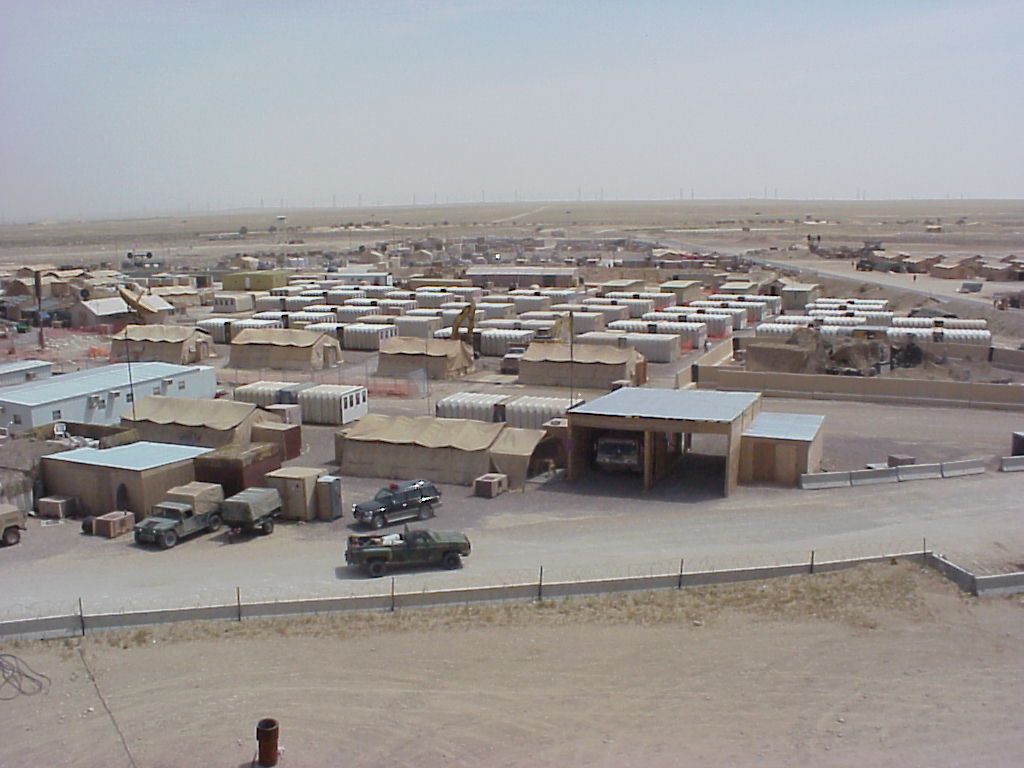
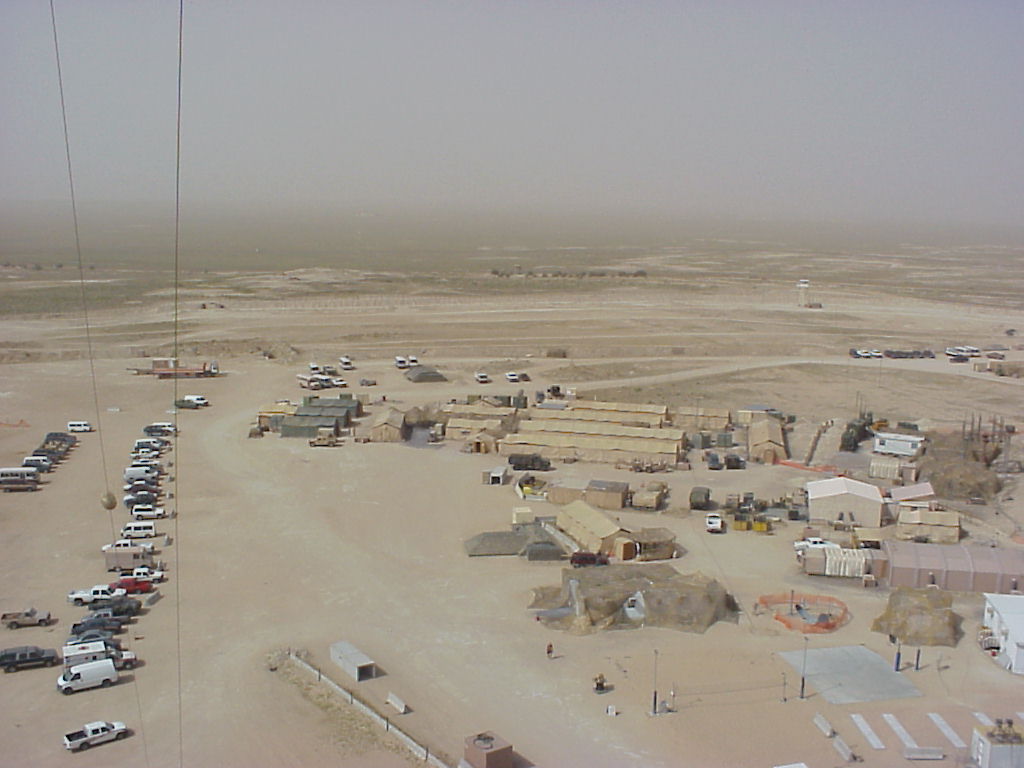
The view of Ali Al Salem Air Base from the radio tower. This definitely gives a bird’s eye perspective of what it was like on this base. You may notice a swimming pool in the photos. The swimming pool was only 3 feet deep and the main reason it was there was because it was the largest source of water in case of a fire.
Related Posts
Sights around Kuwait
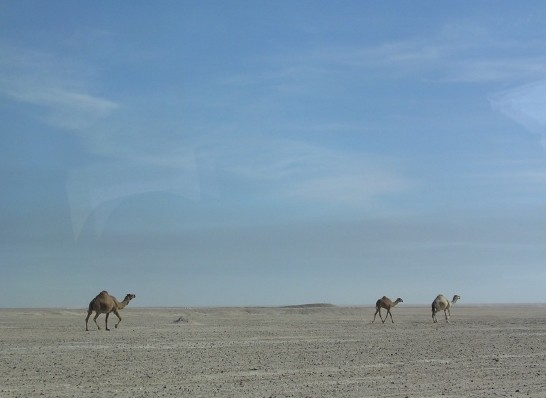
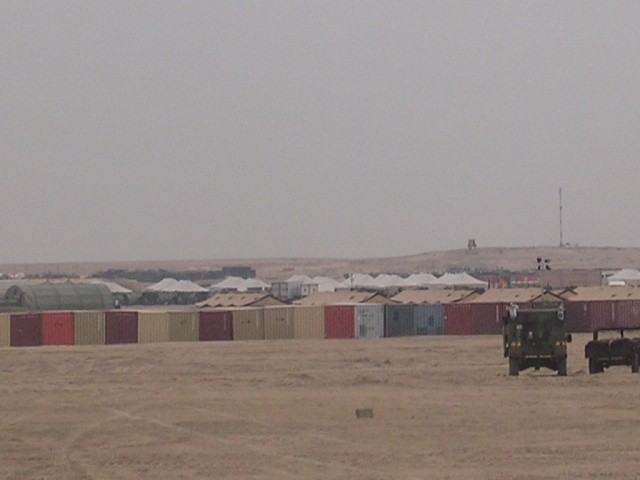
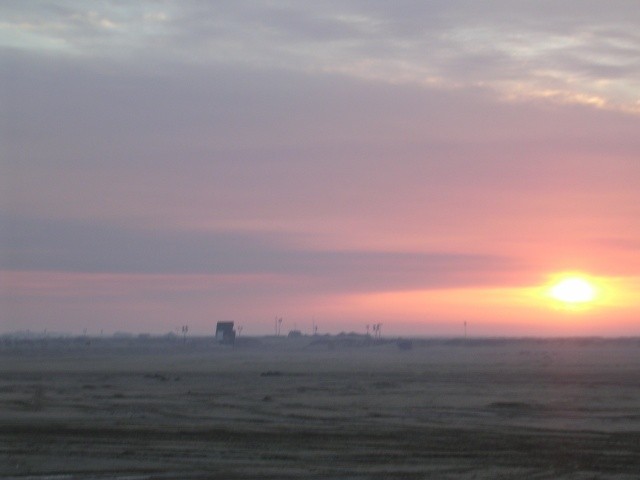
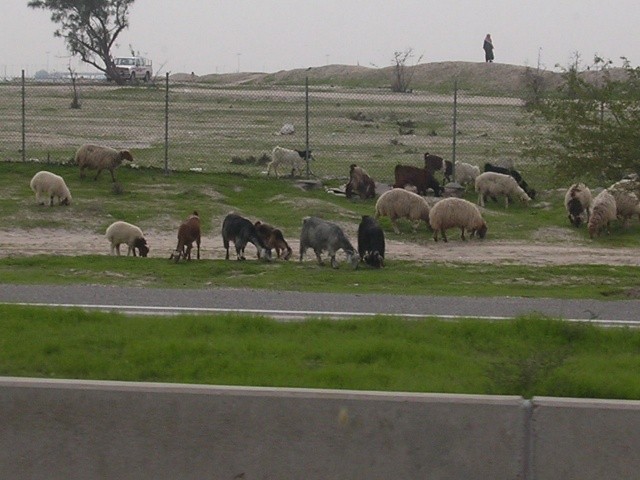
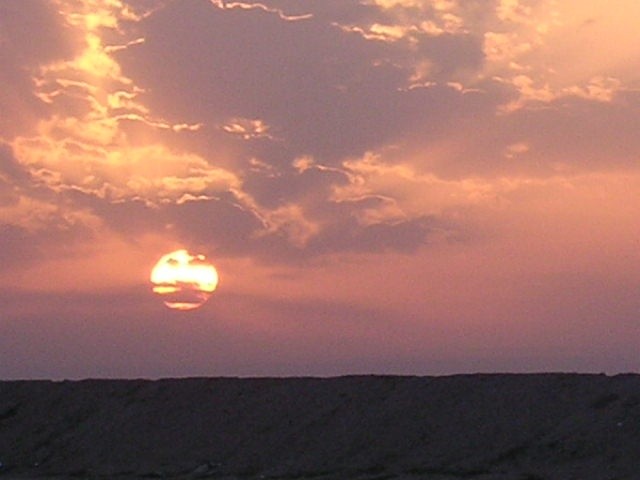
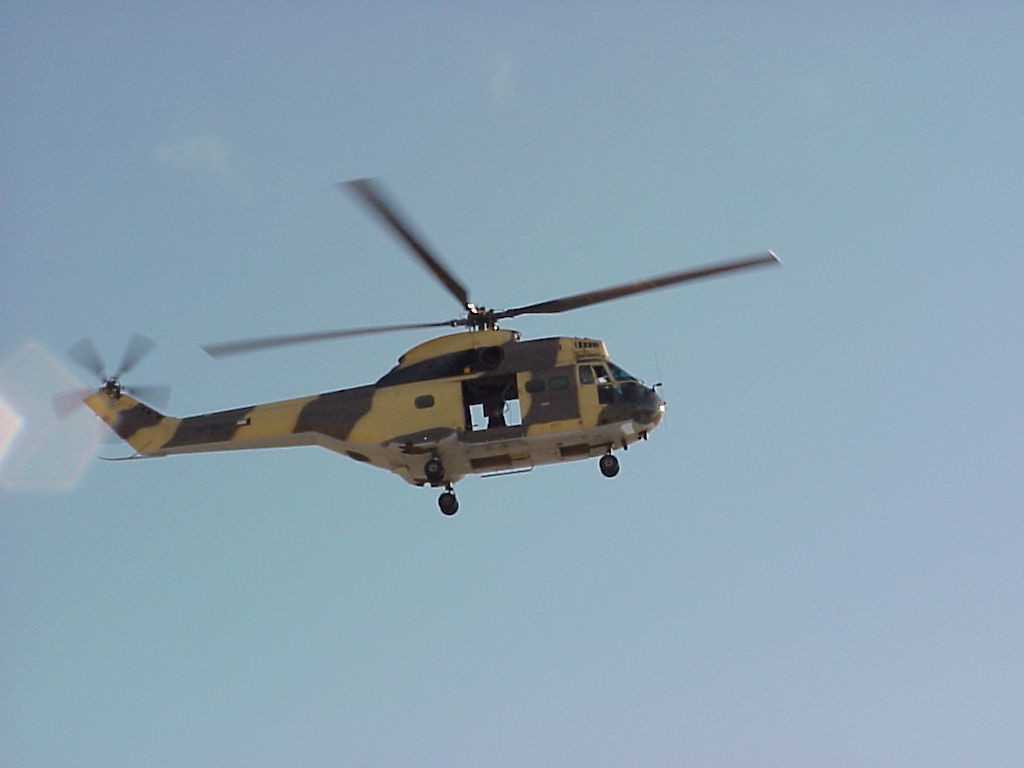
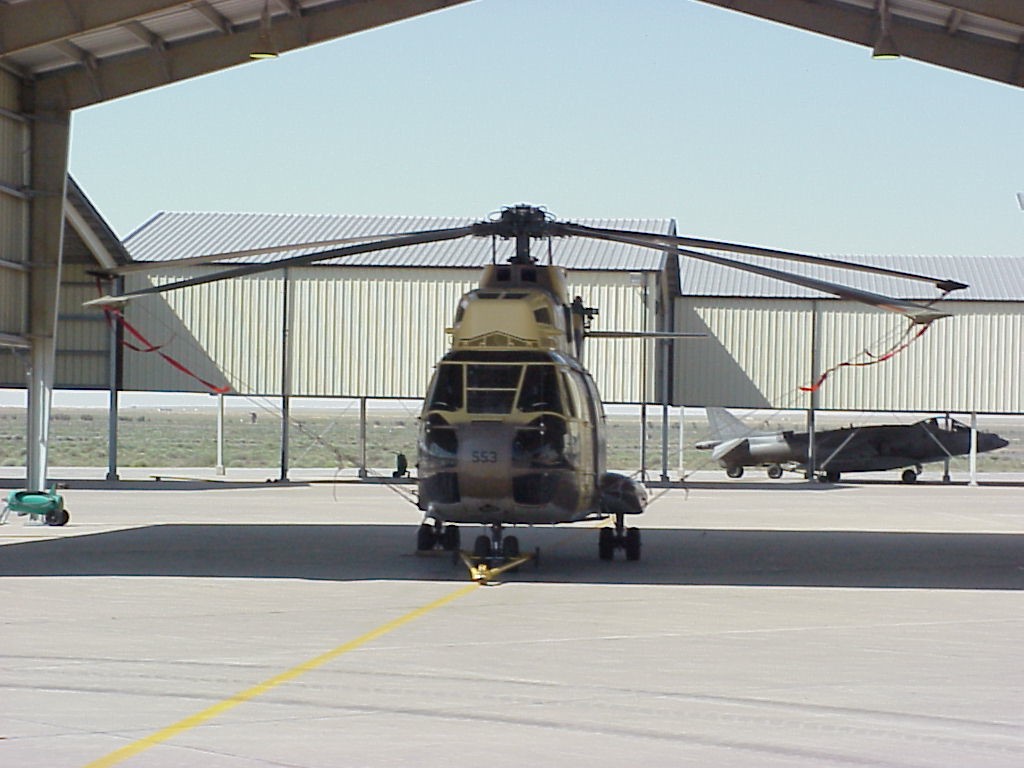
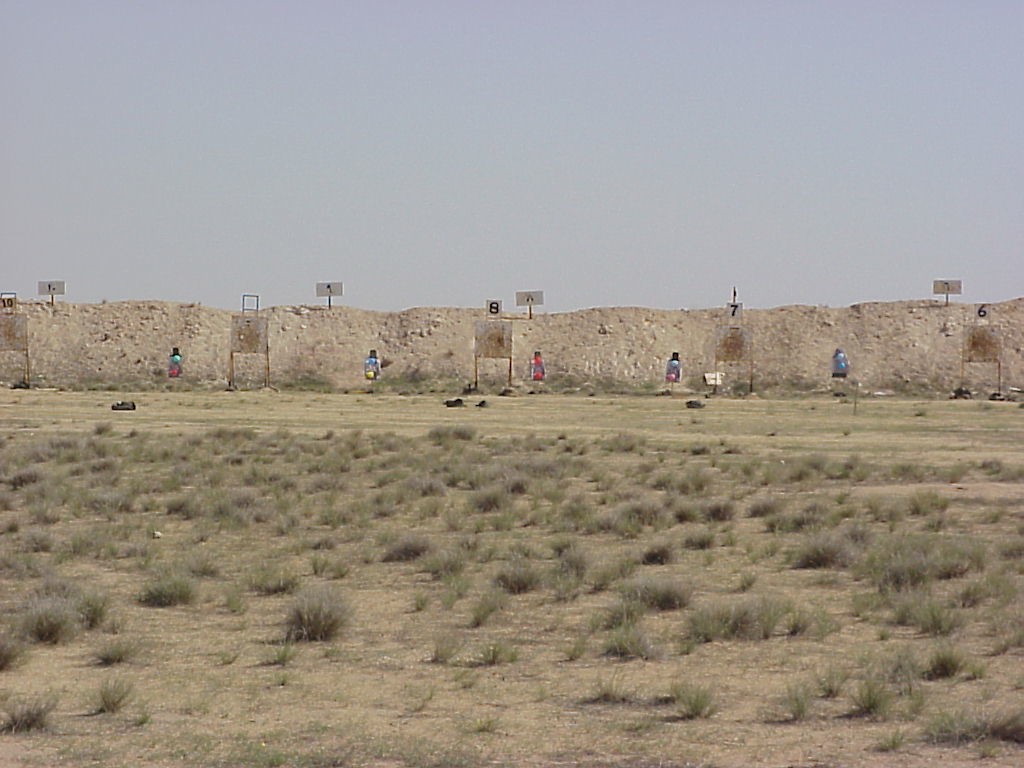
Here are some different things you can see around Kuwait.
Related Posts
Kuwaiti Puma
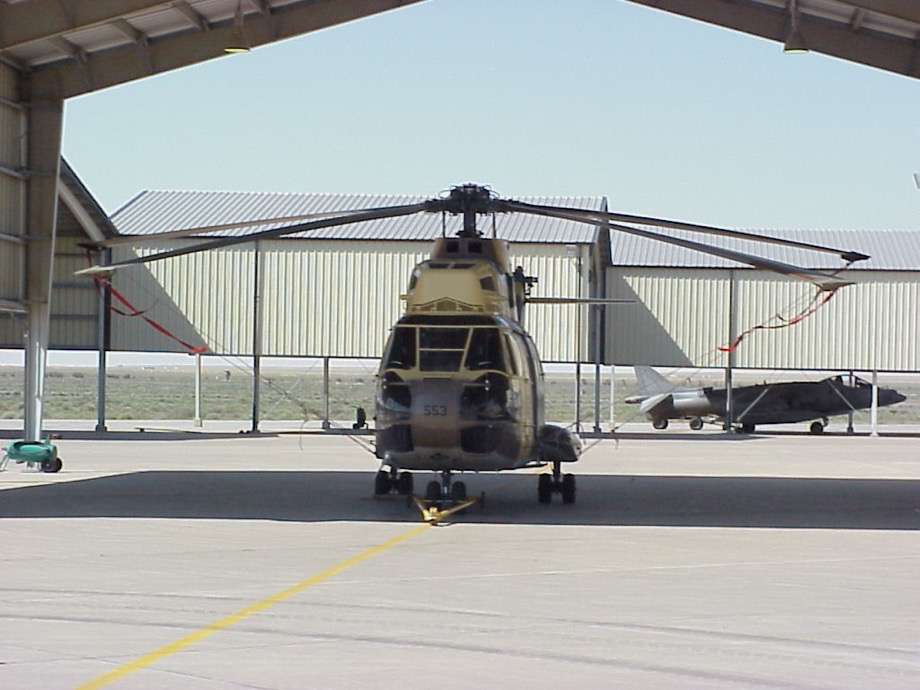
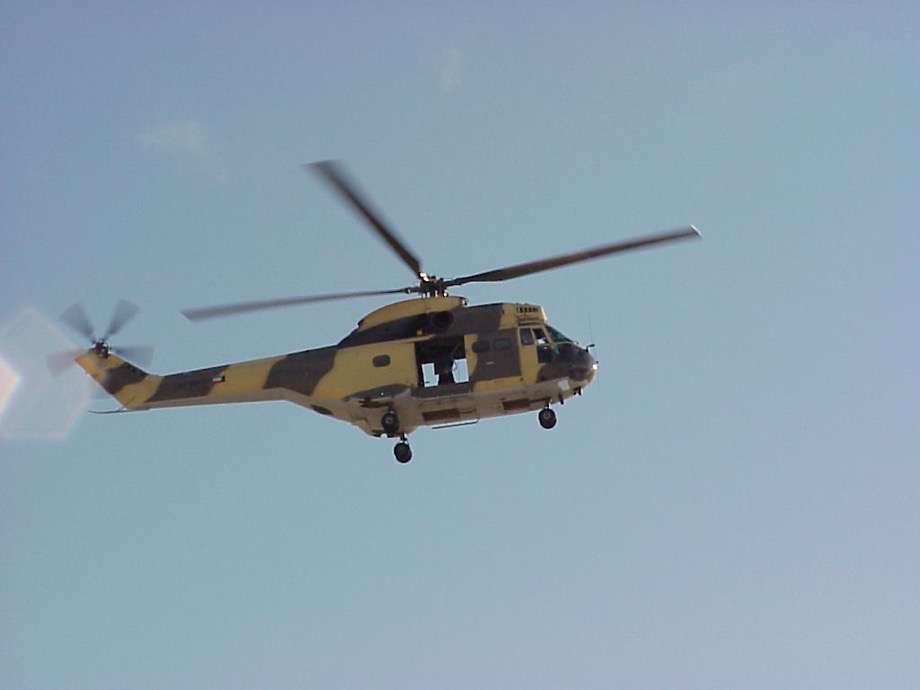
At Ali Al Salem air base in Kuwait I happened to see a couple Kuwaiti Puma aircraft. Here are a couple photos.
Related Posts
Shooting the Big Gun
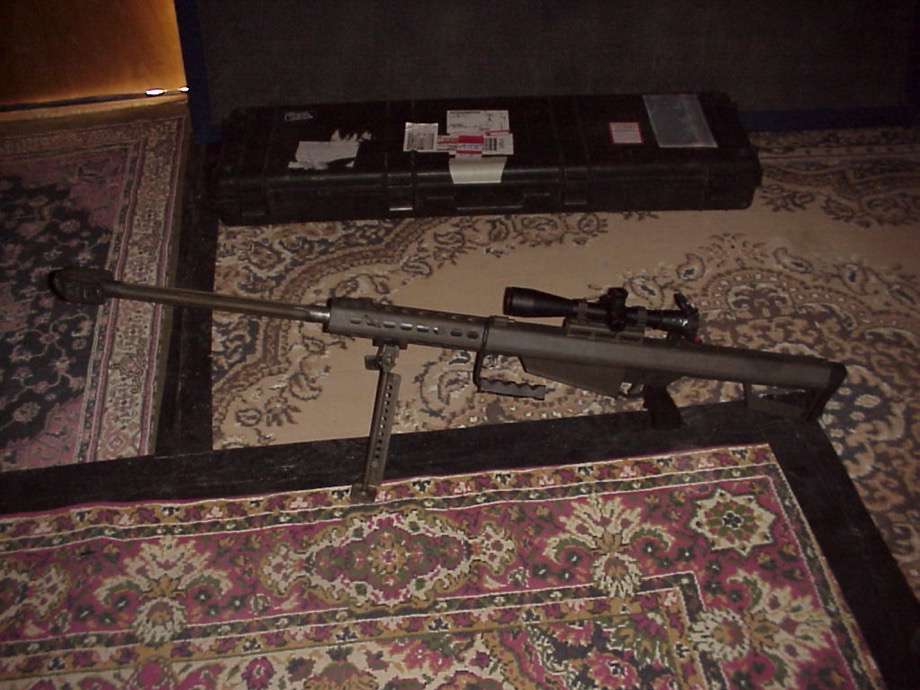
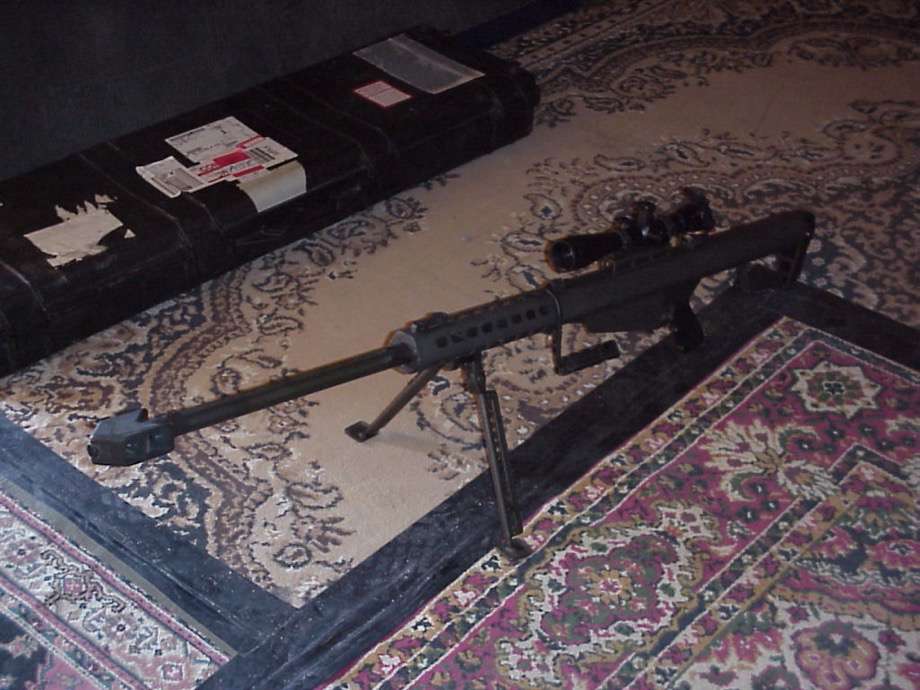
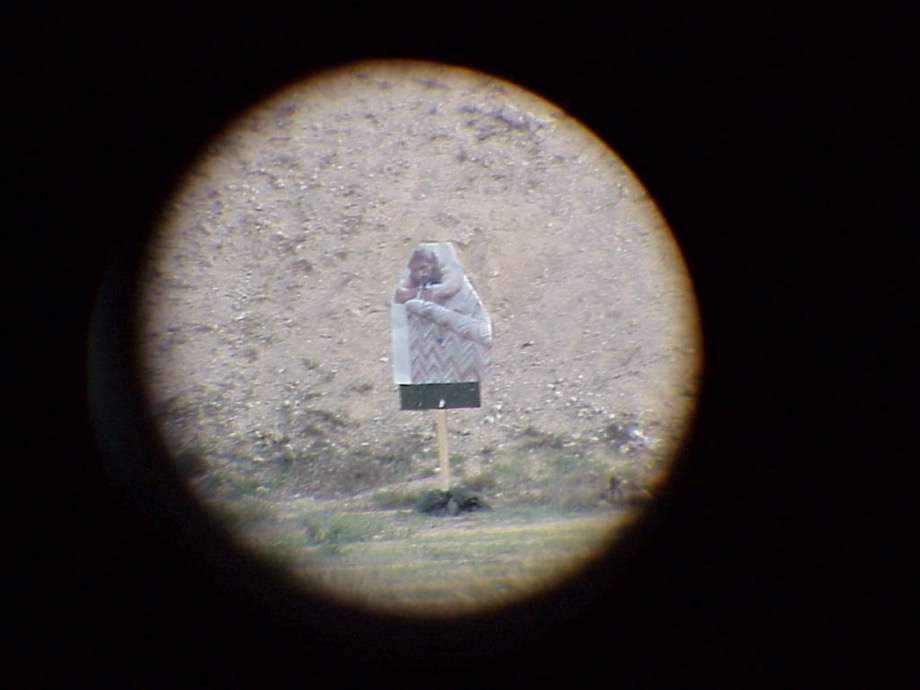
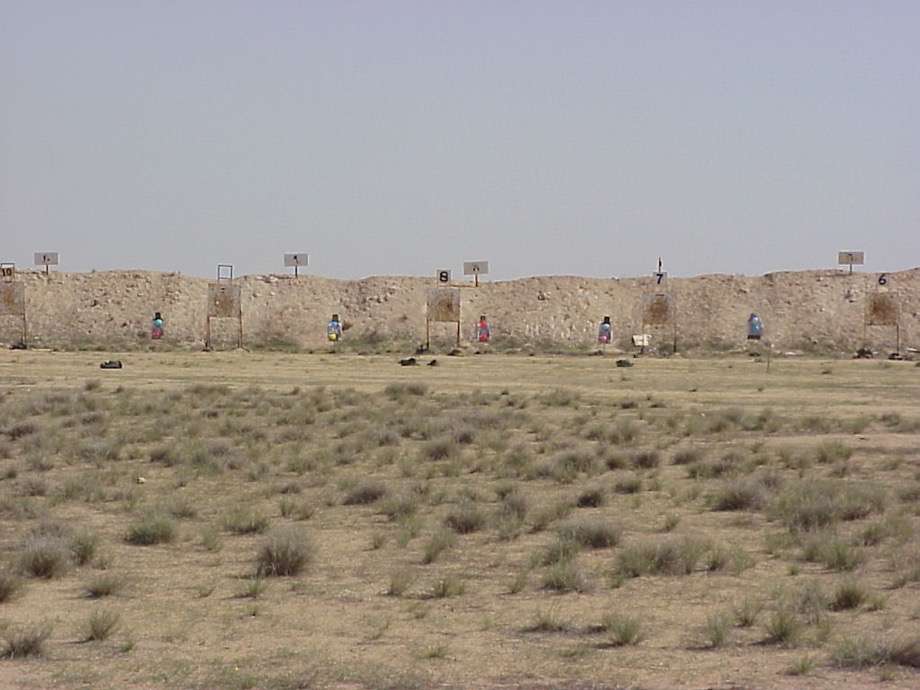
This is what a 50 caliber Baret looks like and this is what it looks like when you are aiming at a bad guy through a scope. These photos were taken at Ali Al Salem air base in Kuwait.
Related Posts
Ali Al Salem Tent City
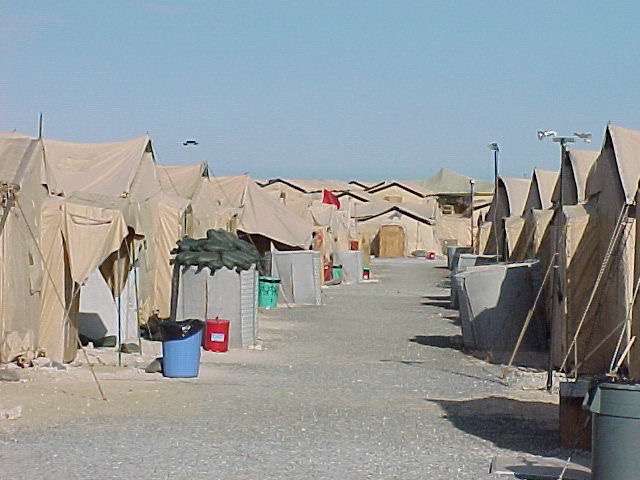
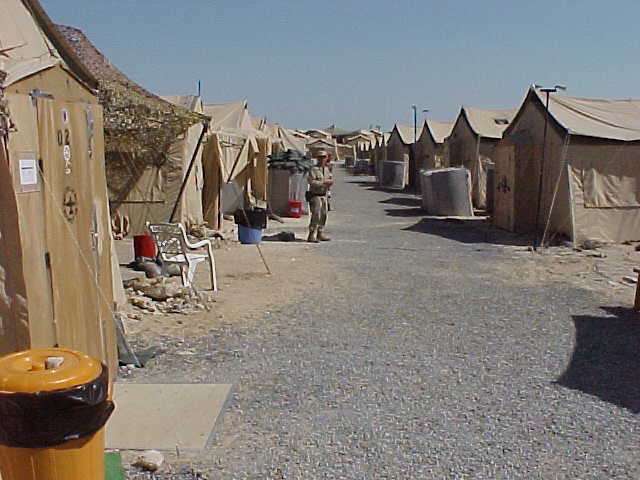
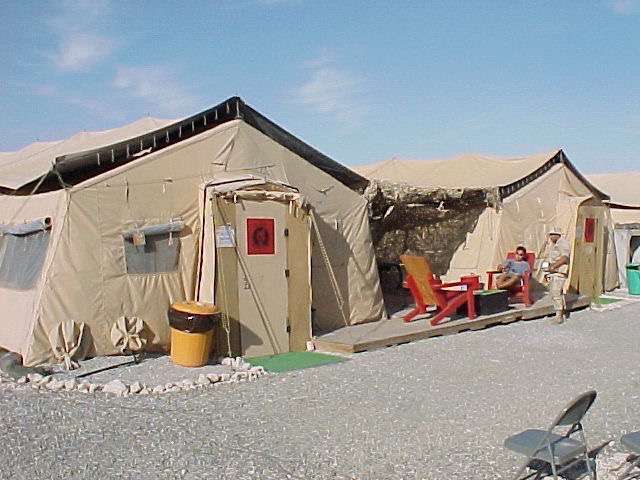
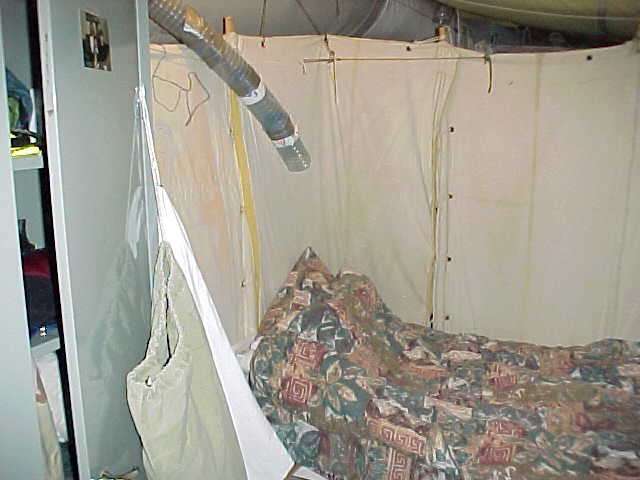
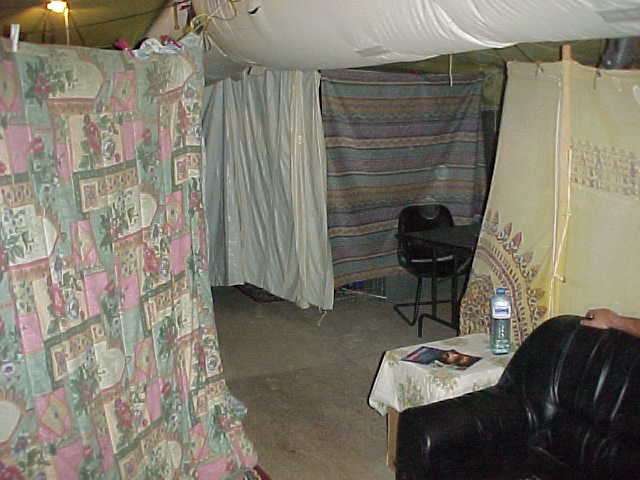
While deployed to Ali Al Salem air base in Kuwait I was afforded the wonderful opportunity to go camping in the desert 39 miles away from the Iraqi boarder. The United States Air Force was ever so kind as to setup tents with air conditioning. It was so hot in the desert that if you wanted to feel any of the air conditioning you needed to tape water bottle together to point the air at you. One of the worst days I can remember was 130 degrees at 9 o’clock in the morning. Whenever there was a windstorm you could count on not getting any sleep that night. It was also nice shaking sand, dirt, and the occasion scorpion or camel spider out of your boots as well. Here are some photos of what tent city was like both inside the tents and on the outside. Sometimes between the tents people would build a common area between the tents so people could play cards or read a book.
Related Posts
Reenlistment Ceremony
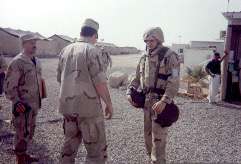
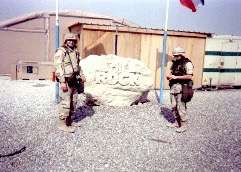
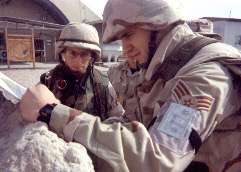
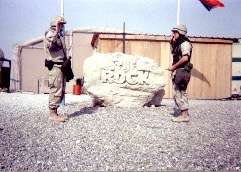
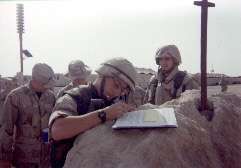
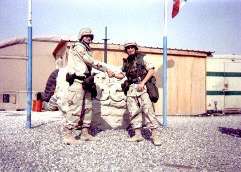
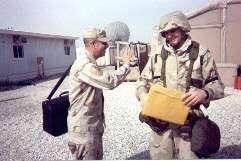
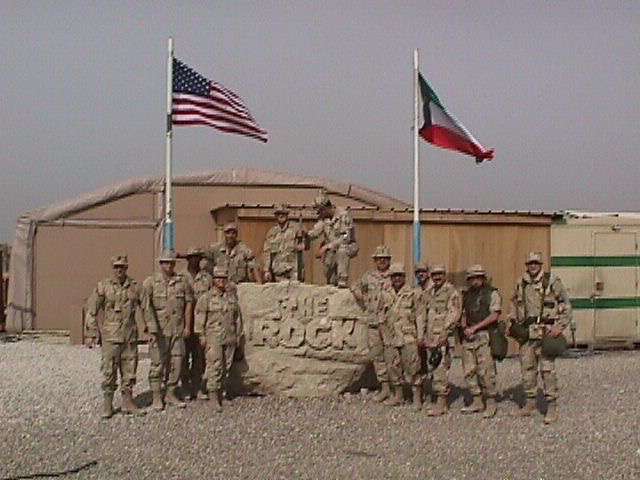
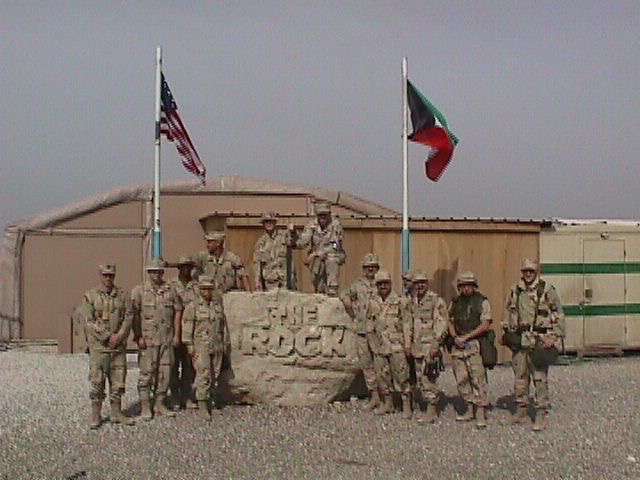
While at Ali Al Salem air base I reenlisted in the Air Force. Here are some photos of the reenlistment ceremony in front of “The Rock.”
Related Posts
Air Force Predator Aircraft
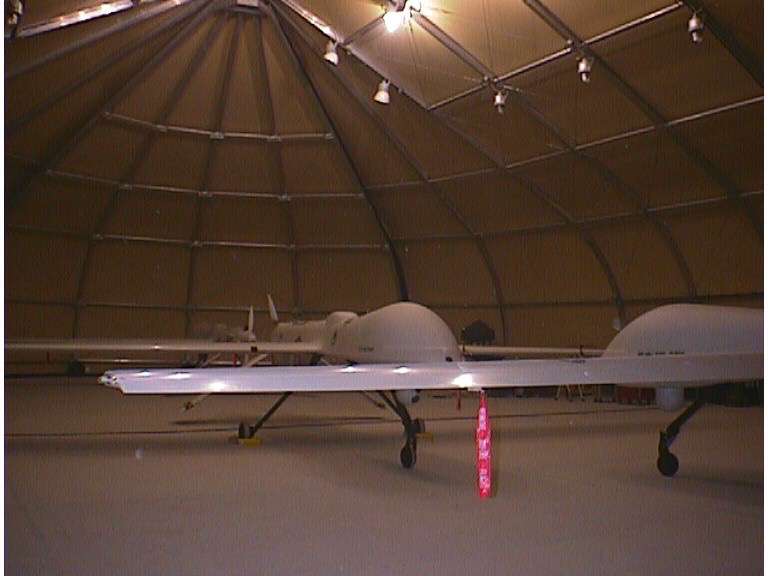
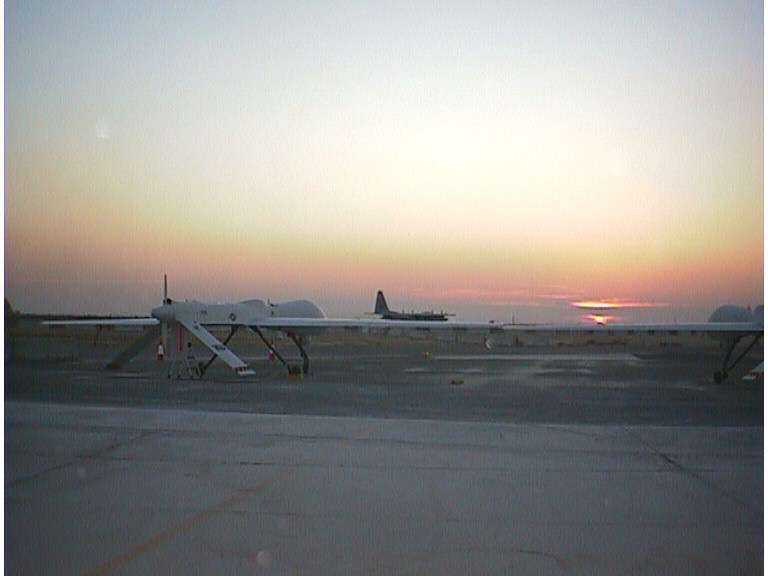
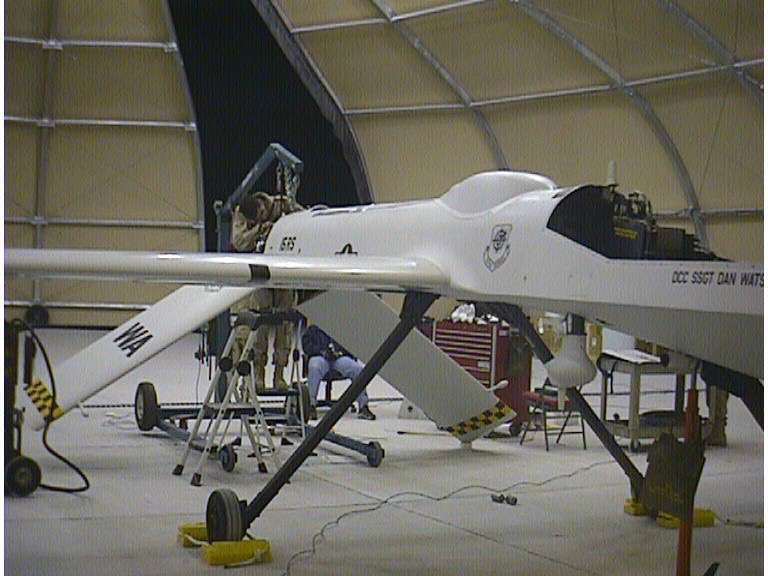
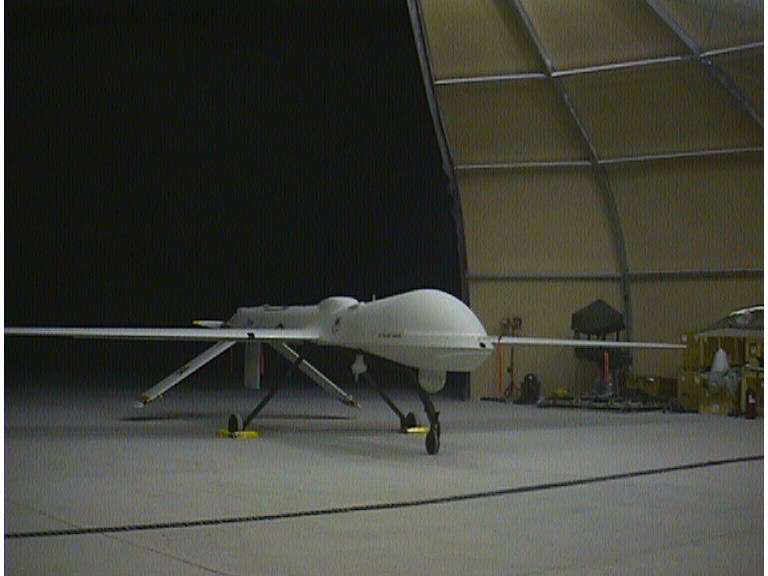
During my time at Ali Al Salem air base in Kuwait it was common occurrence to see the Air Force Predator aircraft. This plane is pretty cool because it is an unmanned aircraft and has virtually a lawnmower engine to power it.
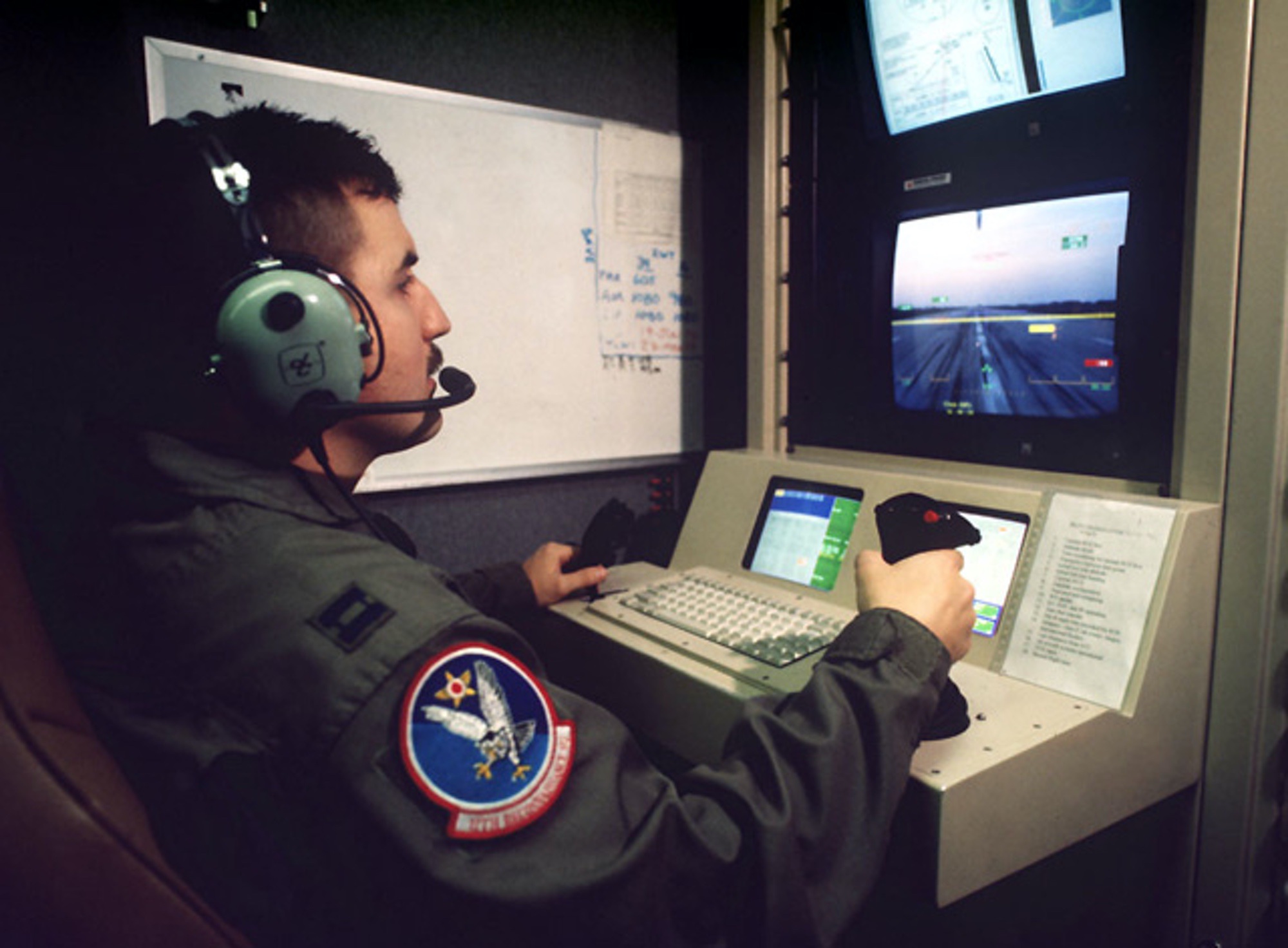
There was a lot of debate between different types of pilots about if the Predator pilots should actually be considered pilots because they sit on the ground and are in no imminent danger if something should fail on the aircraft. They have no threat to life or limb if they do something wrong with the aircraft. It is much like playing a video game.
Related Posts
Hardened Aircraft Shelter at Ali Al Salem
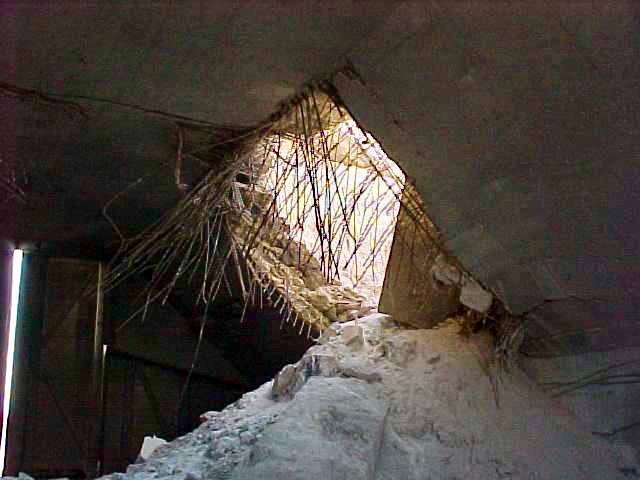
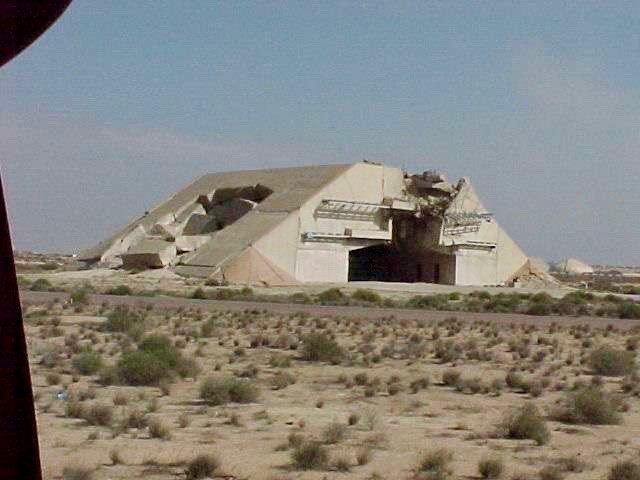
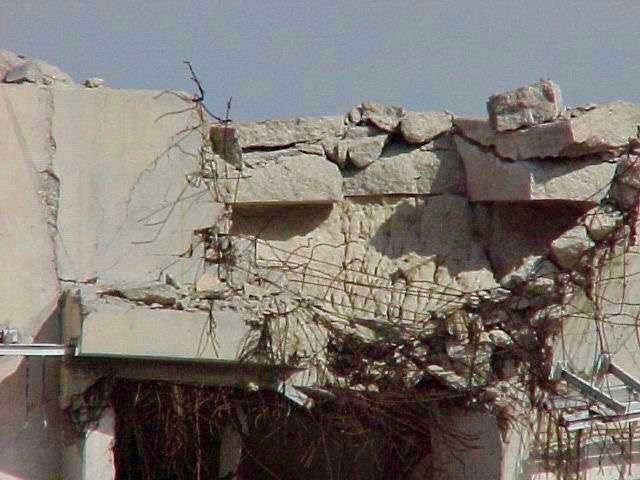
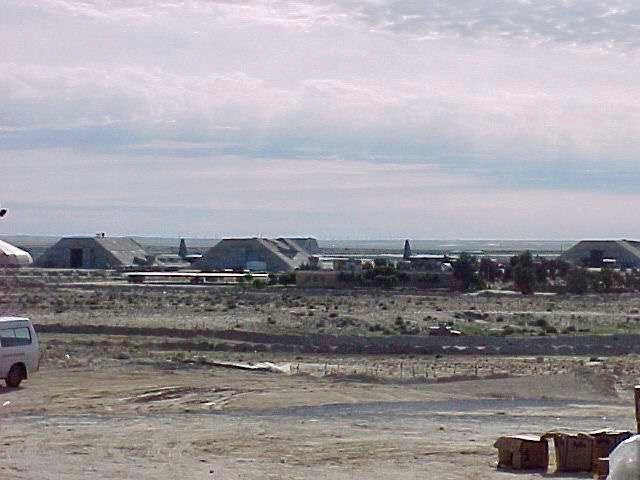
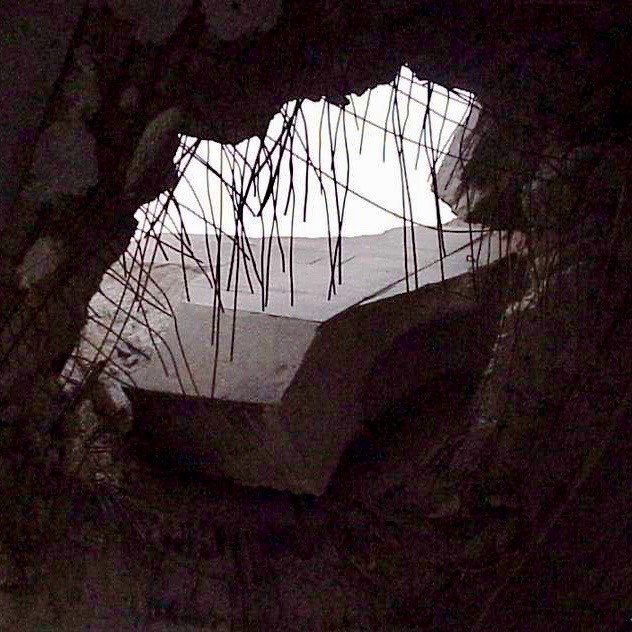
Here are some photos of the hardened aircraft shelter’s (HAS) at Ali Al Salem air base in Kuwait. The story behind the HAS was that they were built by the French and they were designed with 10 foot reinforced concrete. Apparently the French who built them for the Kuwaiti’s sold them as being bomb proof. When Iraq invaded Kuwait they took over these facilities and then during Operation Desert Storm the United States came in and bombed the heck out of them. I heard the Kuwaiti’s sued the French for the HAS not being bomb proof like they were sold as.
Related Posts






Welcome to Ali Al Salem Air Base, Kuwait
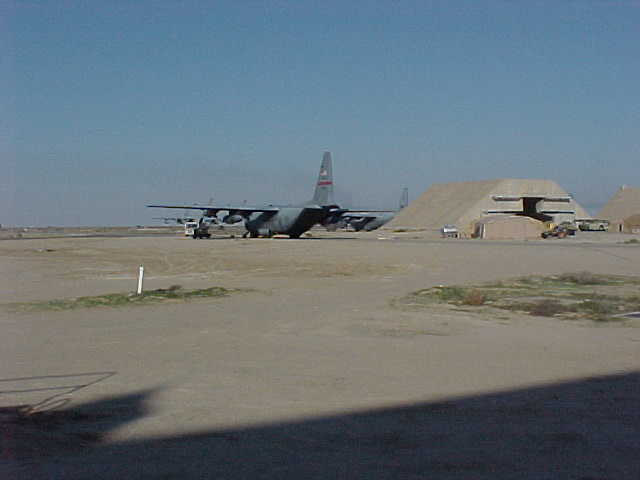
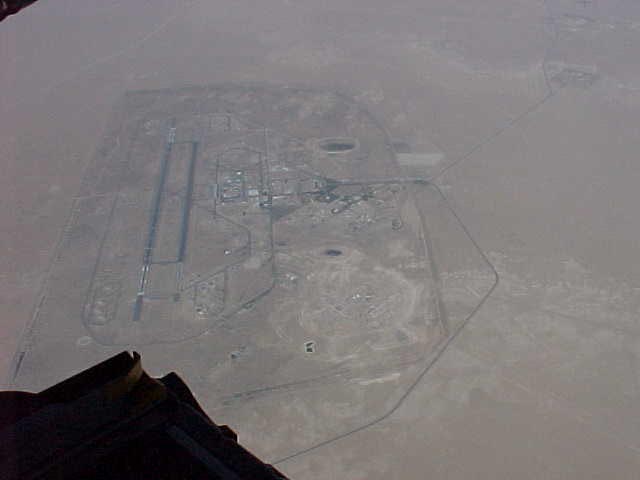
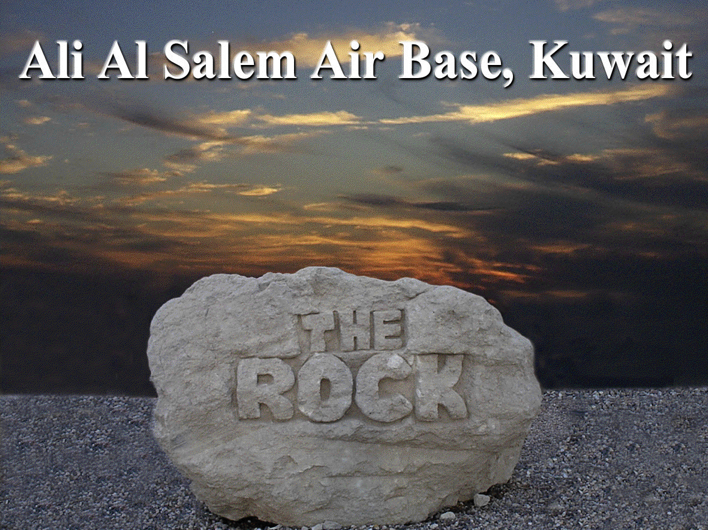
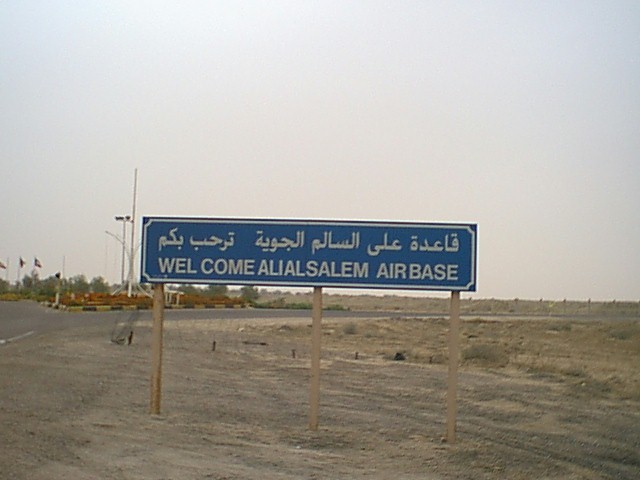
After 34 hours of flight travel I finally arrived at Ali Al Salem Air Base in Kuwait. This base was 39 miles from the Iraqi boarder. Here are a few photos of C-130 aircraft with a photo of the base out of the back of a C-130. Just a few of the things I saw while I was there.
Related Posts
Okinawa Dragon Boat Race
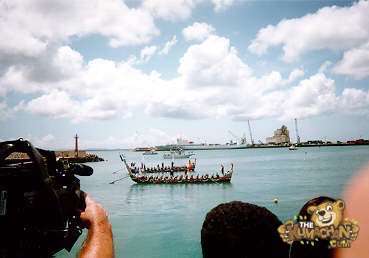
Went to watch the dragon boat races at Tomarin in Okinawa. This was a pretty neat event. There were teams with Okinawan people from different places and there were also teams from different military bases in Okinawa. It seemed as though they were building friendships through friendly competition while experiencing some of the Okinawan culture.
Related Posts
Soaring Shadows and Screaming Thunder: The Story of Fighter Jets
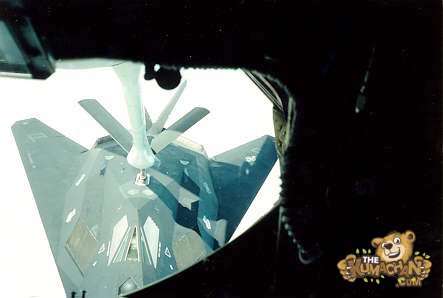
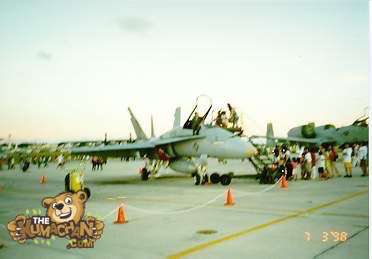
There’s something awe-inspiring about the sight of a fighter jet up close. The roar of engines, the sleek lines that seem sculpted for speed, the feeling of raw power wrapped in metal and advanced engineering — all of it combines to create a sense of wonder, intimidation, and admiration. For many, fighter jets are not only machines of war but symbols of human ambition and ingenuity, proof that mankind is willing to push technology to the very edge of what’s possible in order to dominate the skies. I remember two moments in particular that captured this spirit. The first was a photograph of an Air Force F-117 stealth fighter, taken during an aerial refueling. The perspective, looking out the back of a KC-135 tanker, shows the Nighthawk’s sharp, angular body — a machine designed not for beauty but for invisibility. Its black skin swallows the sunlight as it connects with the boom, a surreal ballet performed miles above the earth where any mistake could mean disaster. The second moment was far more grounded, but no less striking. At Kadena Air Base in Okinawa, Japan, I stood among families and festivalgoers at the annual “Friendship Festival.” There on the tarmac was a Navy F-18 Hornet, gleaming in the sun as children climbed onto their parents’ shoulders to get a better view. Static displays may not have the adrenaline of an in-flight performance, but they offer something just as valuable: the chance for ordinary people to stand a few feet away from the aircraft that define modern air combat, to marvel at their size, precision, and presence. These two images — one in the air, one on the ground — reflect the dual nature of fighter jets. They are machines of war, sharpened to lethal efficiency, but they are also ambassadors of technology, culture, and power. To understand fighter jets is to look at history, innovation, and humanity itself.
Fighter jets didn’t spring into existence fully formed. They are the descendants of the first fragile biplanes of World War I, where pilots strapped machine guns to wooden frames covered in canvas. Back then, the “knights of the sky” engaged in dogfights that were as much about daring as they were about strategy. Technology was primitive, but the concept was clear: controlling the skies meant controlling the battlefield. After World War II, with the introduction of the jet engine, everything changed. Aircraft that once maxed out at 300 mph could now surpass 600 mph, and within a decade, they were breaking the sound barrier. The world had entered the jet age, and the definition of what a fighter could do had to be rewritten. The Cold War supercharged fighter jet development. The United States and the Soviet Union poured billions into building aircraft that could out-fly, out-fight, and out-last one another. The F-86 Sabre and MiG-15 clashed over Korea, showcasing the first large-scale jet-to-jet dogfights. Later, the F-4 Phantom II and MiG-21 defined Vietnam’s aerial battles. Each encounter was a test not only of pilot skill but of the technological edge held by their nations.
Out of this competition came advances in radar, missiles, and stealth. The U.S. bet heavily on electronics and avionics, creating aircraft that were not just faster but smarter. The Soviets, meanwhile, emphasized ruggedness and maneuverability. This divergence created iconic aircraft on both sides — from the American F-14 Tomcat and F-15 Eagle to the Soviet Su-27 Flanker and MiG-29 Fulcrum. When the F-117 Nighthawk appeared in the 1980s, it looked like something out of science fiction. All flat panels and jagged edges, it wasn’t built to look sleek but to scatter radar waves. The idea was revolutionary: make the jet hard to see, and you control the fight before it even begins. The Nighthawk proved itself in combat during the Gulf War, slipping through defenses to strike targets with precision. Though retired now, it marked the beginning of a new era. Stealth became the standard, leading to aircraft like the F-22 Raptor and F-35 Lightning II — jets designed to dominate not only through speed and firepower but by vanishing into the electronic fog of modern warfare.
One of the often-overlooked aspects of fighter operations is aerial refueling. Without it, even the most advanced fighter is tethered to its home base. The photo of the F-117 connecting with a KC-135 is a reminder that every sortie depends on a network of support. Refueling is an art form — precise, dangerous, and essential. It’s easy to romanticize the lone fighter soaring through the skies, but the truth is no jet operates alone. Tankers, AWACS, and maintenance crews form the backbone of airpower. The jet may get the glory, but it’s the system around it that makes the mission possible. Despite all the technology, fighter jets are only as good as the pilots who fly them. These men and women endure grueling training, learning not only to master complex systems but to handle the physical punishment of high-G maneuvers. At nine times the force of gravity, even breathing becomes a challenge. Pilots often describe their first solo supersonic flight as life-changing. The world blurs, the cockpit shakes, and for a moment they are riding on the edge of human capability. It’s no wonder fighter pilots hold a special place in both military and popular culture.
Movies like Top Gun aren’t just entertainment — they’re reflections of the awe that society feels toward those who strap themselves into jets that can climb like rockets and turn tighter than the human body was ever meant to endure. Beyond the battlefield, fighter jets serve as powerful symbols. When a formation screams overhead during a national holiday or an airshow, it’s not just about entertainment. It’s a statement of pride, strength, and identity. Nations invest in these displays because they know the sight of a jet pulling a vertical climb or breaking the sound barrier leaves an impression no speech could match. The F-18 at Kadena’s Friendship Festival wasn’t just a machine on display. It was a reminder of the alliance between the U.S. and Japan, a symbol of trust, and an opportunity for ordinary people to connect with extraordinary technology. Children pointing at the jet with wide eyes aren’t thinking about geopolitics — they’re dreaming about possibility.
As technology marches forward, the fighter jet continues to evolve. The F-35 represents the current cutting edge: stealth, advanced sensors, and data fusion that turns the pilot into more of a conductor than a trigger-puller. Drones are entering the picture too, raising questions about whether the age of the human fighter pilot might one day end. Yet even as automation grows, the fighter jet remains a symbol that resonates. It represents daring, speed, and the eternal desire to dominate the skies. Whether piloted by humans or controlled remotely, fighter aircraft will continue to define the boundaries of military and technological power.
From the fragile wood-and-canvas biplanes of World War I to the stealthy, sensor-laden jets of today, the evolution of fighter aircraft tells the story of humanity’s quest to push boundaries. They embody both the destructive power of war and the inspirational power of innovation. For me, the memory of the F-117 refueling high above the earth and the F-18 gleaming at Kadena’s Friendship Festival encapsulates this duality. One image speaks of secrecy, power, and precision; the other of openness, community, and wonder. Together, they remind us that fighter jets are more than machines — they are experiences, symbols, and stories written across the sky.
Related Posts
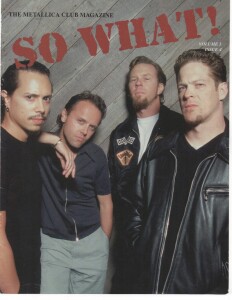
Metallica Club Magazine SO WHAT! Volume 5 Issue 2
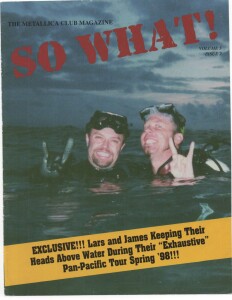
I was cleaning out my garage and I found a box with some old Metallica Club Magazines in it. So I decided to scan them and add them to the website so that I don’t have to carry these magazines around with me forever. This is Volume 5 Issue 2. I think I actually held on this magazine because I went to the Metallica concert at the Budokan arena in Tokyo, Japan on May 8th. Because I was a fan club member I got backstage and got to meet Jason Newsted.
Related Posts
18th Communications Squadron Flag Football
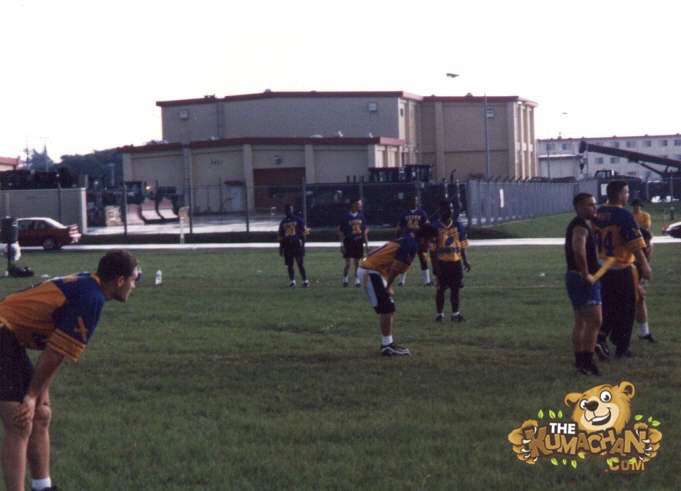
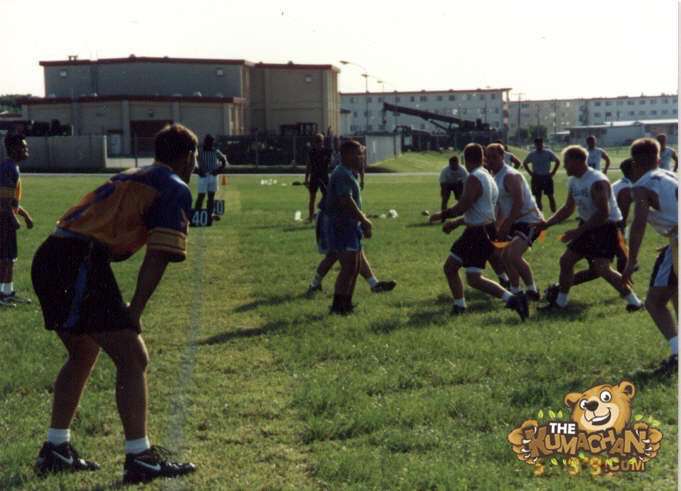
18th Communications Squadron from Kadena Air Base playing flag football against Marines on Camp Hansen in Okinawa, Japan.
Related Posts
Jason Newsted (Former Metallica Bassist) the Unknown Story
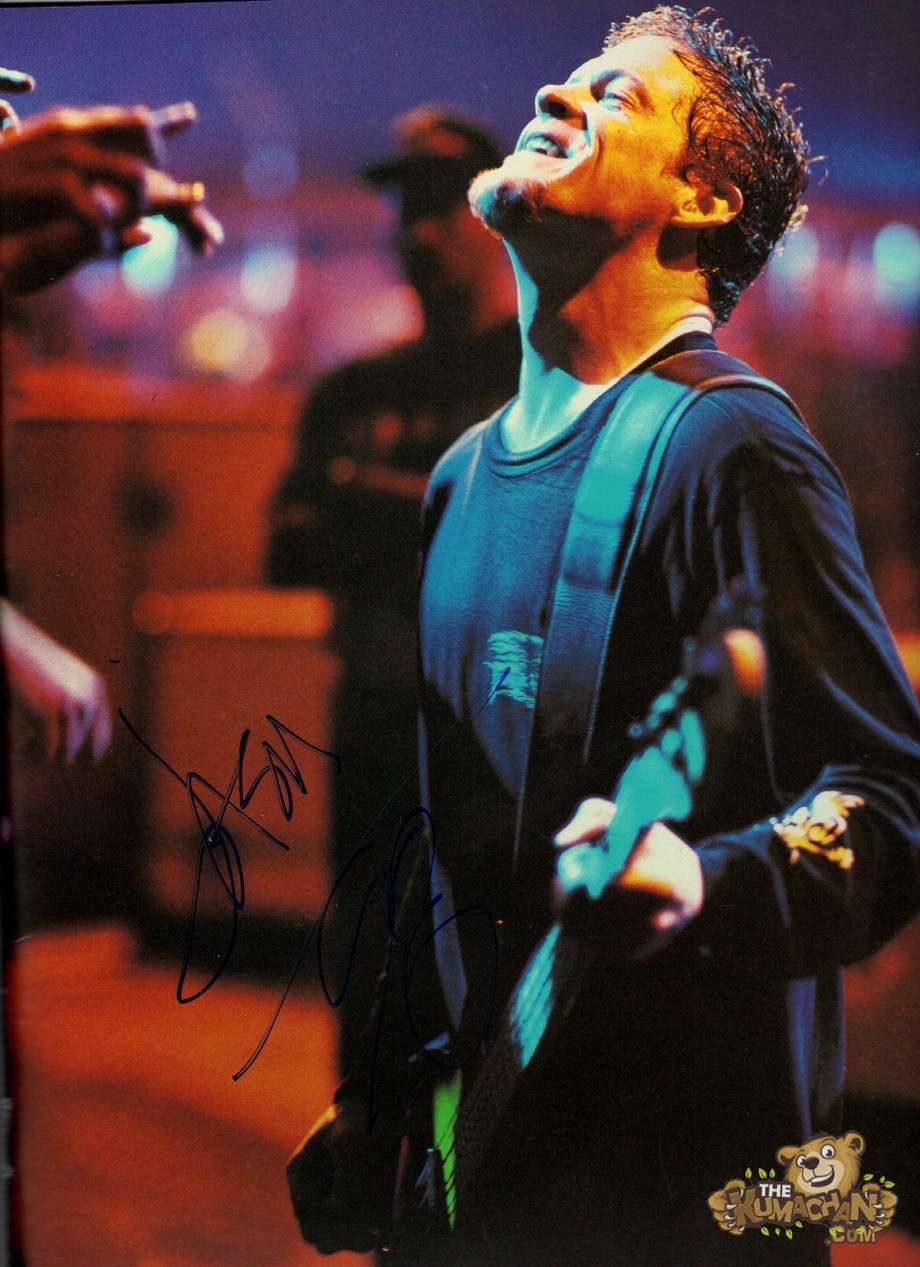
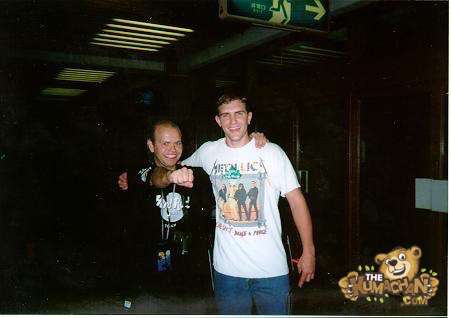
In 1998 I was in Okinawa, Japan when I received my Metallica fan club magazine which informed me of the bands upcoming tour. It was actually happening, Metallica was coming to Japan. I knew immediately I had to get tickets. So I checked with the Metallica club to see if I could get tickets through them for their Tokyo show. Unfortunately they weren’t sending tickets to fan club members overseas. So I did the next best thing, I went to a ticket office in Okinawa and purchased tickets. Next I had to get time off work and buy plane tickets to go to Tokyo from Okinawa. Once I got that squared away, then I just had to wait for the time to arrive.’, ‘The time finally came, I left for Tokyo on May 5th, 1998. Upon arriving at Narita airport I had to make my way to Ginza where I was staying. I went to the hotel and checked in. Dropped my bags off and took a shower. I decided to relax the first day because on the 6th is when I was going to the concert at the Tokyo dome in Budokan. I had purchased an extra ticket because I had a Japanese friend who wanted to go to the concert with me. So I went out to meet him and give him his ticket. When I met him in Shinjuku he had some troubling news. Because he was in a band called Janus and they were part of the X-Japan family. The lead singer from the band X-Japan had died and he had to attend his funeral, so he wasn’t able to make it to the concert. So I had this extra ticket and I didn’t know anybody else to give it to.
The following day I wore my Metallica fan club t-shirt and was pumped and ready for the concert. During the train ride I decided it would be best for me to try to sell my extra ticket outside the stadium. I stood around for a little while and nobody wanted to buy my extra ticket. Since I didn’t want to wait any longer I decided that it was a lost cause trying to sell it. So I decided to just go into the concert. As I was walking around the stadium to find the entrance there was a bouncer standing outside. He saw my t-shirt and asked me if I was a Metallica fan club member. I told him I was, then he told me that if I came back the following day I would be able to get backstage to meet the band. I thought this was some pretty cool news so it made me more pumped to go in and see the concert. Once I was in the stadium I was anxious for the concert to start. It was unbelievable, I was half way around the world from where I had seen my first Metallica concert in Ionia, Michigan, and I was about to see Metallica live again. Fifteen minutes into the concert I had already lost my voice from yelling as loud as I could. The concert went on and it was a kick ass show. After the show I took the train back to Ginza voiceless and wore out from attending an awesome performance.
The following day I went back to Budokan to see about getting backstage to meet the band. I walked around talking to some staff who pointed me in the right direction to get in line. Since I was so early I decided to buy some pamphlets to get autographed by the band. Then I found the line and I was the 2nd person in line waiting to get backstage. I started talking to Japanese guy in line in front of me and he was from near Osaka. He then asked me since I came from so far away that if I wanted to be first in line. I said, “Hell yeah” and he let me go in front of him. While waiting to go backstage Niclas Swanlund (writer for the Metallica fan club magazine) came out and told us what was going on. He told us that because the band was conducting interviews with local radio stations and TV stations, only Jason Newsted would be coming out to meet us. I must admit, I was a little disappointed because I was looking forward to meeting James Hetfield, the lead singer. Niclas Swanlund went on to tell us that Jason doesn’t like flashes from cameras. So if we had a camera we needed to cover the flash. Since all I had was a $10 disposable camera this was no big deal I would just cover the flash with my finger.
They escorted the line backstage where we waited for Jason to come out. When Jason finally came out I was surprised to see that me standing 6 foot 1 inch was taller than short little Jason who was only 5 feet 10 inches tall. As he walked out I snapped a picture with my finger over the flash as he walked up to me. When he got to me I gave him my pamphlets for him to sign and I told him that I was from Michigan too. He said, “Oh yeah, where about?” I told him I was from Saranac and before I said anything else, he said, “Oh yeah, that’s up near my aunt in Ionia”. After he signed my pamphlets he started working his way down the line to the other fan club members. He made it to the 4th person and he paused for a second. He said, “Where am I?” I blurted out, “You’re in fucking Japan man.” He then glanced down and said, “I know that dude”. He then proceeded down the rest of the line when a guy came out and took Jason outside to show him a Harley Davidson motorcycle that had Metallica painted on the gas tank. Once he came back in, he was walking on his way to the concert. I was so excited that I just met Jason Newsted from Metallica I wanted to say, “Rock on” before his show. As he was walking by, I blurted out, “Jason!” and before I got to say “rock on”. He just shook his head and I heard him mumble to the person he was walking with, “These fans” then I couldn’t hear what else he said. It was as if he was getting an attitude because I wanted to let him know I appreciated their music.
I ended up venturing back to Okinawa where I told my coworkers about my experience of going to the Metallica concert and getting backstage to meet Jason Newsted. I didn’t forget to leave out the part about him being a little guy with a big attitude towards his fans. I brought in my pictures after having them developed and the picture of Jason did not turn out since I wasn’t able to use a flash, but my picture of Niclas Swanlund and me did turn out. After that one experience I never looked at the band quite the same so in 2001 when I heard news that Jason was leaving the band I was not heart broken. Once I heard Metallica’s 3rd bassist was going to be Rob Trujillo, previously from Ozzy, I knew the band was going to rock again.
Related Posts
Sapporo Building
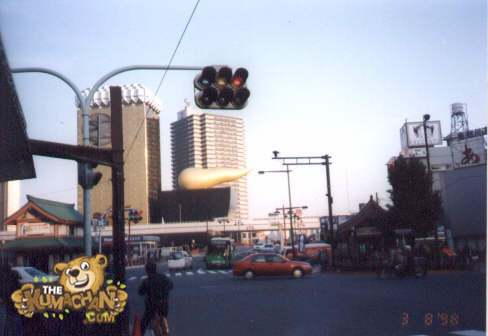
While in Tokyo, Japan I went to Asakusa and on the way back I stopped and snapped this photo of the Sapporo building. Sapporo is a big beverage company in Japan and they are best known for their beer.