On October 19, 1781, in a quiet Virginia field, the mightiest empire in the world bent its knee to a ragtag army of farmers, tradesmen, and dreamers. The British surrender at Yorktown was more than just a military defeat—it was the moment the American Revolution transformed from rebellion into reality, from fragile hope into tangible independence. Cannons thundered no more; muskets fell silent; and as British General Charles Cornwallis’s forces marched out to lay down their arms, the world bore witness to the collapse of British authority in America and the rise of a new nation that would, in time, reshape the globe.
The path to Yorktown was paved with desperation, grit, and unlikely alliances. By 1781, the American Revolution had dragged on for six long years. Washington’s army had endured winters of starvation, defeats that seemed insurmountable, and dwindling supplies. Britain had assumed the rebellion would fizzle out, that colonists armed with passion but little else could never sustain a war against red-coated veterans. But the colonists had something Britain did not: unshakable resolve, a vast and unforgiving land, and eventually, the support of France. The alliance with France—born from diplomacy, nurtured by shared hatred of Britain—tipped the scales. French ships, French soldiers, French gold: all flowed into the American cause, breathing life into the faltering revolution.
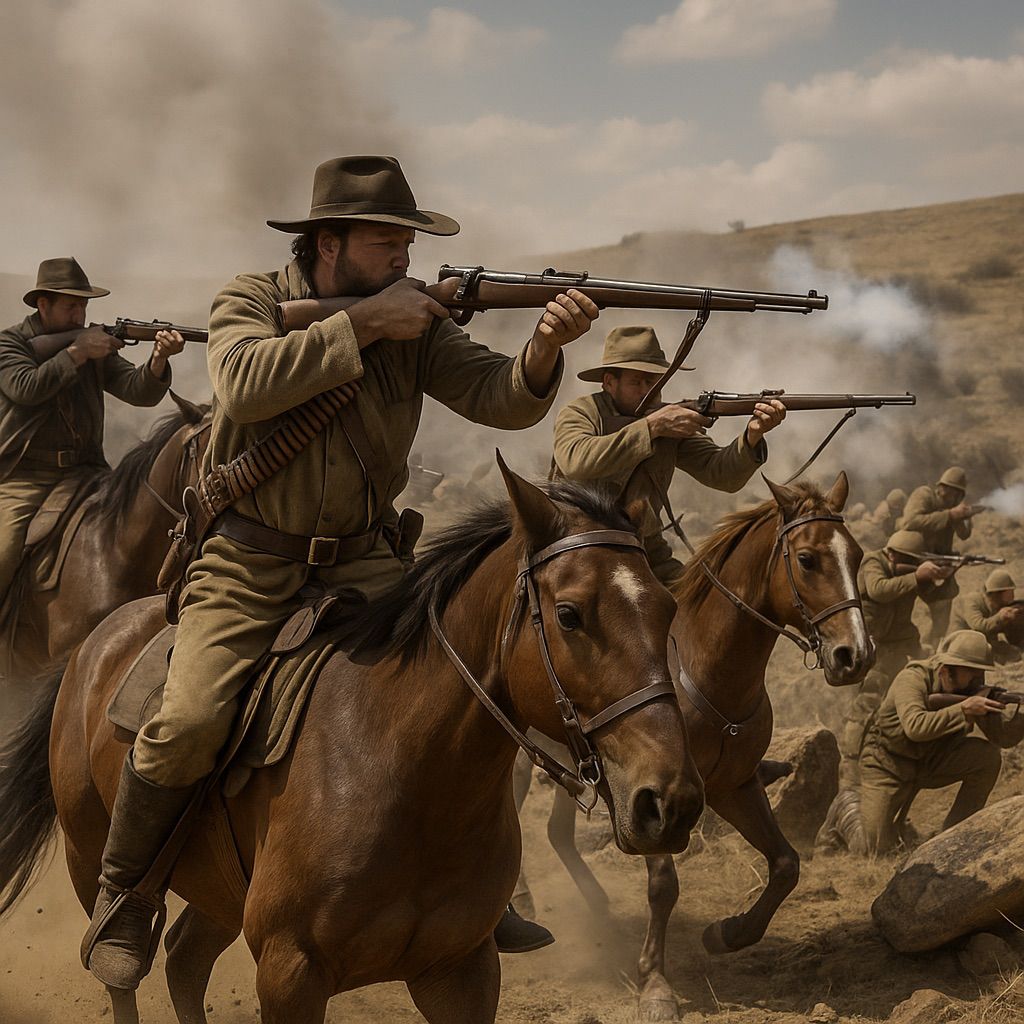
Cornwallis, commanding British forces in the South, found himself trapped by his own choices. Ordered to secure Virginia, he fortified Yorktown, a small port town on the Chesapeake Bay, assuming British naval supremacy would protect him. But fate turned against him. The French fleet, under Admiral de Grasse, shattered British naval power at the Battle of the Chesapeake, sealing off escape by sea. On land, Washington, Rochambeau, and Lafayette moved swiftly, encircling Yorktown with combined Franco-American forces. Cannons were dragged into position, trenches dug, and a siege unlike any seen in the New World began.
For weeks, American and French artillery rained fire on British positions. Red-hot cannonballs set supply depots ablaze. Soldiers crouched in trenches, hearts pounding with each thunderous blast. Cornwallis’s men, once confident, grew weary, starving, and desperate. By mid-October, escape was impossible, reinforcements nonexistent, and supplies dwindling. On October 17, Cornwallis requested a ceasefire to negotiate surrender. Two days later, October 19, 1781, the deal was sealed.
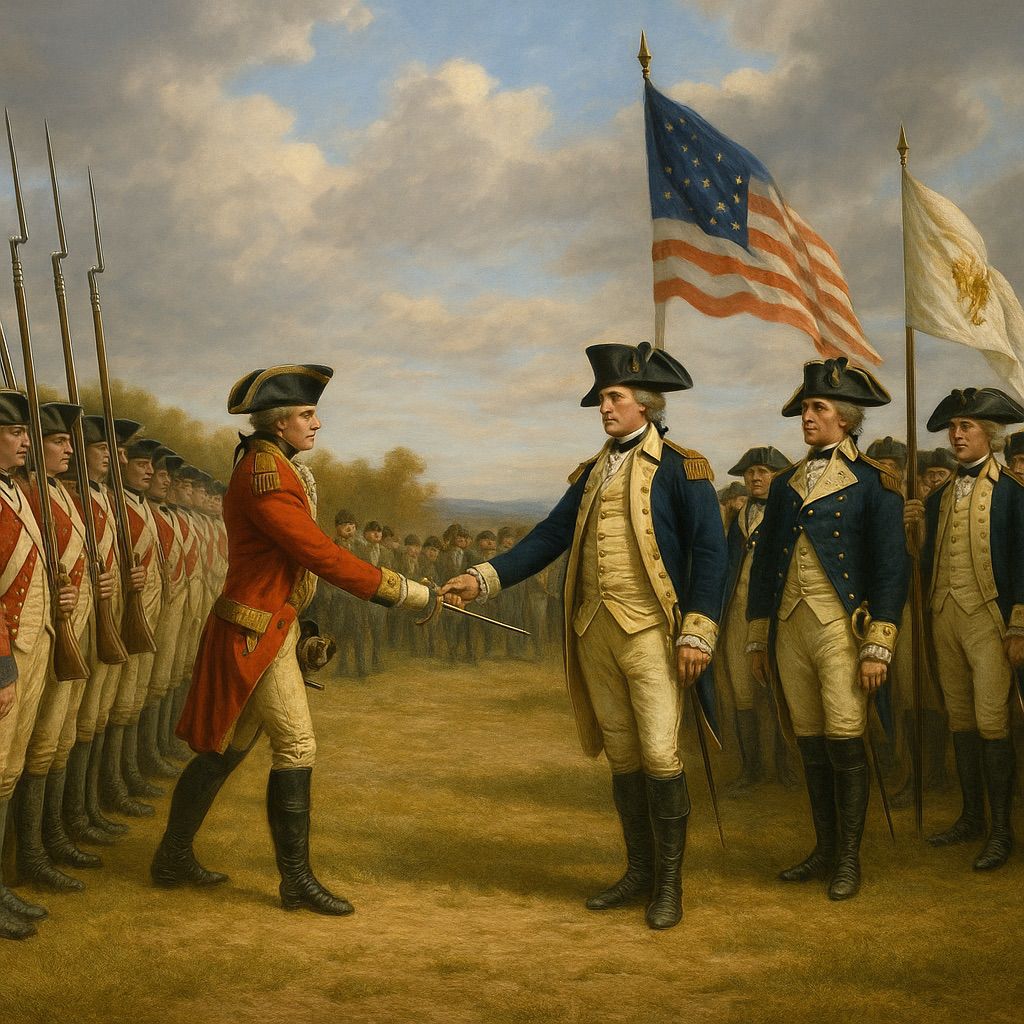
The surrender ceremony was both somber and monumental. British troops marched between ranks of American and French soldiers, drums beating a dirge, muskets reversed, flags furled in shame. Tradition dictated that Cornwallis himself surrender, but claiming illness, he sent General Charles O’Hara in his stead. O’Hara first offered his sword to Rochambeau, who refused, directing him to Washington. Washington, embodying dignity and restraint, also refused, sending O’Hara to his subordinate, General Benjamin Lincoln—the very man forced to surrender to the British at Charleston the year before. It was a gesture rich in symbolism: America, once humiliated, now held the upper hand.
For the soldiers on the field, it was more than ceremony. It was the end of years of hunger, fear, and sacrifice. Picture the barefoot soldier at Valley Forge, remembering frozen nights with no shoes, now watching redcoats surrender. Picture the farmer who left his plow, the blacksmith who left his forge, the printer who left his press—all now vindicated in their struggle. Picture the French allies, proud to see their gamble pay off, their muskets gleaming beside American rifles. For them, Yorktown was not just a victory. It was redemption.
The news spread like wildfire. Bells rang in Philadelphia, crowds celebrated in Boston, and in Paris, champagne flowed. In London, the reaction was grim. The war was not formally over—treaties would take years—but Yorktown shattered Britain’s will to continue. Parliament debated, voices rose, and finally, Prime Minister Lord North uttered the words that echoed through history: “Oh God, it’s all over.”
Yet Yorktown was not merely the end of a war. It was the birth of an idea: that ordinary people, united in cause and conviction, could overthrow empire and create a republic built on liberty. The United States would not be perfect. It would struggle, fracture, and fall short of its ideals. But on October 19, the seed was planted, and the world took notice. Revolutions in France, in Latin America, in Europe, would follow in its footsteps, inspired by the sight of farmers defeating kings.
Humanizing Yorktown means remembering not just Washington, Cornwallis, or Rochambeau, but the individuals who made the impossible possible. The young drummer boy who beat time as British troops surrendered, not fully grasping history but feeling its weight. The enslaved men who fought on both sides, hoping for freedom in exchange for service, many betrayed, but some realizing liberty through revolution. The women who sewed uniforms, nursed the wounded, and kept farms alive while husbands fought. Their hands, their sweat, their tears, all marched at Yorktown too.
The surrender at Yorktown is a reminder that history is never inevitable. Victory was not guaranteed, independence not assured. It was won through grit, sacrifice, and the audacity to believe that a people could govern themselves. October 19, 1781, was the day the dream became real, the day empire faltered, and the day a new nation rose, fragile but determined.
The world would never be the same.