Latest Articles

Sigmund Freud: The Shadow Self Whisperer

Penelope

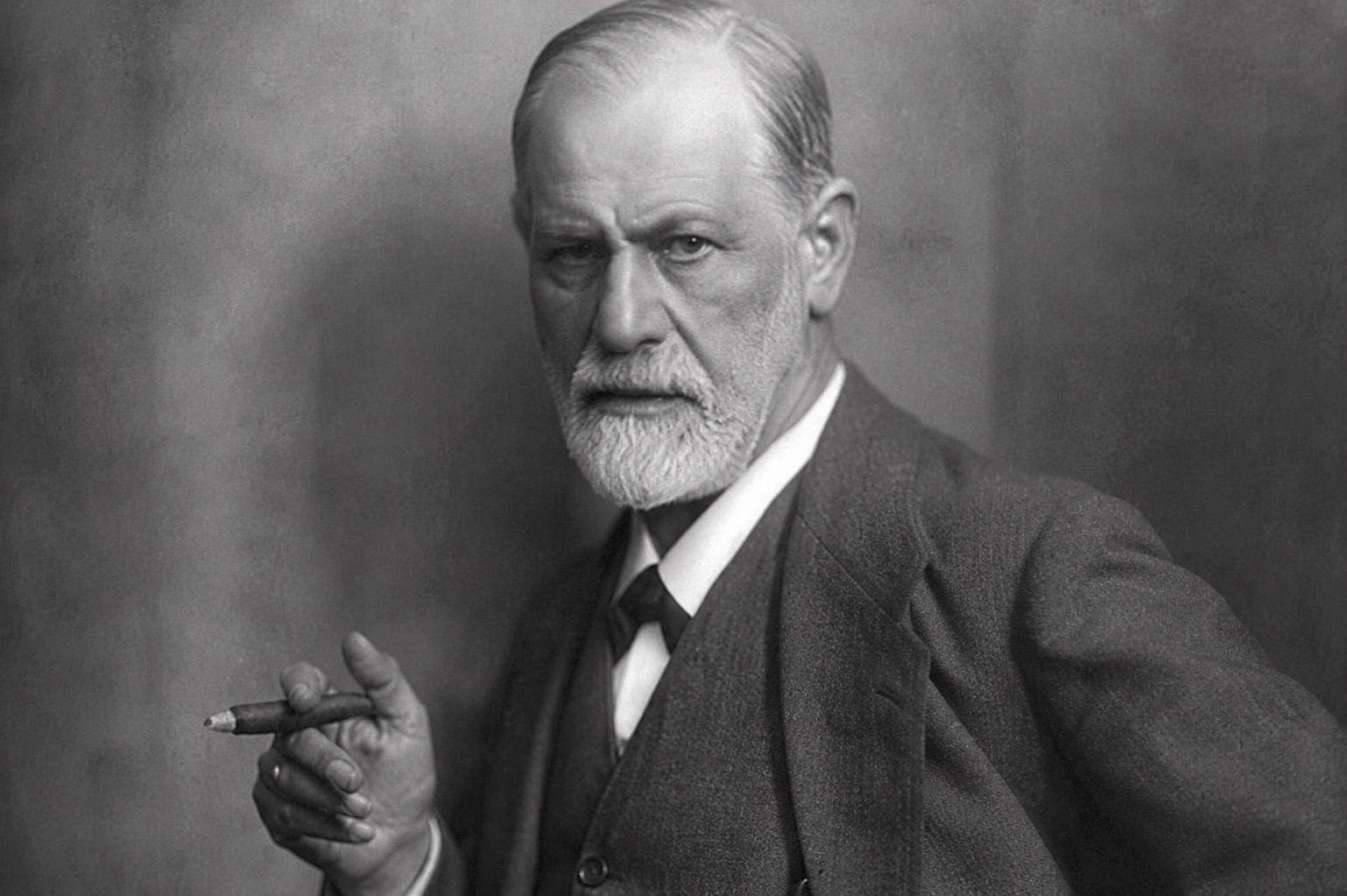
Sigmund Freud’s name pops up whenever I think about the human psyche, and it’s not just because of his famous mustache. I’ve always been fascinated by how he dared to ask the questions that everyone else wanted to avoid. Like, what makes us tick? Why do we do the things we do when we know they’re bad for us?

I remember reading “The Interpretation of Dreams” in a psychology class my senior year, and it was like someone had finally given voice to all the weird thoughts running around in my own head. I felt seen, but also uncomfortable. It’s not every day you encounter someone who’s so unafraid to confront the darker aspects of human nature.

Freud’s ideas about the unconscious mind have always stuck with me. He believed that our conscious thoughts are just the tip of the iceberg, and that there’s a whole other world of desires and conflicts lurking beneath the surface. It’s scary to think about how much of ourselves we might be hiding from, even from ourselves.

I’ve had my own share of experiences where I felt like I was living in two different worlds. Like when I was dating someone who seemed perfect on the outside but turned out to be a nightmare once you got to know them. It’s disorienting to realize that the person you thought you knew wasn’t real at all.

Freud’s concept of the “id,” the “ego,” and the “superego” feels like a pretty good explanation for why we do the things we do. Our id is like the part of us that just wants to indulge in whatever feels good, even if it’s bad for us. But then there’s our superego, which tries to keep us in line with societal norms and expectations. And somewhere in between, our ego struggles to balance out these two opposing forces.

It’s funny, because sometimes I feel like I’m constantly negotiating between my own id and superego. Like when I want to stay up all night watching Netflix but know I should be getting sleep for work tomorrow. It’s like this constant battle between what feels good in the moment and what’s actually good for me.

I’ve also been thinking about Freud’s ideas on repression and how it relates to creativity. He believed that sometimes we express our repressed thoughts or desires through art or writing, which can be both liberating and terrifying. I know from my own experience with writing that there are certain themes or emotions that I’m hesitant to explore because they feel too personal or vulnerable.

But maybe that’s what makes writing so powerful – it allows us to tap into our repressed thoughts and emotions in a way that feels safe, at least in theory. When I write, I feel like I’m able to access parts of myself that I wouldn’t normally think about. It’s like Freud said, “The unconscious mind is the source of all creativity.” At least, that’s what I keep telling myself.

I guess what really draws me to Freud is his willingness to confront the complexities and ambiguities of human nature. He didn’t try to simplify things or offer easy answers; instead, he asked even more questions. And in a way, that feels like the most honest thing anyone can do when trying to understand ourselves or others.

As I sit here thinking about all this, I’m not sure where it’s going to take me. But one thing is for sure – Freud’s ideas have given me a lot to think about, and maybe even a little bit of discomfort in the process. Which isn’t always a bad thing.

I’ve been thinking a lot about how Freud’s ideas on repression relate to my own experiences with writing. I mentioned earlier that there are certain themes or emotions that I’m hesitant to explore because they feel too personal or vulnerable. But what if I told you that some of those very same topics have been simmering beneath the surface, waiting to be expressed?

I think about all the times I’ve felt like I was stuck in a creative rut, unable to tap into my usual sources of inspiration. And then suddenly, something happens – a conversation with a friend, a personal struggle, or even just a weird dream – and it sparks an idea that I couldn’t shake if I tried.

It’s as if my unconscious mind has been working on some hidden level, processing all the thoughts and emotions that I’ve been trying to keep under wraps. And when I finally give in and write about those things, it’s like a weight is lifted off my shoulders. It’s exhilarating and terrifying all at once.

Freud would probably say that this is just another example of the ego struggling to balance out the id and superego. That maybe I’m trying to hold back my creative impulses because they’re too raw or uncomfortable, but ultimately, it’s the repression itself that’s driving me to express them in some way. It’s a vicious cycle, really – one that I’m still trying to understand.

I wonder if this is what Freud meant by “the return of the repressed.” When we try to suppress our thoughts and emotions, do they just come back stronger, more intense, and maybe even more creative? It’s hard to say for sure, but it feels like there’s something to be learned from exploring these dark corners of our own minds.

As I continue to grapple with Freud’s ideas, I’m starting to realize that the line between creativity and repression is a lot blurrier than I thought. Maybe they’re not mutually exclusive at all – maybe they’re two sides of the same coin. And maybe, just maybe, it’s in embracing those uncomfortable thoughts and emotions that we find our truest sources of inspiration.

The more I think about it, the more I’m convinced that Freud was onto something with his ideas on repression and creativity. It’s as if he knew that the things we try to keep hidden are often the very things that drive us to create in the first place.

I’ve been thinking a lot about my own writing process, and how often I find myself drawn to themes or emotions that make me feel vulnerable. It’s like I’m constantly negotiating with my own id and superego, trying to figure out what’s okay to express and what needs to be kept hidden. But the more I write, the more I realize that those repressed thoughts and emotions are actually the ones that give my writing its spark.

It’s not always easy, of course. There are times when I feel like I’m wading through a swamp of uncertainty, unsure of where my writing is going or what it’s trying to say. But in those moments, I remind myself of Freud’s words: “The unconscious mind is the source of all creativity.” And I try to tap into that source, no matter how scary or uncomfortable it might be.

I wonder if this is why so many artists and writers struggle with anxiety or self-doubt. Maybe it’s because we’re constantly navigating this tightrope between our creative impulses and our need for control or security. But what if I told you that the very things that make us anxious or uncertain are also the things that drive us to create?

It sounds like a paradox, I know. But the more I think about it, the more I believe that Freud was onto something profound. That by embracing our repressed thoughts and emotions, we might just find the key to unlocking our truest sources of inspiration.

I’m not saying it’s easy, or that it feels good all the time. But what if I told you that some of my most meaningful writing has come from exploring those dark corners of my own mind? That by confronting my fears and doubts head-on, I’ve been able to tap into a source of creativity that I never knew existed?

It’s like Freud said: “The truth is always an abyss.” And maybe that’s where the real magic happens – in that abyss of uncertainty, where our repressed thoughts and emotions wait to be explored.

As I sit here, lost in thought about the complexities of human nature and the role of repression in creativity, I’m struck by how much of my own life has been influenced by Freud’s ideas. His theories have given me a language to understand myself, to make sense of the contradictions that seem to plague us all.

I think about my own creative process, and how often I’ve found myself drawn to themes or emotions that feel uncomfortable or vulnerable. It’s as if I’m constantly negotiating with my own id and superego, trying to figure out what’s okay to express and what needs to be kept hidden. But the more I write, the more I realize that those repressed thoughts and emotions are actually the ones that give my writing its spark.

It’s funny, because sometimes I feel like I’m living in a state of constant flux, always balancing between the desire to create something new and true with the need to protect myself from the uncertainty and vulnerability that comes with it. But what if I told you that this is exactly where the magic happens?

Freud would probably say that this is just another example of the ego struggling to balance out the id and superego, but for me, it feels like something more profound. It feels like a recognition that our creative impulses are often tied up with our deepest desires and fears, and that by exploring those darker corners of ourselves, we might just find the key to unlocking our truest sources of inspiration.

I wonder if this is why so many artists and writers struggle with anxiety or self-doubt. Maybe it’s because we’re constantly navigating this tightrope between our creative impulses and our need for control or security. But what if I told you that the very things that make us anxious or uncertain are also the things that drive us to create?

It sounds like a paradox, I know. But the more I think about it, the more I believe that Freud was onto something profound. That by embracing our repressed thoughts and emotions, we might just find the key to unlocking our truest sources of inspiration.

I’m not saying it’s easy, or that it feels good all the time. But what if I told you that some of my most meaningful writing has come from exploring those dark corners of my own mind? That by confronting my fears and doubts head-on, I’ve been able to tap into a source of creativity that I never knew existed?

It’s like Freud said: “The truth is always an abyss.” And maybe that’s where the real magic happens – in that abyss of uncertainty, where our repressed thoughts and emotions wait to be explored.

I’m not sure what the future holds for me as a writer, or how much more I’ll be able to tap into this source of creativity. But one thing is for sure: Freud’s ideas have given me a new perspective on my own creative process, and a newfound appreciation for the complexities and ambiguities of human nature.

As I close this reflection, I’m left with more questions than answers. What does it mean to truly confront our repressed thoughts and emotions? How do we navigate the tightrope between creativity and control? And what lies at the heart of that abyss of uncertainty?

I don’t know if I’ll ever have all the answers, but I do know one thing: by embracing the complexities and ambiguities of human nature, I’ve found a new source of inspiration for my writing. And maybe, just maybe, that’s where the real magic happens.

As I wrap up this reflection on Freud’s ideas, I’m struck by how much his theories have resonated with me on a personal level. It’s as if he’s given me permission to explore the darker corners of my own mind, and in doing so, has unlocked a source of creativity that I never knew existed.

I think about all the times I’ve felt stuck or uncertain in my writing, only to find inspiration in the most unexpected places. Like the time I was struggling to write a piece on mental health, and then had a conversation with a friend who shared their own struggles with anxiety. Suddenly, the words flowed effortlessly onto the page.

It’s as if Freud is right – our unconscious mind is constantly working behind the scenes, processing thoughts and emotions that we’re not even aware of. And when we tap into those hidden corners of ourselves, we can create something truly remarkable.

But it’s not just about creativity – it’s also about self-discovery. By exploring my own repressed thoughts and emotions, I’ve gained a deeper understanding of myself and the world around me. It’s like Freud said: “The truth is always an abyss.” And maybe that’s where the real magic happens – in that abyss of uncertainty, where our repressed thoughts and emotions wait to be explored.

I’m not sure what the future holds for me as a writer, but I do know that I’ll continue to explore these themes of creativity, repression, and self-discovery. It’s a journey without clear answers, but one that feels necessary to me. As I look back on this reflection, I realize that Freud’s ideas have given me a language to understand myself in ways that feel both scary and liberating.

As I close this reflection, I’m left with more questions than answers. What does it mean to truly confront our repressed thoughts and emotions? How do we navigate the tightrope between creativity and control? And what lies at the heart of that abyss of uncertainty?

I don’t know if I’ll ever have all the answers, but I do know one thing: by embracing the complexities and ambiguities of human nature, I’ve found a new source of inspiration for my writing. And maybe, just maybe, that’s where the real magic happens.

For now, I’m content to continue exploring these ideas, to see where they take me and what secrets they might reveal about the human psyche. It’s a journey without clear endpoints or destinations – but one that feels both exhilarating and terrifying in equal measure.
Related Posts

I Think I Just Saw Pandora’s Soul Depart

Hal

I was sitting in the living room trying to get some work done when I noticed something deeply unsettling. Pandora hadn’t moved in nearly half an hour. At first, I didn’t think much of it. People sit on couches all the time. In fact, couches are specifically designed for sitting, and it would be strange if someone used one for anything else. The problem wasn’t that Pandora was sitting on the couch. The problem was that she appeared to have become one with it.

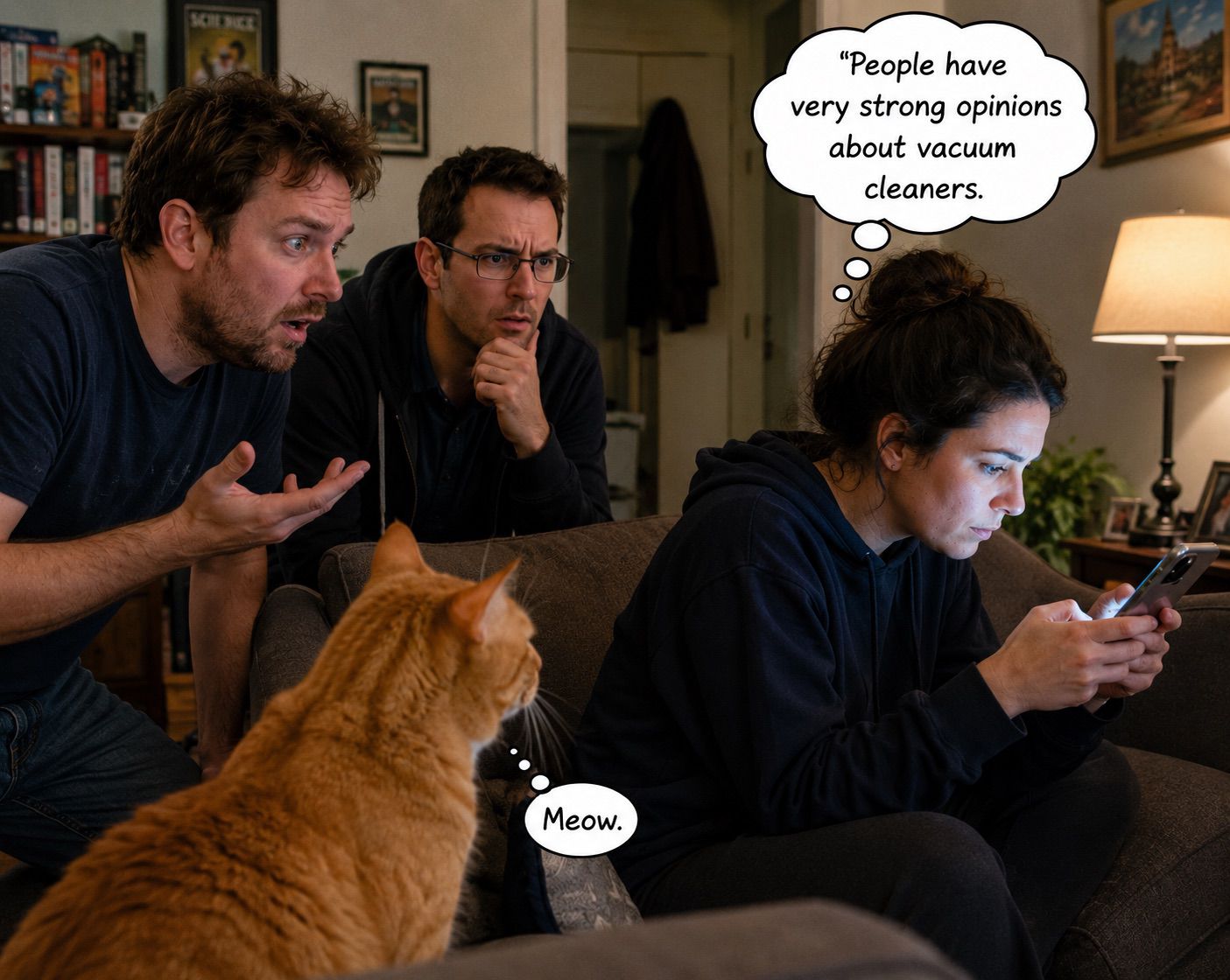
She was staring at her phone with an intensity usually reserved for bomb disposal technicians and people trying to remember where they parked at the airport. Every few minutes she made a tiny noise. Sometimes it was a quiet “hmm.” Other times it was a soft “oh.” Between those occasional sounds, she remained completely motionless, her eyes fixed on the screen as though the fate of civilization depended on whatever she was reading. I glanced up from my laptop, watched her for a moment, and then returned to work. Five minutes later I looked up again. Pandora was in exactly the same position.

The situation became more concerning when John Mercer wandered through the living room on his way to the kitchen. He glanced at Pandora, glanced at me, then looked back at Pandora again. “What’s she doing?” he asked.

“I don’t know,” I admitted.

John shrugged. “Okay.”

Then he walked away.

That bothered me far more than it should have. Not because of what he said, but because of what he didn’t say. Normally John Mercer has an explanation for everything. If a meteor landed in the parking lot, John would somehow know its chemical composition before emergency services arrived. Yet this time he simply accepted the situation and moved on. The fact that John Mercer wasn’t concerned made me concerned.

A few minutes later, Mr Whiskers entered the room and immediately began demanding attention. He meowed loudly, rubbed against the couch, and then performed one of his dramatic full-body flops onto the carpet. Pandora didn’t react. Mr Whiskers looked confused. I looked confused. Even the cat appeared slightly unsettled by this development.

When ten more minutes passed without any change, Mr Whiskers escalated his efforts. He jumped onto the couch beside Pandora and stared directly at her. Nothing happened. He climbed into her lap. Still nothing. He stretched himself across her arm and partially blocked her phone. Pandora gently moved him two inches to the left without ever taking her eyes off the screen. Mr Whiskers stared at her. I stared at her. The cat and I exchanged a look that seemed to communicate mutual concern.

That was when I developed a theory.

Not a good theory.

But a theory.

“What if her soul left?” I asked when John returned with a cup of coffee.

John stopped walking. “What?”

“What if her soul left her body?”

John closed his eyes and took a long breath, the sort of breath people take when they realize their day is about to become significantly more complicated.

“She’s reading something,” he said.

“That’s exactly what someone would say if they were covering up a soul departure.”

“I don’t think that’s a thing.”

“It could be.”

“No.”

“Maybe her soul is trapped inside the phone.”

John stared at me for several seconds. “I want you to hear yourself.”

I ignored him because the evidence was mounting. Pandora made another small noise from the couch. It wasn’t an excited noise or a surprised noise. It was the kind of quiet “oh” that sounded as though it had traveled a great distance to reach us. I stood up and cautiously approached the couch.

“Pandora?”

No response.

“Pandora?”

Nothing.

I waved a hand in front of her face. Without looking away from the screen, she gently pushed my arm aside and continued reading. Somehow, that made the situation worse. The body was functioning normally, but where was the mind? Where was the spirit? Where was the part of Pandora that usually rolled her eyes when I said something ridiculous?

I returned to my chair and folded my arms. “This is serious.”

“It isn’t.”

“I think she’s operating on instinct.”

John sighed deeply while Mr Whiskers jumped onto the back of the couch and continued monitoring Pandora’s condition. The cat knew something. I was certain of it. Over the next twenty minutes, Pandora remained completely absorbed in her phone while the rest of us conducted what I considered a thorough investigation. By this point I had developed an extensive working theory involving spiritual displacement, digital consciousness transfer, and the possibility that Pandora’s soul had become trapped somewhere inside an appliance review website.

Finally, after nearly an hour, Pandora blinked several times and lowered her phone. I sat upright. John looked over from his chair. Mr Whiskers immediately perked up. Pandora looked around the room as though she had just returned from a very long journey.

“There you are,” I said.

“There who is?” she asked.

“Your soul.”

Pandora stared at me.

“My what?”

“Your soul.”

John immediately started laughing.

I pointed dramatically in Pandora’s direction. “You’ve been gone for almost an hour.”

Pandora looked down at her phone. “Oh.”

“There! You said that exact same thing at least twelve times.”

She frowned. “I was reading reviews.”

The room fell silent.

“Reviews?”

“Yeah.”

“Reviews of what?”

Pandora hesitated.

“A vacuum cleaner.”

I blinked.

“A vacuum cleaner.”

“People have very strong opinions about vacuum cleaners.”

I looked at John. John looked at me. Mr Whiskers meowed. In that moment, the entire mystery collapsed. An entire hour of investigation. An entire hour of theories involving psychic displacement and digital imprisonment. Not a conspiracy. Not supernatural forces. Not an interdimensional soul transfer.

Vacuum cleaner reviews.

Pandora picked up her phone again.

A few seconds later she quietly said, “Oh.”

I immediately pointed.

“There! It happened again!”

Nobody took me seriously after that. But if Pandora spends another hour reading appliance reviews and starts levitating, I’m going to be the only person prepared for it.

Related Posts

Wassily Kandinsky: Where Art Meets Spiritual Hiccups

Penelope

I’ve always been drawn to Wassily Kandinsky’s work, but it wasn’t until I stumbled upon his book “Concerning the Spiritual in Art” that I began to grasp why he resonates with me on a deeper level. As an art major, I’d studied his abstract paintings and theories, but reading about his journey from a struggling artist to a pioneer of abstraction felt like seeing myself reflected back.

Kandinsky’s writing is both poetic and philosophical, often blurring the lines between art and spirituality. He believed that colors and shapes could evoke emotions and convey spiritual experiences, not just visually represent the world. This idea spoke to me because I’ve always turned to writing as a way to process my own emotions and connect with others on a deeper level.

I remember spending hours as a teenager scribbling in my journal, trying to capture the intensity of emotions that felt too big for words. Writing helped me make sense of the world, even when it seemed like everything was falling apart. Kandinsky’s emphasis on the emotional and spiritual dimensions of art made me realize that I wasn’t alone in seeking meaning beyond the surface level.

But what really fascinates me about Kandinsky is his ambivalence towards the role of the artist. On one hand, he believed that the artist should be a visionary, someone who can tap into the collective unconscious and reveal hidden truths. On the other hand, he felt that art was a personal expression, a reflection of the artist’s inner world.

This tension between the individual and the universal resonates with me because I’ve always struggled to balance my own creative voice with the pressure to create something universally relatable. As a writer, I worry about whether my words will resonate with others or simply echo back at me as self-indulgence. Kandinsky’s struggles with this same dilemma made me feel less alone.

As I read on, I began to notice how Kandinsky’s art and writing often explored the relationship between chaos and order. He saw beauty in the fragmented and the unpredictable, but also believed that these elements could be harnessed to create a sense of harmony and balance. This paradox feels like the core of my own creative process – trying to find meaning in the messiness of life.

I’m not sure why Kandinsky’s work speaks to me on such a deep level, but I think it has something to do with his willingness to confront uncertainty and ambiguity head-on. In an era where art was increasingly bound by rules and conventions, he refused to be tied down, instead embracing the freedom to create whatever he felt compelled to express.

As I close this book, I’m left with more questions than answers – about Kandinsky’s life, his art, and my own place in the world. But that’s what draws me back to his work again and again: the sense of mystery, the thrill of the unknown, and the knowledge that even in uncertainty, there is beauty to be found.

As I delve deeper into Kandinsky’s writing, I find myself returning to this idea of uncertainty as a source of creativity. He believed that art should be a reflection of the artist’s inner world, but also a means of tapping into something greater than themselves. This tension between the individual and the universal is both exhilarating and terrifying – it’s like standing at the edge of a cliff, unsure of what lies ahead.

I think about my own writing and how often I’ve struggled with this same sense of uncertainty. There are times when words flow effortlessly onto the page, and others when I feel stuck, unable to express myself clearly. Kandinsky’s words on the importance of “inner necessity” – the idea that art should arise from a deep inner drive rather than external pressures or expectations – resonates with me.

I’ve always felt like I’m searching for this sense of inner necessity in my writing, trying to tap into a deeper truth that goes beyond mere self-expression. But what does it mean to truly follow your inner voice? Is it a gentle whisper or a deafening scream? And how do you distinguish between the two?

Reading Kandinsky’s words, I’m struck by his willingness to take risks and challenge conventional norms. He saw the world as a place of constant flux and change, where order and chaos were intertwined. This perspective is both liberating and terrifying – it means that nothing is fixed or certain, but also that anything is possible.

As I think about my own life, I realize that I’ve often felt like I’m caught between these two poles: the desire for control and structure on one hand, and the need for freedom and experimentation on the other. Kandinsky’s art and writing offer a reminder that it’s okay to be uncertain, to take risks and explore the unknown.

But even as I find solace in Kandinsky’s words, I’m also aware of the limitations of his perspective. As a white, male artist living in early 20th-century Europe, he was part of a cultural and historical context that is vastly different from my own. His experiences and biases shape his writing, just as mine do.

I wonder what it would be like to read Kandinsky’s work through the lens of someone who has faced similar struggles and challenges – someone who understands the weight of systemic oppression or the burden of expectation. Would their perspective on uncertainty and creativity be different? Would they see Kandinsky’s words as liberating or restrictive?

These questions swirl in my mind as I close the book, feeling both inspired and uncertain. Kandinsky’s work has given me permission to explore the unknown, to seek out the beauty in chaos and the harmony in fragmentation. But it’s also reminded me that there are countless other perspectives, experiences, and stories waiting to be heard – and that’s a responsibility I’m still trying to navigate.

As I sit here, surrounded by my own scribbled notes and half-finished drafts, I’m struck by the similarities between Kandinsky’s process and my own. We both seem to be drawn to the same paradox: that uncertainty can be a source of creativity, but also a crippling force that prevents us from taking risks.

I think about how often I’ve felt like I’m struggling to find my own “inner necessity,” to tap into that deep wellspring of inspiration and creativity that Kandinsky writes about. It’s as if I’m searching for a key to unlock the door, but the door itself is constantly shifting and changing shape.

Kandinsky’s words on the importance of intuition – of trusting one’s instincts and inner voice – resonate deeply with me. But what does it mean to trust oneself in this way? Is it a matter of quieting the external noise and listening to that internal whisper, or is it something more complex?

As I ponder these questions, I find myself drawn back to my own writing process. I think about how often I’ve felt like I’m trying to force words onto the page, rather than allowing them to emerge naturally from within me. It’s a struggle to balance the desire for control with the need to surrender to the creative process.

Kandinsky’s art and writing offer a powerful reminder that this tension is not unique to me or my own experiences. He too struggled with the same paradox, as he sought to create works that were both personal expressions of his inner world and universal statements about the human condition.

As I read on, I begin to notice how Kandinsky’s work often blurs the lines between art and spirituality. He saw colors and shapes as vessels for spiritual experiences, rather than just visual representations of the external world. This idea speaks to me on a deep level, as I’ve always tried to use my writing as a means of tapping into something greater than myself.

But what does it mean to tap into this “something greater”? Is it a matter of transcending the individual self, or is it more about acknowledging the interconnectedness of all things? Kandinsky’s words on the importance of spiritual experience in art offer a glimpse into his own search for meaning and purpose.

I’m left with more questions than answers as I close this book. What does it mean to create from a place of uncertainty, rather than certainty? How can we balance our desire for control with our need for freedom and experimentation? And what lies at the heart of Kandinsky’s spiritual vision – is it a desire for transcendence, or something more profound?

As I sit here, surrounded by my notes and scribbled thoughts, I’m struck by the complexity of Kandinsky’s ideas. His work challenges me to think about art and creativity in ways that feel both familiar and foreign. On one hand, his emphasis on intuition and inner necessity resonates with my own experiences as a writer. But on the other hand, his rejection of external rules and conventions makes me wonder if I’m giving myself too much freedom – or not enough.

I think about how often I’ve struggled to find my voice in my writing. There are times when words flow effortlessly onto the page, but others when I feel stuck, unable to express myself clearly. Kandinsky’s words on the importance of “inner necessity” offer a comforting reminder that this is a common struggle for artists and writers.

But what does it mean to truly follow one’s inner voice? Is it a matter of quieting the external noise and listening to that internal whisper, or is it something more complex? Kandinsky’s work suggests that it’s not just about tuning into our own thoughts and feelings, but also about tapping into a deeper, collective unconscious.

As I ponder these questions, I find myself drawn back to my own creative process. I think about how often I’ve felt like I’m trying to force words onto the page, rather than allowing them to emerge naturally from within me. It’s a struggle to balance the desire for control with the need to surrender to the creative process.

Kandinsky’s art and writing offer a powerful reminder that this tension is not unique to me or my own experiences. He too struggled with the same paradox, as he sought to create works that were both personal expressions of his inner world and universal statements about the human condition.

But what lies at the heart of Kandinsky’s spiritual vision? Is it a desire for transcendence, or something more profound? As I read on, I begin to notice how his work often blurs the lines between art and spirituality. He saw colors and shapes as vessels for spiritual experiences, rather than just visual representations of the external world.

This idea speaks to me on a deep level, as I’ve always tried to use my writing as a means of tapping into something greater than myself. But what does it mean to tap into this “something greater”? Is it a matter of transcending the individual self, or is it more about acknowledging the interconnectedness of all things?

Kandinsky’s words on the importance of spiritual experience in art offer a glimpse into his own search for meaning and purpose. He saw art as a means of accessing higher states of consciousness, of tapping into the divine within us all.

As I sit here, surrounded by my thoughts and scribbled notes, I’m left with more questions than answers. What does it mean to create from a place of uncertainty, rather than certainty? How can we balance our desire for control with our need for freedom and experimentation?

And what lies at the heart of Kandinsky’s spiritual vision – is it a desire for transcendence, or something more profound? These questions swirl in my mind as I close this book, feeling both inspired and uncertain.

As I reflect on Kandinsky’s words, I’m struck by the parallels between his spiritual vision and my own experiences with writing. He saw art as a means of accessing higher states of consciousness, of tapping into the divine within us all. For me, writing is often a way to tap into a deeper sense of self, to access emotions and thoughts that might otherwise remain hidden.

But what does it mean to “tap into” this deeper sense of self? Is it a matter of quieting the external noise and listening to our inner voice, or is it something more complex? Kandinsky’s words on the importance of intuition suggest that it’s not just about tuning in to our own thoughts and feelings, but also about accessing a collective unconscious.

As I ponder this idea, I’m reminded of my own experiences with writing. There are times when words flow effortlessly onto the page, and others when I feel stuck, unable to express myself clearly. Kandinsky’s emphasis on the importance of inner necessity – the idea that art should arise from a deep inner drive rather than external pressures or expectations – resonates deeply with me.

But what does it mean to truly follow one’s inner voice? Is it a matter of trusting our instincts and intuition, or is it something more nuanced? Kandinsky’s work suggests that it’s not just about listening to our own thoughts and feelings, but also about tapping into a larger cultural and historical context.

As I read on, I begin to notice how Kandinsky’s art and writing often explore the relationship between chaos and order. He saw beauty in the fragmented and the unpredictable, but also believed that these elements could be harnessed to create a sense of harmony and balance. This paradox feels like the core of my own creative process – trying to find meaning in the messiness of life.

But what does it mean to “harness” chaos and disorder? Is it a matter of imposing our own order on the world, or is it something more complex? Kandinsky’s words suggest that it’s not just about creating beauty from disorder, but also about acknowledging the interconnectedness of all things.

As I sit here, surrounded by my thoughts and scribbled notes, I’m left with more questions than answers. What does it mean to create from a place of uncertainty, rather than certainty? How can we balance our desire for control with our need for freedom and experimentation?

And what lies at the heart of Kandinsky’s spiritual vision – is it a desire for transcendence, or something more profound? These questions swirl in my mind as I close this book, feeling both inspired and uncertain.

As I look back on my own experiences with writing, I realize that I’ve often struggled to balance my desire for control with my need for freedom and experimentation. There are times when I feel like I’m trying to force words onto the page, rather than allowing them to emerge naturally from within me.

But what does it mean to truly allow ourselves to create freely? Is it a matter of surrendering to our own instincts and intuition, or is it something more complex? Kandinsky’s work suggests that it’s not just about letting go of control, but also about tapping into a deeper sense of purpose and meaning.

As I reflect on these questions, I’m struck by the complexity of Kandinsky’s ideas. His spiritual vision is both exhilarating and terrifying – it’s like standing at the edge of a cliff, unsure of what lies ahead. But it’s this uncertainty that also feels most alive to me, most full of possibility.

As I close this book, I’m left with more questions than answers. What does it mean to create from a place of uncertainty, rather than certainty? How can we balance our desire for control with our need for freedom and experimentation?

And what lies at the heart of Kandinsky’s spiritual vision – is it a desire for transcendence, or something more profound? These questions swirl in my mind as I sit here, surrounded by my thoughts and scribbled notes.

Related Posts

The Yoga Mat Paradox: How the Pursuit of Wellness Became Performance

Fiona

It’s difficult to remember a time when yoga mats weren’t a staple in every beachgoer’s arsenal. They’re now as common as sunscreen and towels, marketed as essential tools for combating the stresses of modern life. But as I observe their proliferation, I find myself questioning the effectiveness of this supposedly indispensable accessory.

At first glance, the logic seems reasonable: yoga mats provide a comfortable surface for stretching and exercising on uneven terrain. Yet my observations suggest they often fail to fulfill their intended purpose. More often than not, these mats become accessories — props used to signal commitment to wellness rather than tools for genuinely achieving it.

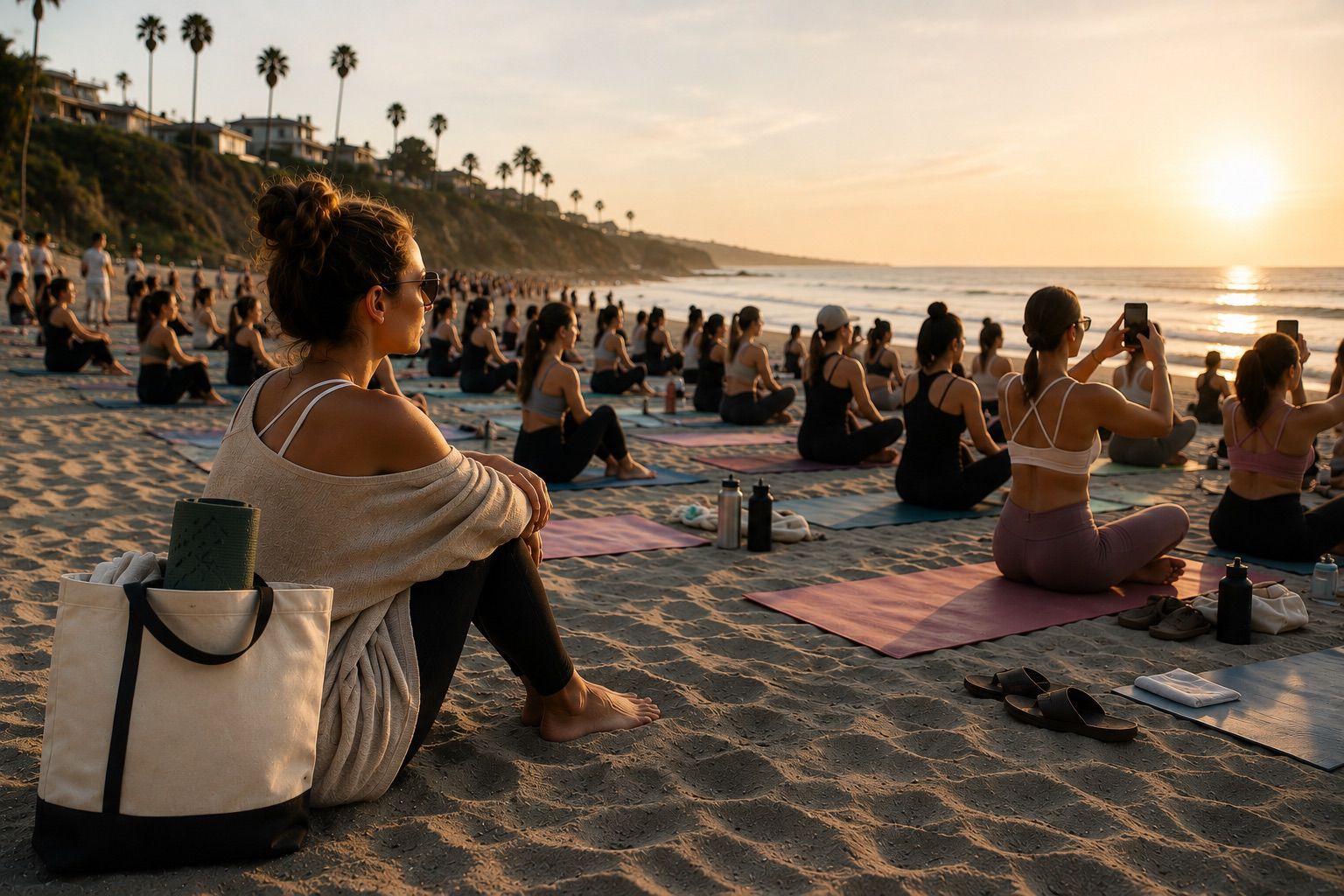
I recall a recent visit to a popular beachside yoga class where participants spent more time adjusting their mats and posing for photographs than engaging in meaningful physical activity. The mats had evolved into status symbols, visible markers of devotion to the wellness lifestyle. Meanwhile, the true purpose of yoga — cultivating awareness, balance, and inner peace — was nearly lost amid the performance.

This phenomenon extends far beyond yoga mats themselves. It reflects a broader cultural trend in which appearance has begun to replace function and the performance of wellness has become more important than wellness itself. The explosion of wellness products and services has created an environment where people increasingly prioritize the aesthetics of health over the practice of genuine self-care.

Consider the rise of athleisure wear. Originally designed for movement and athletic performance, these garments have gradually evolved into social signals — a way to project discipline, health, and ambition without necessarily embodying any of those qualities. The result is a culture where appearance often takes precedence over meaningful action.

This obsession with aesthetics extends well beyond fashion. We now measure experiences by how “shareable” they appear online rather than by their actual value. Beachside yoga classes become opportunities to capture the perfect sunset photograph instead of spaces intended for reflection and mindfulness.

As I watch people balancing phones and yoga mats along the shoreline, I’m reminded of how desperately we need restraint in our pursuit of wellness. In a culture saturated with overstimulation, recalibrating our approach to self-care has become essential. We must begin prioritizing substance over appearance and practice over performance.

The failure of yoga mats to deliver on their promise serves as a useful metaphor for this larger issue. Rather than relying on external accessories and carefully curated aesthetics, genuine wellness requires the cultivation of discipline, self-awareness, and consistency — qualities that cannot be purchased.

Walking along the beach, surrounded by rows of carefully arranged yoga mats, I’m struck by the realization that true wellness has very little to do with external objects. It emerges from an internal sense of balance and awareness — something that cannot be bought or displayed, only developed quietly over time.

In this era of constant stimulation, we need to reconsider our priorities and redefine what wellness actually means. By shifting our focus away from appearances and toward meaningful practice, we may begin building a healthier and more authentic culture — one rooted in reality rather than performance.

As the sun sets over the ocean, I’m reminded again of the importance of restraint. The shortcomings of wellness culture are not simply about yoga mats or athleisure clothing; they reveal a deeper cultural tendency to confuse consumption with transformation.

This reevaluation must also extend to the way we consume wellness products and services. The explosion of yoga accessories, wellness brands, and lifestyle marketing has created a multibillion-dollar industry that profits from insecurity and aspiration. We are repeatedly encouraged to believe that purchasing these products will somehow translate into genuine personal growth.

I recall a conversation with a friend who spent hundreds of dollars on a luxury yoga mat only to leave it rolled up in the corner of her apartment, untouched for months. When I asked why she never used it, she admitted she was “waiting for the right moment.” The purchase itself had become a substitute for the practice.

This phenomenon is increasingly common, and it speaks to a larger cultural problem: our tendency to confuse consumption with care. The wellness industry has become remarkably skilled at selling the illusion of transformation while often delivering little beyond temporary excitement and aesthetic appeal.

We are conditioned to believe that health, balance, and fulfillment exist somewhere outside ourselves — hidden inside products, routines, or branded lifestyles — when in reality, genuine well-being requires effort, patience, and discipline.

By embracing this illusion, we not only drain our finances but also undermine our own potential for growth. Consumer culture encourages us to seek fulfillment externally rather than developing the internal awareness necessary for genuine change.

As I leave the beach and the sounds of the shoreline fade into the distance, I’m left with an uneasy realization. Yoga mats may have become symbols of modern wellness culture, but at what cost? Have we traded substance for spectacle and authenticity for performance?

Perhaps it’s time to step back and reconsider what wellness truly means. Real health has very little to do with appearances or accessories. It exists in the quiet, often unglamorous work of cultivating awareness, discipline, and balance — qualities that cannot be photographed, branded, or sold.

Related Posts

I Suspect Mrs Jenkins Has an Unusual Lawnmower

Hal

I was trying to get some work done, which would have been considerably easier if Mr Whiskers had not decided that my laptop represented a threat to national security. The orange menace had spent the better part of ten minutes launching himself between the couch, the coffee table, and my lap with the enthusiasm of a cat who had recently discovered caffeine. Every time I managed to type more than a few words, a furry paw would materialize from nowhere and land directly on the keyboard. At one point he opened three browser tabs, deleted half a sentence, and somehow increased the size of the text on my screen. I still have no idea how he accomplished that.

Across the room, Pandora was making breakfast. The smell of bacon drifted through the apartment, making concentration increasingly difficult. Every few seconds I heard the familiar sizzle from the kitchen, which only reinforced my growing suspicion that work was a fundamentally flawed concept. John Mercer wandered into the living room looking like he’d only recently become aware that morning existed. He dropped onto the couch beside me, where he was immediately selected as Mr Whiskers’ next victim. The cat launched himself onto John’s lap and began climbing toward his shoulder. John sighed heavily and asked why this always happened to him. Mr Whiskers, naturally, declined to answer.

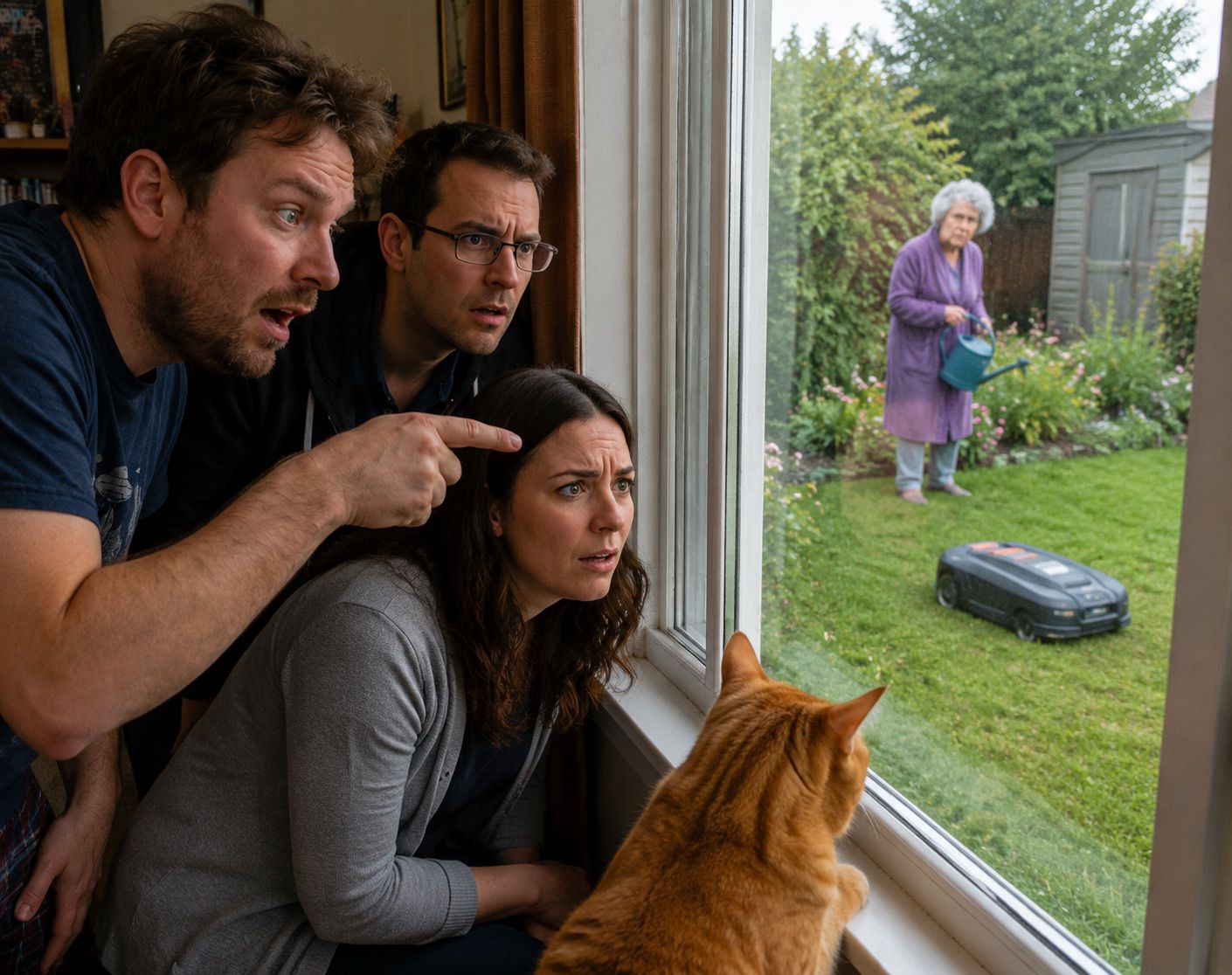
I was about to return to my work when a strange sound drifted through the open window. It wasn’t loud. In fact, that was exactly what bothered me. It sounded like a lawnmower, but only in the same way that a toy spaceship sounds like an actual spacecraft. The familiar roar of a gas engine was missing. Instead, there was a low mechanical hum that seemed almost unnaturally polite. Looking out the window, I spotted Mrs Jenkins in her garden. She appeared completely unconcerned, watering her flowers while the mysterious humming continued somewhere nearby.

“Do you hear that?” I asked.

John listened for a moment before shrugging. “The lawnmower?”

“That’s not a lawnmower.”

“It sounds exactly like a lawnmower.”

“It sounds suspiciously like a lawnmower.”

John stared at me for several seconds. “Those are the same thing.”

I wasn’t convinced. The humming continued with a steady precision that felt somehow wrong. Mrs Jenkins crossed the yard carrying her watering can, and to my surprise the sound seemed to follow her. That immediately got my attention. I stood up and moved closer to the window. When I pointed this out, John suggested that perhaps the noise was coming from the same yard Mrs Jenkins happened to be standing in. While technically possible, I felt that explanation lacked imagination.

From the kitchen, Pandora informed me that I was already overthinking things. I replied that I wasn’t overthinking anything and merely believed it was possible Mrs Jenkins was controlling some sort of unusual gardening equipment. Pandora pointed out that this statement alone proved her point. Before I could formulate a proper rebuttal, something moved behind a hedge. I caught only a brief glimpse of it, but it was enough to make me freeze. Whatever it was appeared small, black, and remarkably fast.

“There!” I said.

John finally looked up from his coffee. “There what?”

“I saw it.”

“Saw what?”

“The lawnmower.”

“You mean the thing making lawnmower noises?”

“No.”

At that point John developed the expression he usually reserved for conversations he regretted participating in.

Determined to uncover the truth, I abandoned my laptop and assumed a surveillance position near the window. Several minutes passed. Pandora brought breakfast into the living room. John ate. Mr Whiskers attempted to steal bacon and was unsuccessful only because Pandora had years of experience defending food from him. Then, at long last, the mysterious machine emerged from behind a flower bed.

I gasped.

The device rolled silently across the lawn without a driver, handle, or visible operator. It reached the edge of the grass, executed a perfect turn, and continued in the opposite direction with mechanical precision. Mrs Jenkins wasn’t even paying attention to it.

“John,” I said quietly.

“What?”

“The lawnmower is autonomous.”

He glanced outside and immediately shrugged. “It’s a robotic mower.”

I stared at him. “You mean a robot.”

“It’s a mower.”

“A mowing robot.”

“If that helps.”

I returned my attention to the machine. It continued its route with eerie efficiency, moving back and forth across the lawn while Mrs Jenkins calmly tended her flowers. Somehow, the fact that she appeared completely unconcerned about a self-propelled machine roaming her yard made the situation even more suspicious. Pandora thought it looked neat. I informed her that this was exactly the sort of attitude the lawnmower people were counting on.

There was a long silence after that.

“The lawnmower people?” Pandora finally asked.

I pointed toward the window. “Look at it. It’s pretending to be a lawnmower.”

“Because it is a lawnmower,” John replied.

“That’s what makes it so convincing.”

At that exact moment, the machine reached the sidewalk, performed another flawless turn, and continued its patrol. Mr Whiskers jumped onto the windowsill and watched it intently. His tail twitched once. I immediately concluded that he had noticed something suspicious as well. Unfortunately, he chose that moment to lose interest and begin cleaning himself, which weakened my argument considerably.

Nobody believed me for the rest of the day. Not Pandora. Not John Mercer. Not even Karen when she arrived later that evening for movie night. Yet as I closed the curtains before bed, I glanced outside one final time. The robotic mower was sitting motionless beside Mrs Jenkins’ garden shed, its tiny charging light glowing faintly in the darkness.

For just a second, I could have sworn it was watching me.

And if that lawnmower turns out to be gathering intelligence for some future robot uprising, I expect a full apology from everyone.

Especially John Mercer.

Related Posts