Latest Articles

The Tragedy and Terror of the Nanjing Massacre

Elias Rowen

The city of Nanjing moved like a living organism on the morning of December 13, 1937—a place where street vendors shouted over one another, students hurried to classes, and families prepared meals as though the world outside the city walls was not collapsing. But beneath this surface of everyday life, anxiety churned. For weeks, news had trickled in of the Imperial Japanese Army moving closer, cutting through Chinese resistance with terrifying efficiency. Rumors of brutality accompanied every report—stories dismissed by many as exaggerations, because the alternative was too horrifying to accept.

When Japanese forces finally breached the city walls, the truth proved far worse than rumor.

Chinese Nationalist forces, exhausted and outnumbered, had fought furiously to hold back the Japanese advance. General Xue Yue had fortified the city as best he could, but Nanjing was simply not prepared to withstand the might of an army fueled by imperial ambition and conditioned for total war. Once the defenses collapsed, Japanese troops poured into the city in a flood of steel and fury. What followed would become one of the darkest chapters in human history.

The initial hours of chaos gave way to something far more organized and sinister. Soldiers began scouring the streets, dragging civilians from their homes and businesses. One street might erupt in gunfire; another might echo with screams; another might be eerily silent except for the sound of boots and bayonets tapping against concrete. Families huddled in fear, hoping their doors would not be the next ones kicked open.

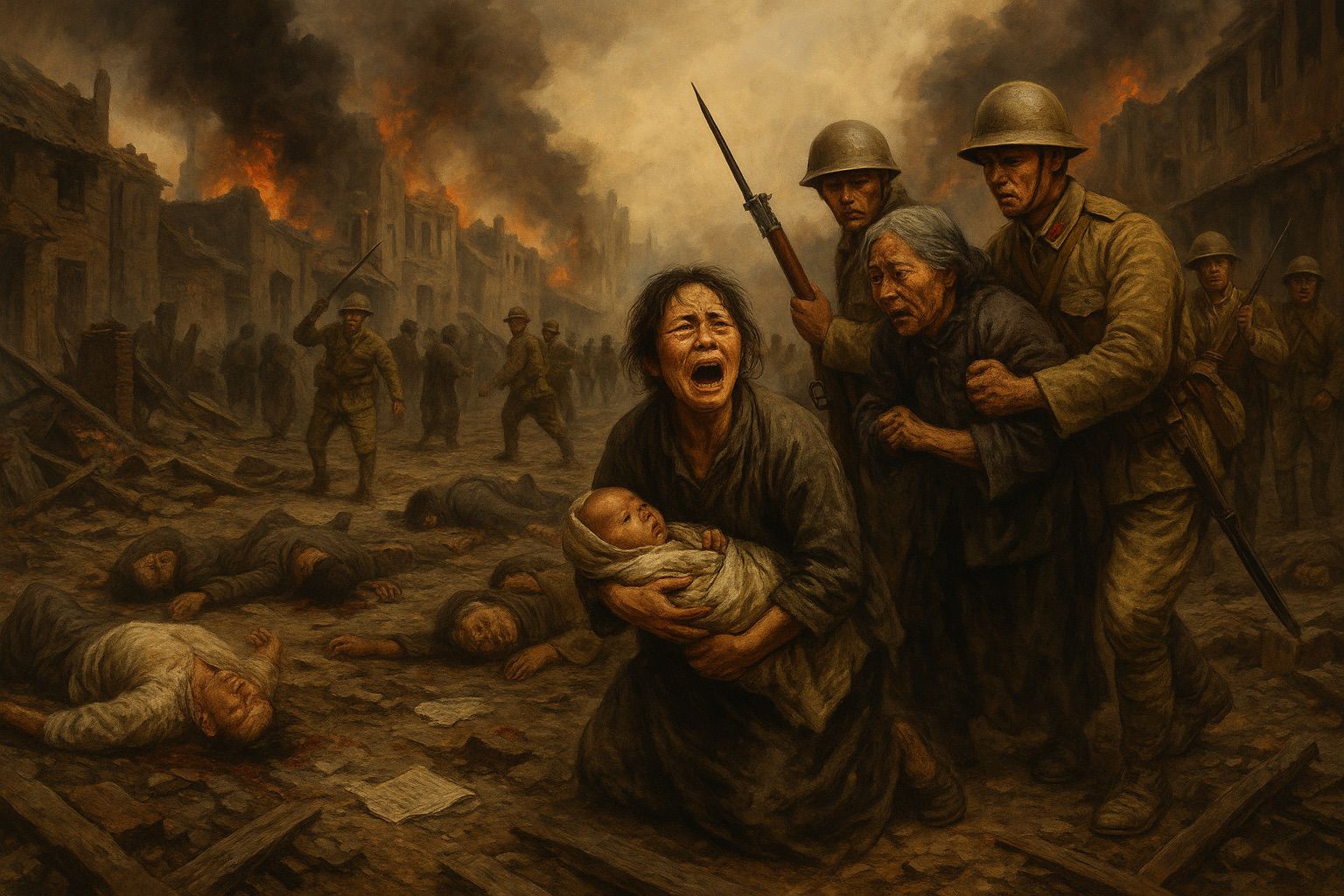
The violence escalated with shocking speed. Japanese soldiers, acting not as individuals but as a collective instrument of terror, unleashed a campaign of systematic brutality. Women—some as young as eight, others well into their seventies—were raped in staggering numbers. Men suspected of being former soldiers or resisters were rounded up and marched to the edges of the city, where they were gunned down en masse or used for bayonet practice. Prisoners of war were stripped of their uniforms, marched into open fields, and slaughtered without mercy.

Eyewitnesses, including missionaries and foreign officials, kept diaries describing scenes that defy comprehension. Bodies piled along the riverbank. Infants tossed into the air and caught on bayonets. Soldiers laughing as they set fire to homes with families still inside. It was not chaos—it was cruelty refined into ritual.

Panic spread like wildfire. Thousands of civilians attempted to flee, but with Japanese troops encircling the city, escape became nearly impossible. Those who remained sought shelter anywhere they could—in churches, in abandoned buildings, or in designated “safety zones” set up by a handful of brave foreigners, including German businessman John Rabe and American surgeon Robert Wilson. These individuals risked their lives daily, negotiating with Japanese officers to protect the civilians under their care. Without their intervention, the death toll might have been even more unimaginable.

As December wore on, the violence did not abate. Homes were ransacked. Shops were looted. Entire neighborhoods were reduced to rubble. Civilians were forced into makeshift labor camps where starvation, disease, and abuse became routine. Japanese soldiers operated with near-total freedom, as if they had been instructed that everything within the city—lives, bodies, property—was theirs to take.

Reports and documentation later revealed that this was not merely a breakdown of military discipline. Many Japanese officers condoned, encouraged, or directly participated in the violence. Some soldiers kept scorecards of how many civilians they had killed. Others took photographs, which would later serve as grim evidence of the horrors inflicted.

By the end of the massacre, estimates suggest that between 150,000 and 300,000 people were dead—some historians argue even higher. The exact number is impossible to determine; the destruction was too total, the records too incomplete. But numbers alone cannot capture the scope of suffering endured by the people of Nanjing.

International reaction, when it finally came, was slow and hesitant. Reports from survivors and foreign observers did reach the outside world, but political calculations often outweighed moral outrage. Japan was an important geopolitical power, and many governments were reluctant to condemn it publicly. Some newspapers downplayed the reports; others ignored them altogether. The silence became a second betrayal.

In the aftermath of the massacre, survivors carried scars that would never fully heal. Entire families had been wiped out. Children were left orphaned. Women bore trauma that would shape the rest of their lives. The cultural, emotional, and psychological wounds endured by the people of Nanjing did not fade even after Japan’s surrender in 1945.

Justice, too, proved elusive. Though some Japanese commanders were eventually tried for war crimes, many escaped accountability entirely. Japan itself struggled—and still struggles—to fully acknowledge the extent of the massacre, creating decades of tension between China and Japan. For the victims and their descendants, the fight for recognition became a continuation of their suffering.

Yet amid the darkness, the story of Nanjing also contains moments of profound human courage. Foreign nationals who could have fled chose to stay, risking their lives to shield strangers. Some Japanese soldiers defied orders to protect civilians. Survivors helped one another, shared food, and sheltered orphans despite their own grief and fear.

History teaches us that human beings are capable of astonishing cruelty—but also astonishing resilience.

The Nanjing Massacre remains a stark reminder of what happens when hatred is weaponized, when militarism goes unchecked, and when one nation believes its people are entitled to dominate another. It stands as a warning that wartime atrocities do not occur in a vacuum; they are allowed to happen when the world turns its gaze away.

To remember Nanjing is not merely to recount a tragedy. It is to recommit ourselves to the principles of humanity, dignity, and justice. It is to listen to the voices of those who suffered and ensure their stories are not forgotten. It is to acknowledge that peace is fragile—and must be protected with vigilance.

Decades later, the survivors of Nanjing are fewer each year. But their memories endure, passed from generation to generation as both a lament and a lesson. The massacre is not just a chapter in Chinese history—it is a chapter in human history, a testament to the depths to which humanity can sink, and a call to rise above it.
Related Posts

The Day Democracy Paused: Bush v. Gore and the Most Controversial Election in Modern U.S. History

Elias Rowen

The 2000 United States presidential election remains one of the most polarizing political events in modern American history, a moment when the nation found itself suspended in uncertainty, divided not only by ideology but by the mechanics of democracy itself. For many Americans, the night of November 7 began like any other presidential election night: a flurry of electoral maps, pundit predictions, and partisan hopefulness. Yet as the hours wore on, what initially seemed like a tight but ordinary race between Vice President Al Gore and Texas Governor George W. Bush began twisting into something far more complex, a legal and political storm centered around one unexpected battlefield—the State of Florida.

Florida’s election results were razor-thin, decided by mere hundreds of votes out of more than six million cast. At the stroke of midnight, news networks retracted earlier projections, tempers flared, and election officials braced themselves for a process they had never imagined would be thrust upon them. Hanging chads, butterfly ballots, and punch-card irregularities suddenly became part of the national vocabulary. Every vote mattered—but only if it could be properly counted.

As recounts began, confusion reigned in county offices where exhausted workers scrutinized ballots by hand, holding flimsy punch cards up to the light like archaeologists examining ancient inscriptions. What had started as a simple procedural recount soon devolved into a legal war of attrition, as each campaign tried to seize control of the narrative. The Gore campaign insisted that every voter deserved to have their intention accurately recorded, while the Bush team argued that the continuing recounts threatened chaos and undermined the fairness of the electoral process.

On December 8, 2000, the Florida Supreme Court ordered a statewide manual recount of undervotes—ballots where no presidential choice had been detected by machines. To Gore supporters, this ruling offered the possibility of a narrow but legitimate path to victory. To Bush supporters, it represented what they viewed as judicial activism motivated by partisan loyalty. And to the nation, watching anxiously, it added yet another twist in a saga that seemed increasingly surreal.

Just days later, the U.S. Supreme Court agreed to hear Bush v. Gore—a sign that the conflict had escalated beyond Florida into a constitutional crisis of national consequence. In a country where courts traditionally avoided entangling themselves in political disputes, the fact that the Supreme Court had intervened stunned both legal scholars and ordinary citizens. The stakes were immense: the presidency itself hung in the balance.

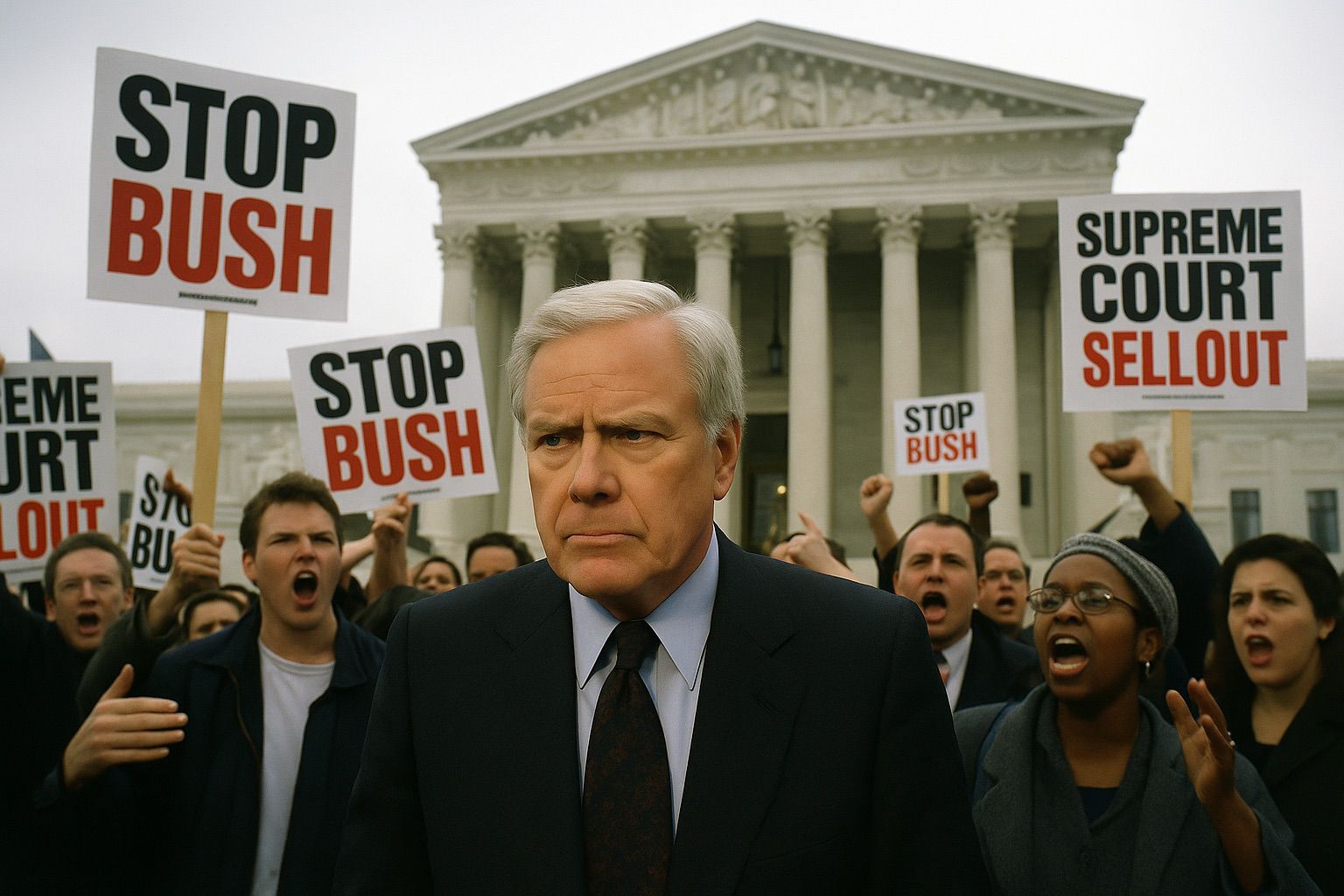
Oral arguments took place on December 11, setting the stage for what would become one of the most scrutinized judicial decisions in American history. Inside the marble chambers of the Court, attorneys battled over questions of equal protection, state authority, and whether time had simply run out for a fair recount. Outside, protesters from both parties gathered, waving signs and chanting, their faces lit by camera crews who broadcast every moment.

On December 12, at approximately 10 p.m., the Court issued its ruling. In a 5–4 decision split along ideological lines, the justices halted the Florida recount, determining that varying standards across counties violated the Equal Protection Clause. With no constitutional way to continue the recount before the deadline, George W. Bush effectively became the next President of the United States. Gore conceded the following day, his voice somber yet resolute, emphasizing unity even as millions of Americans felt lingering frustration and disbelief.

For many people, the decision left deep emotional scars. Some saw it as a necessary intervention to preserve electoral order; others believed it was a judicial coup that disrupted the democratic will of the people. Scholars dissected the decision for years, debating whether it had been motivated by legal principle or political preference. What became clear, however, was that public trust in institutions—especially the Supreme Court—had been shaken.

In the months that followed, recounts conducted by newspapers and academic institutions found that the results remained excruciatingly close, with hypothetical outcomes varying depending on the standards used. Yet regardless of these findings, the nation had already moved on, propelled forward by the inauguration of Bush and the beginning of a new political era.

In the shadow of Bush v. Gore, America began reconsidering its electoral processes. Calls for election reform grew louder. New voting technologies were implemented, though not without their own controversies. Voter access, ballot design, recount standards, and election integrity became central political themes for decades to come. Even today, echoes of the 2000 election reverberate through debates about democracy, voting rights, and the responsibilities of the judicial branch.

The 2000 election exposed both the fragility and resilience of American democracy. It showed how a nation of millions could be brought to a standstill by a few hundred votes, and how the machinery of government could withstand enormous pressure while still revealing its flaws. It demonstrated that democracy is not merely a system of rules and procedures, but a living institution that depends on the faith of its citizens.

For those who lived through it, Bush v. Gore remains unforgettable—an election night that lasted for 36 days, a courtroom drama broadcast nationwide, and a reminder that the most powerful democracy in the world is not immune to uncertainty. The legacy of 2000 endures, shaping how Americans view elections, courts, politics, and the delicate balance between law and legitimacy. It is a story not only about ballots and legal briefs, but about the enduring struggle to ensure that every voice matters, even when the path forward is shrouded in doubt.

Related Posts

When the Winds of Freedom Rose: Kenya’s Long Road to Independence

Elias Rowen

Kenya’s struggle for independence was not a moment, nor a single uprising, nor a simple negotiation across a polished British table. It was a decades-long awakening—messy, painful, courageous, and breathtaking in its persistence. By the mid-20th century, the winds of change sweeping across Africa were gathering force, and few places felt that gale more intensely than Kenya. For nearly a century, the British Empire ruled the territory with a grip that grew increasingly strained as Kenyans began to articulate a new, unshakable sentiment: their destiny must belong to them.

In the early 1900s, the British attempted to give the appearance of local participation through the creation of the Legislative Council—a body that, in theory, included African representation. But in practice, it became immediately clear that this was more ceremonial than meaningful. African members had no real authority, no legislative leverage, and no capacity to challenge policies crafted entirely around the interests of the colonial administration and European settlers. Yet even in this carefully controlled chamber, the seeds of political consciousness took root.

The first sparks of organized nationalism appeared in 1921 with the formation of the Young Kikuyu Association. Initiated in Nairobi, the group sought to confront land dispossession, labor inequalities, and the systematic marginalization of Africans. Figures like Harry Thuku stood at the helm of early agitation—young, bold, and unafraid to confront a colonial system that dismissed African grievances as inconvenient noise beneath imperial machinery. Their activism marked the beginning of a political awakening that would intensify with every passing decade.

By 1944, Kenya’s nationalist movement had gained both momentum and vision. That year saw the birth of the Kenya African Union (KAU), and with it the emergence of a leader who would become synonymous with the struggle: Jomo Kenyatta. Articulate, strategic, and deeply committed to reclaiming Kenya’s dignity, Kenyatta transformed the nationalist conversation from reformist appeals into an unmistakable call for full independence. KAU demanded expanded rights, land restitution, and a political system not merely adjusted for Africans—but led by them.

Global winds were shifting as well. After World War II, the British Empire—exhausted financially and burdened by mounting anti-colonial sentiment—faced pressure to loosen its imperial hold. Across Africa and Asia, nationalists were rejecting paternalistic models of governance and asserting their right to self-determination. Kenya, however, remained one of Britain’s most tightly held territories, both agriculturally rich and strategically significant. This made London hesitant, even defensive, in the face of growing demands.

Tensions reached a boiling point in 1952, when a militant movement known as Mau Mau launched an armed resistance largely based in the central highlands. Led symbolically by Field Marshal Dedan Kimathi, the Mau Mau rebellion represented not only political frustration but deep anger over decades of land theft and injustice. The colonial government responded with ferocity: mass detentions, torture, executions, and the establishment of detention camps that would later be compared to concentration camps. Thousands of Kenyans were imprisoned; thousands more were killed.

Yet instead of crushing the struggle, British brutality only highlighted the moral bankruptcy of colonial rule. International observers began questioning Britain’s conduct, while within Kenya, sympathy for nationalist leaders intensified. When Jomo Kenyatta was arrested in 1952 on fabricated charges linking him to Mau Mau leadership, he became a martyr in the eyes of many—proof that Britain would dismantle anyone who demanded freedom.

By the late 1950s, the tide had turned. The cost of suppressing Kenya was rising, international pressure was mounting, and the Kenyan population was increasingly united. In 1960, the British government began drafting a new constitution intended to expand African political participation. It was not enough. Kenyans wanted sovereignty, not constitutional tinkering.

In 1962, the first major elections under the new constitution took place, and Kenyatta’s party, the Kenya African National Union (KANU), emerged victorious. With negotiations accelerating in London and local support swelling at home, the British finally conceded what had become inevitable.

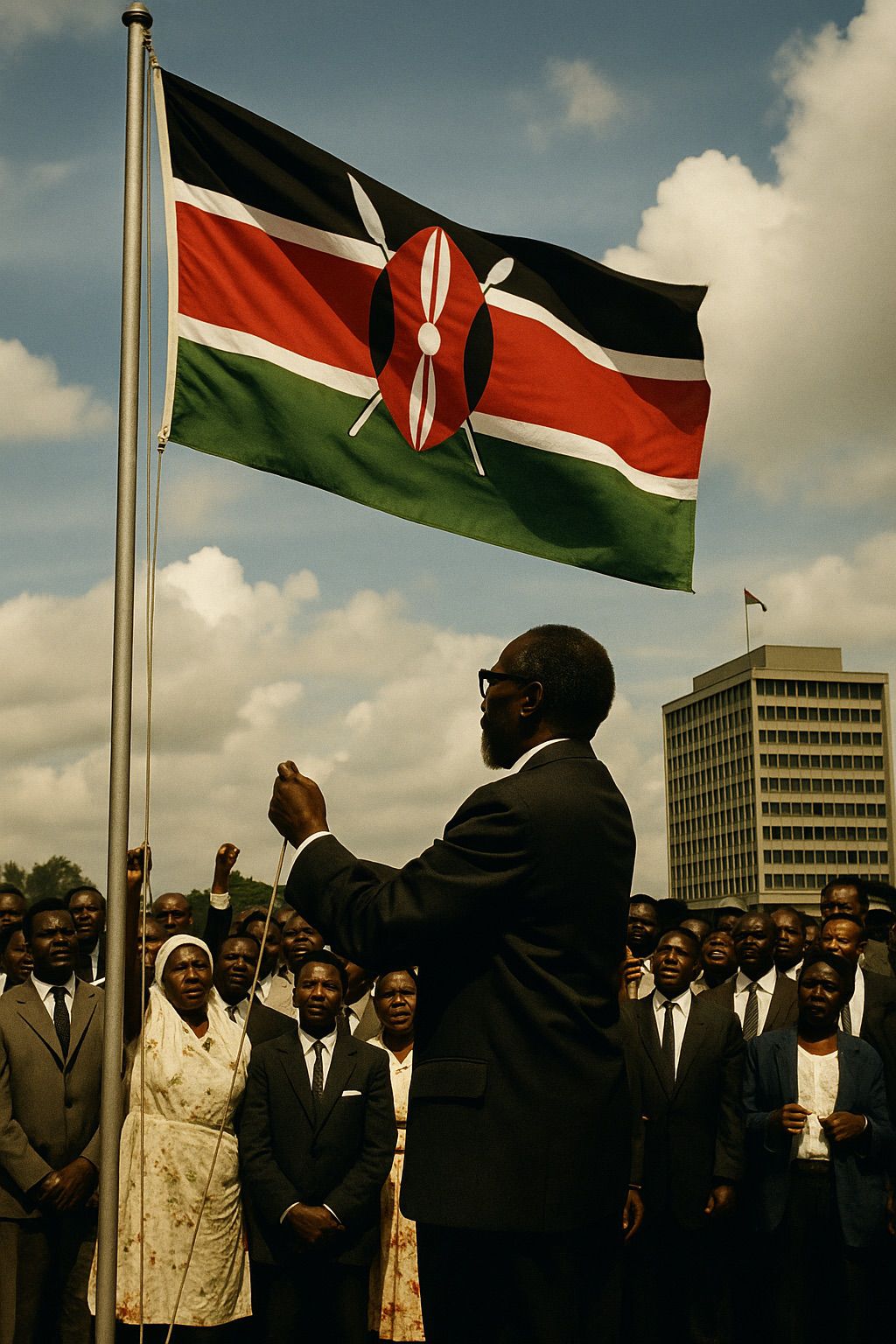
On December 12, 1963, Kenya became an independent nation. Jomo Kenyatta—once imprisoned, once dismissed—raised the new flag as the nation’s first Prime Minister. Crowds filled stadiums, streets, and villages, celebrating the dawn of a country that had been imagined, fought for, and bled for.

But independence did not mean instant transformation. The young nation inherited economic disparities, land inequities, and the lingering shadow of British hierarchy. Yet Kenyatta’s government made meaningful strides: investing in schools, expanding healthcare access, stabilizing the economy, and beginning land resettlement programs that, while imperfect, represented a long-sought return of dignity to displaced communities.

Women, long underestimated in historical narratives, played a critical role in post-independence progress—organizing grassroots movements, mobilizing rural communities, and later entering political and professional leadership roles. Their contributions reflected a broader truth: Kenya’s liberation was never the story of a few great men, but a nation of ordinary people refusing to bow to injustice.

Kenyatta’s death in 1978 and the subsequent rise of Daniel arap Moi began a new, complicated chapter in Kenyan governance. Yet even through authoritarianism, economic struggles, and political turbulence, the spirit ignited during the independence movement remained alive. Kenya continued to evolve, and by the 21st century, it stood as one of Africa’s most influential economies.

Today, Kenya faces new challenges—corruption, inequality, climate stress—but its resilience is rooted in a history of collective courage. Independence was not a gift from Britain; it was the culmination of decades of organization, sacrifice, rebellion, diplomacy, and unbreakable faith in the possibility of freedom.

Kenya’s story is a reminder of what can happen when ordinary people refuse to accept the limits imposed on them. It is a testament to a nation that rose from colonial subjugation to sovereignty—and continues to shape its own future with the same determination that carried it to independence.

As Jomo Kenyatta once said, with the clarity of a man who had walked through fire:

“Our children may learn about the heroes of the past. Our task is to make ourselves the architects of the future.”

Related Posts

Marconi receives first transatlantic radio signal

Elias Rowen

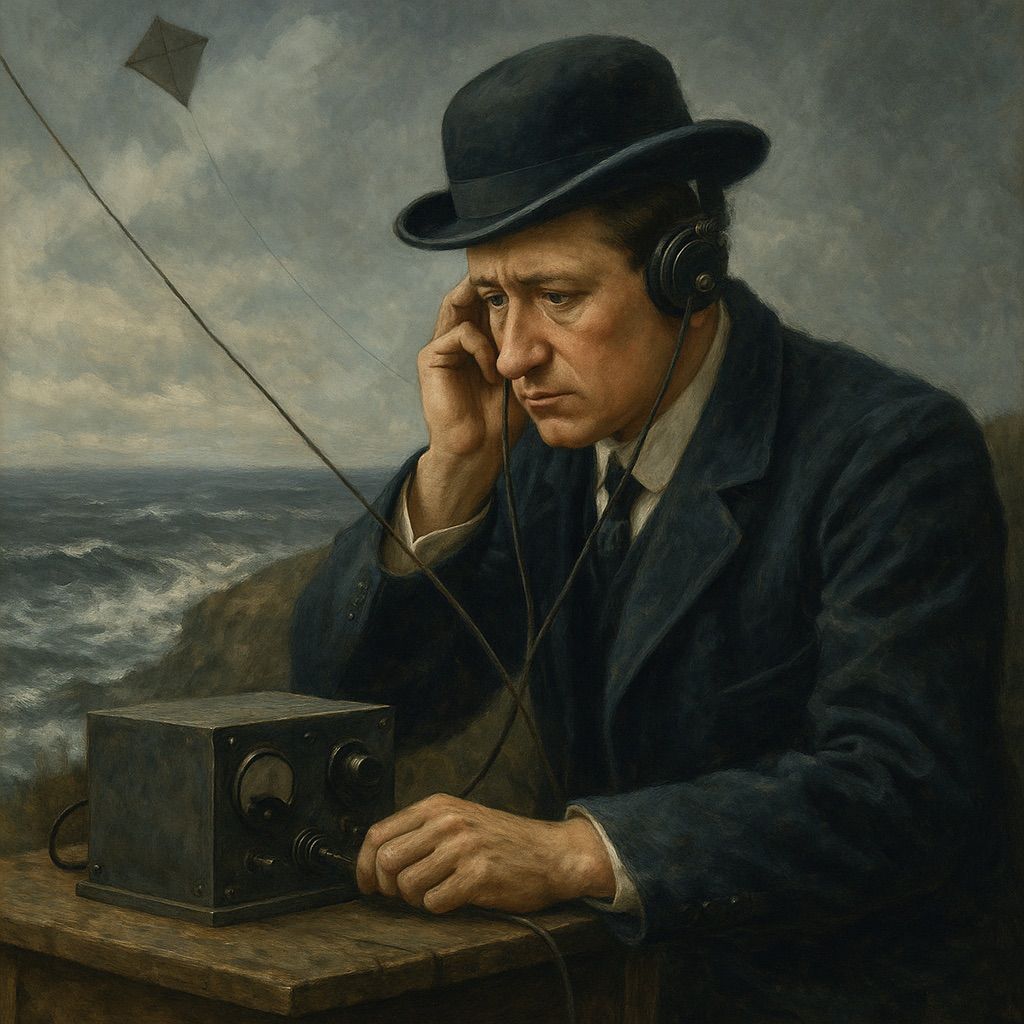
On December 12, 1901, Guglielmo Marconi stood on the wind-scoured cliffs of Cape Cod with the Atlantic stretching before him like a vast, silent barrier. For centuries, that ocean had symbolized distance—geographical, political, psychological. It separated continents, cultures, and empires. Messages took days or weeks to cross it, carried by ship through unpredictable seas. But Marconi believed he could make the ocean do something no one had ever thought possible: carry a whisper of electricity from one side to the other, a whisper that spelled out the letter S in Morse code, repeated again and again, faint but unmistakably human. That whisper would change the world.

Marconi’s journey to this moment started decades earlier in Bologna, where he was a restless child more interested in wires and batteries than schoolwork. He would spend hours experimenting in his attic, tapping keys, stretching wires across rooms, sending crude signals from one floor of his home to the next. His teachers called his ideas fanciful. His neighbors called them impossible. But young Marconi cared only about questions, especially the one that consumed him: Could invisible waves carry messages through the air, farther and farther, someday even beyond the horizon?

At the University of Bologna, Marconi immersed himself in the groundbreaking theories of James Clerk Maxwell and the experiments of Heinrich Hertz. Maxwell had predicted the existence of electromagnetic waves; Hertz confirmed them. But neither man believed those waves could be harnessed for long-distance communication. Hertz famously claimed his discovery was “of no practical use whatsoever.” Marconi disagreed. He saw not limits—but opportunity.

By the time he reached his early twenties, Marconi had refined his first working wireless transmitter. It could send signals across a garden, then across a field, and eventually over several miles. This might seem insignificant today, but at the time, miles were revolutionary. The world took notice. Governments, navies, and scientific societies leaned in with sudden interest. The first wireless company was formed. Stations began appearing across Europe. Ships at sea began to carry Marconi devices. The dream of wireless communication was no longer science fiction—it was becoming a business, a tool, a necessity.

But Marconi wanted more. He wanted the Atlantic.

Every expert told him it was impossible. Radio waves, they insisted, travel only in straight lines. The Earth curves. The ocean would swallow the signal. Distance, weather, sunspots, atmospheric noise—every factor seemed designed to thwart his ambition. But Marconi believed the atmosphere itself could carry signals farther than anyone imagined. He believed that if he could build a powerful enough transmitter and pair it with an antenna tall enough to lasso the sky, the waves would travel beyond the horizon, bouncing along the ionosphere like a skipping stone.

So he built. And built big.

By 1901, he had constructed two massive stations: one in Poldhu, Cornwall, for transmitting, and one in Cape Cod for receiving. They were not simple outposts but technological cathedrals—great wooden towers draped with copper wire, humming with generators, pulsing with energy. Engineers worked through storms, failures, and electrical fires. The towers collapsed twice. Workers rebuilt them. Money ran thin. Marconi pressed on.

Then came December 12.

The winds on Cape Cod battered the receiving station, icy and relentless. Marconi and his assistant set up a simple receiver connected to a wire antenna raised by a kite—one of the many improvisations required in a place where the weather seemed determined to make history as inconvenient as possible. At 8:20 p.m., through the static and wind, a faint, rhythmic pattern emerged. Three short clicks. The letter S. Again. And again.

Marconi froze. He listened. His assistant leaned in, wide-eyed. The signal was delicate but undeniable. Against the predictions of scientists, against the limits of technology, against the very curvature of the Earth, a message sent from England had crossed 2,100 miles of open ocean and arrived on American shores in a whisper of electromagnetic waves.

For the first time in human history, the Atlantic Ocean had been conquered not by ships, but by light.

Word spread across the world almost immediately. Newspapers hailed it as an epoch-making achievement. Governments scrambled to assess the implications. Military strategists realized a new age of naval communication had begun. Businesses imagined transoceanic markets linked in real time. Ordinary citizens were stunned by the idea that the world had suddenly become smaller, faster, more connected.

But no one felt the moment more deeply than Marconi. He knew instantly that this was not just a technological triumph; it was the birth of global communication. It was the bridge that would lead to radio broadcasting, radar, satellite communication, GPS, Wi-Fi, and every invisible wave that now threads through modern life. His invention did not just shrink the world—it rewired it.

Still, the journey ahead was far from smooth. Many scientists doubted the authenticity of the transatlantic signal. Some accused Marconi of fraud. Others insisted it must have been an atmospheric accident. But Marconi didn’t waste time arguing. He focused on proving it undeniably—and commercially.

He built more stations, refined his transmitters, expanded his networks. Ships at sea soon carried wireless sets as standard equipment. Messages that once took weeks now took seconds. Lives were saved when wireless distress calls enabled rapid rescue during maritime disasters. Information flowed faster than ever before. Empires, economies, and cultures began to shift around the newfound speed of communication.

In 1909, Marconi won the Nobel Prize in Physics for his contributions to wireless telegraphy. And he continued pushing the boundaries—experimenting with shortwave radio, directional antennas, and long-distance broadcasting. By the 1920s, radio had become a global force, carrying news, music, political speeches, and entertainment into homes around the world. The age of wireless communication—born on that cold December night—had fully arrived.

Yet perhaps the most profound impact of Marconi’s achievement was the psychological one. For the first time, humanity understood that distance was no longer an insurmountable barrier. The world could speak to itself. Borders could not stop a signal. The sky had become a highway for information.

As we stand today in an era of instantaneous global communication, it’s easy to take this miracle for granted. We send messages across continents without thinking. We stream live videos from one hemisphere to another with the tap of a finger. But every text, every radio broadcast, every satellite transmission, every Wi-Fi connection owes a debt to the spark Marconi ignited.

The cliffs of Cape Cod are quiet now, the old towers long gone. But if you stand there at dusk and listen to the wind, you might imagine—just for a moment—the faint clicking of Morse code drifting across the Atlantic. The sound of the world becoming smaller. The sound of possibility. The sound of humanity’s first whisper across the void.

And in that whisper, the future began.

Related Posts

Fire in the Caucasus: How the Chechen Wars Forged Modern Russia and the Rise of Vladimir Putin

Elias Rowen

The invasion of Chechnya by Russian forces stands as one of the most consequential and defining episodes in modern Russian history—a conflict that reshaped Moscow’s relationship with its Muslim-majority regions and fundamentally altered the trajectory of Vladimir Putin’s rise to power. Yet despite its enormous impact, the origins of the Chechen wars are far more complicated than the familiar timelines suggest. To truly understand how Russia plunged into two brutal wars in the North Caucasus, one must trace the fault lines back decades, through Soviet collapse, nationalist awakening, political opportunism, and a tangled web of grievances that never found resolution.

By the late 1980s, as the Soviet Union trembled under the weight of glasnost and perestroika, suppressed national identities began to re-emerge across its vast territories. In Chechnya—a region with a long memory of resistance against Russian domination—these reforms ignited a fierce resurgence of nationalist sentiment. With their own distinct culture, language, and a history marked by deportations under Stalin, the Chechens saw an opportunity to reclaim what had been taken from them. Calls for autonomy quickly grew into calls for independence, setting the stage for confrontation with Moscow.

In 1991, as the Soviet Union dissolved, Dzhokhar Dudayev, a former Soviet Air Force general, seized control of Chechnya and declared independence. Russia, newly formed and led by Boris Yeltsin, found itself overwhelmed by economic collapse, internal dissent, and a fractured federation demanding attention. At first, Moscow’s response to Chechnya oscillated between overt hostility and reluctant tolerance. But as years passed—with the region slipping further out of federal control—Yeltsin faced growing pressure to reassert authority and prevent a domino effect of secessionist movements.

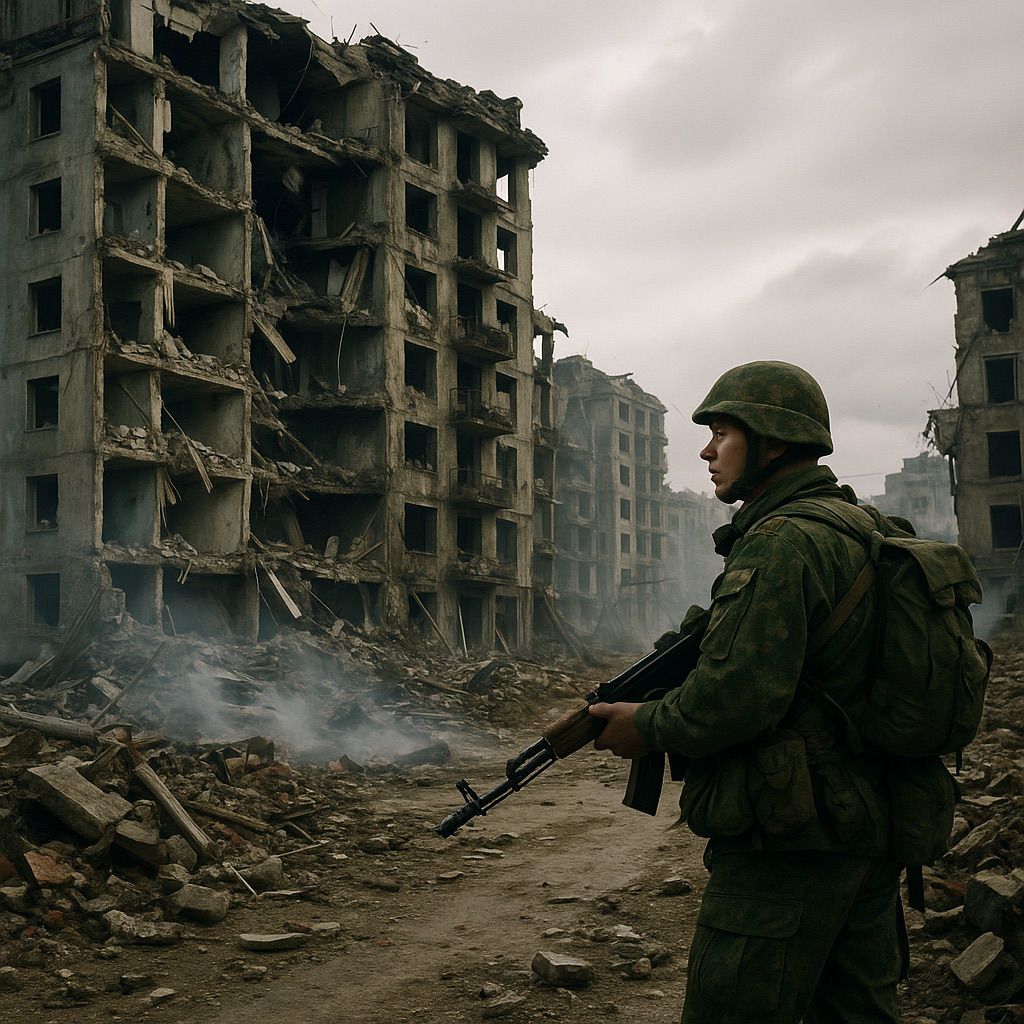
When negotiations failed and tensions mounted, Russia launched its first invasion in December 1994, under the guise of restoring constitutional order. The Kremlin believed the campaign would be swift. Instead, they walked into one of the most disastrous military engagements of the post-Soviet era. Chechen fighters—underequipped but deeply motivated—used urban warfare tactics that Russian forces were unprepared to counter. Grozny, the Chechen capital, became a symbol of devastation, with its ruins reflecting not only military failure but moral collapse.

The conflict dragged on until 1996, when mounting casualties and declining public support forced Moscow into the Khasav-Yurt Accord, negotiated by General Alexander Lebed. The agreement halted the fighting and granted Chechnya de facto independence, though its final status remained unresolved. For a brief moment, peace seemed possible. But the region, ravaged by war and lacking infrastructure, fell into lawlessness. Kidnappings, factional power struggles, and the rise of radical Islamist groups destabilized the fragile republic. The chaos provided fertile ground for the next stage of conflict.

In September 1999, a series of apartment bombings rocked Russia, killing hundreds and terrifying millions. The Kremlin immediately blamed Chechen militants, though the true perpetrators remain the subject of fierce debate among historians, analysts, and human rights groups. Regardless of who carried out the attacks, the impact was seismic. Public outrage surged, and the government seized upon the moment to rally the nation behind a new military campaign. Yeltsin—by then politically weakened—appointed Vladimir Putin, a little-known former KGB officer, as prime minister.

Putin responded with a promise that defined his ascent: to crush terrorism “in the outhouse” if necessary. Days later, Russian forces invaded Chechnya again, igniting the Second Chechen War. This campaign was vastly different from the first. Under Putin’s command, the Russian military employed overwhelming force, flattening entire districts of Grozny, leveling villages, and implementing harsh filtration operations that swept up civilians indiscriminately. Human rights organizations documented torture, disappearances, and mass killings, painting a grim portrait of Moscow’s approach to reasserting control.

Despite the brutality, Putin’s popularity soared. He appeared decisive, tough, and uncompromising at a time when many Russians longed for stability. By early 2000, he was elected president in a landslide victory—an outcome directly bolstered by the war in Chechnya. The conflict, in many ways, became the crucible that forged his political identity.

In Chechnya, meanwhile, the cost was immeasurable. Grozny was left in ruins, declared by the United Nations to be the most devastated city on earth. Tens of thousands of civilians died, and hundreds of thousands more were displaced. Families were shattered, villages depopulated, and an entire generation grew up amid the trauma of war. The region ultimately fell back under Russian control, governed by a Moscow-backed regime that suppressed dissent with near-total impunity.

Yet beneath the skyscrapers and reconstructed avenues that now stand in Grozny lies a silent legacy of grief. Many Chechens continue to live under constant surveillance and repression, with memories of vanished relatives and destroyed homes still raw. Although overt separatist movements have been crushed, the fissures carved by decades of conflict remain embedded in the social fabric of the region.

The wars in Chechnya reshaped Russia’s internal politics, redefined its security state, and cemented a new mode of governance built on centralized authority, military force, and tight control over information. They also revealed the dangers of nationalist fervor, political manipulation, and the ease with which fear can be weaponized to consolidate power.

Looking back, the Chechen wars stand as a stark reminder of the deep human cost of geopolitical ambition. They show us how the lines between national security and aggression blur when governments believe they are fighting existential threats. And they challenge us to recognize the lasting scars that such conflicts leave on both the oppressed and the aggressors.

Today, as Russia continues to assert itself on the global stage—from Ukraine to Syria—many of the strategies first tested in Chechnya echo loudly in contemporary policy. The lessons, however, remain unresolved. The conflict serves as a cautionary tale: that unchecked authority, fueled by fear and framed as patriotism, can lead nations down a path from which recovery may take generations.

And amid the ruins—literal and symbolic—Chechnya endures. A testament to resilience, a witness to tragedy, and a reminder that even in the darkest valleys of modern history, the fight for identity and dignity persists.

Related Posts