Latest Articles

Impeached: The Night Bill Clinton’s Presidency Was Put on Trial

Elias Rowen

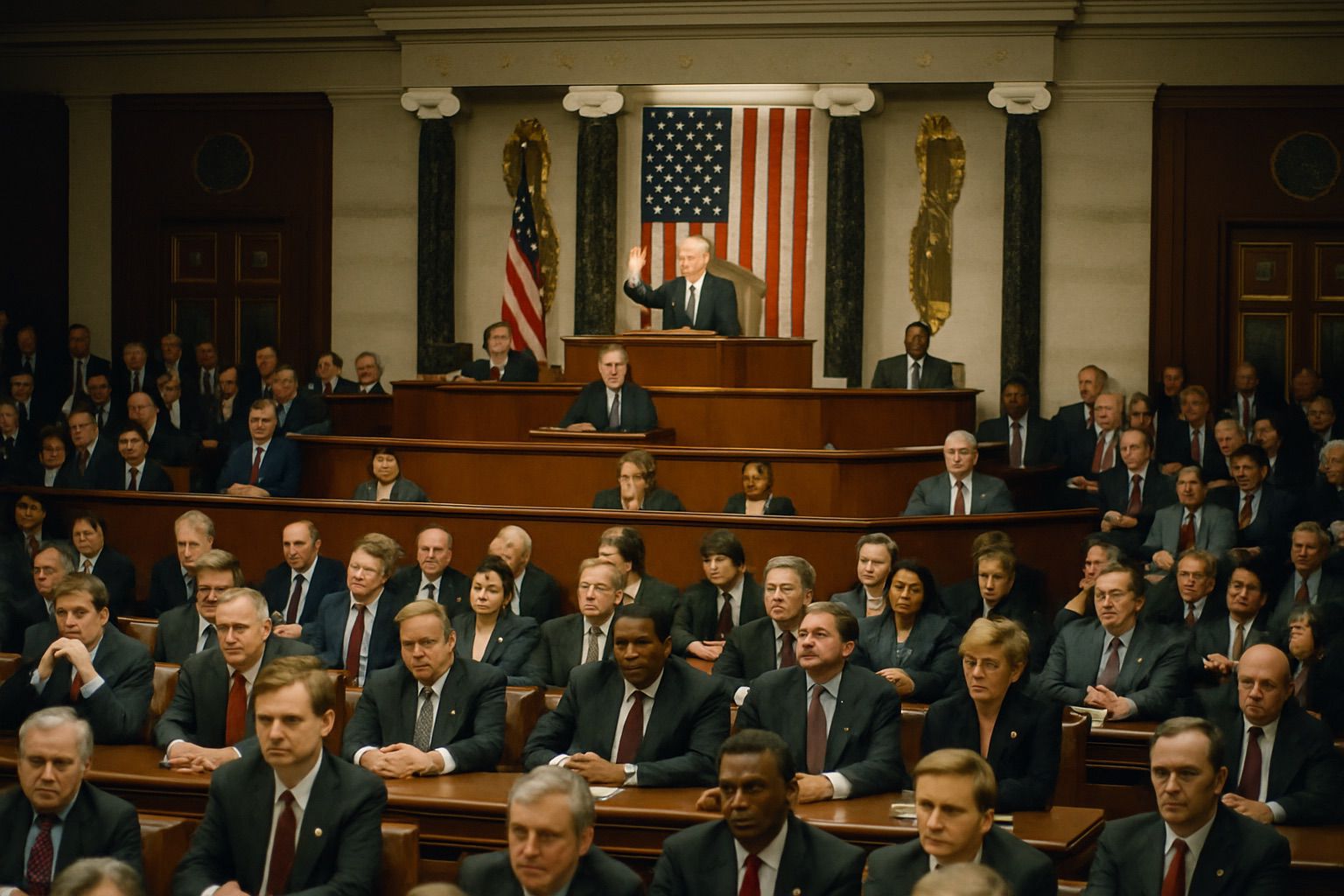
The night of December 19, 1998, unfolded with an unmistakable sense of gravity across Washington, D.C. Inside the U.S. Capitol, history was about to be made in a way few Americans had ever witnessed. Outside, the city buzzed with tension as news cameras lined the streets and citizens stayed glued to their televisions. By the end of the evening, President Bill Clinton would become only the second president in American history to be impeached by the House of Representatives, thrusting the nation into a moment of reckoning that went far beyond one man’s personal failings.

The impeachment of Bill Clinton did not erupt suddenly. It was the culmination of months of scandal, investigation, political maneuvering, and public spectacle that blurred the line between governance and voyeurism. At the center of it all was a deeply human story—one involving power, secrecy, deception, and the consequences of choices made in private that spilled relentlessly into the public arena.

The controversy began in January 1998 when reports surfaced that Clinton had engaged in an inappropriate relationship with Monica Lewinsky, a former White House intern. At first, the allegations were met with denial. Clinton stood before the cameras and delivered what would become one of the most quoted statements of his presidency, insisting he had not had sexual relations with Lewinsky. For a time, many Americans accepted his words, reluctant to believe that a sitting president would so boldly lie.

As evidence mounted, however, the narrative began to unravel. Testimony, sworn statements, and physical evidence contradicted Clinton’s denials. By August 1998, the truth could no longer be contained. Clinton admitted that he had indeed engaged in an improper relationship, though he carefully framed his confession in legalistic terms. The damage, however, had already been done. Trust—arguably the most fragile currency in politics—had been shattered.

What transformed a personal scandal into a constitutional crisis was not the affair itself, but the actions Clinton took to conceal it. Investigators alleged that he lied under oath during a deposition related to a separate sexual harassment lawsuit filed by Paula Jones. They further argued that he encouraged others to lie and attempted to obstruct justice by manipulating testimony and evidence. These allegations struck at the heart of the legal system, raising profound questions about accountability at the highest level of government.

The House Judiciary Committee took center stage as it examined whether Clinton’s actions constituted “high crimes and misdemeanors” as defined by the Constitution. Hearings were tense, emotional, and deeply partisan. Republicans argued that no one—not even the president—was above the law. Democrats countered that impeachment was being weaponized for political gain and warned of the dangerous precedent such a move would set.

Throughout the fall of 1998, the nation watched as legal arguments clashed with moral judgments. Polls revealed a striking contradiction: many Americans disapproved of Clinton’s behavior, yet they continued to support his presidency. The economy was strong, unemployment was low, and for many voters, Clinton’s personal failures did not outweigh his political successes.

Inside Congress, however, the lines hardened. On December 11, the Judiciary Committee approved four articles of impeachment, including perjury and obstruction of justice. Debate moved to the full House, where emotions ran high. Lawmakers delivered impassioned speeches invoking the Founding Fathers, the sanctity of the Constitution, and the moral fabric of the nation.

As December 19 arrived, the atmosphere inside the House chamber was electric. Members understood the gravity of what they were about to do. Late into the night, votes were cast. When the final tallies were announced, Clinton had been impeached on two counts—perjury and obstruction of justice—largely along party lines. History had been altered with the stroke of a gavel.

That same night, Clinton addressed the nation. His tone was somber but resolute. He accepted responsibility for his actions while rejecting the notion that they warranted removal from office. The presidency, he insisted, would continue. The country, exhausted by months of scandal, braced for the next phase: a Senate trial.

The Senate proceedings in early 1999 carried their own weight. Chief Justice William Rehnquist presided with quiet restraint as senators took an oath to administer impartial justice. The trial unfolded under intense media scrutiny, yet it lacked the theatrical drama many had expected. Testimony was limited, arguments were tightly controlled, and the outcome seemed increasingly predictable.

When the Senate voted on February 12, 1999, Clinton was acquitted on both charges. No article received the two-thirds majority required for conviction. Clinton remained president, but the scars of impeachment would linger long after the gavel fell.

The impeachment of Bill Clinton reshaped American politics in subtle but enduring ways. It deepened partisan divisions, normalized the use of scandal as political weaponry, and eroded public trust in institutions already under strain. It also forced Americans to confront uncomfortable questions about leadership, morality, and the limits of forgiveness.

For Clinton himself, the experience was both humbling and defining. Though he completed his term with relatively high approval ratings, his legacy would forever be intertwined with impeachment. His presidency became a case study in contradiction—a period of economic prosperity shadowed by personal failure and political turmoil.

In retrospect, the Clinton impeachment stands as a mirror reflecting the tensions of a nation wrestling with its values. It exposed how deeply politics had become entangled with identity, outrage, and media spectacle. More than two decades later, its echoes can still be felt in the hyper-partisan climate that defines modern American life.

December 19, 1998, was not just a night when a president was impeached. It was a night when the country learned how fragile trust could be—and how enduring the consequences of its loss might become.
Related Posts

The Ghost That Saved Christmas: How Dickens’ “A Christmas Carol” Rekindled the Human Heart

Elias Rowen

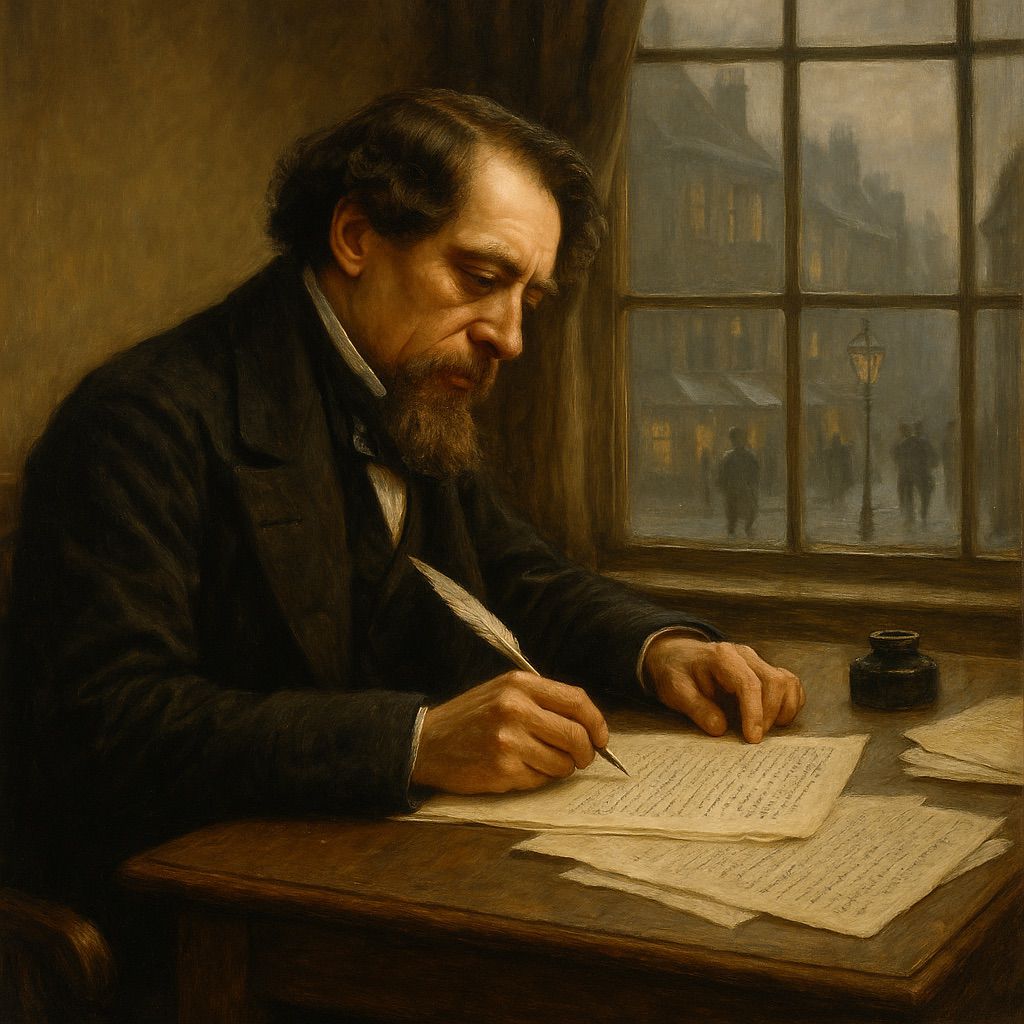
London, December 1843. The city was wrapped in fog and frost, the streets slick with mud and the smell of coal smoke thick in the air. Gas lamps flickered against the dark as hurried footsteps echoed off cobblestones. Winter had descended with its usual cruelty—especially on the poor. In narrow alleyways, ragged children huddled for warmth, their faces pale with hunger. And yet, in that same bleak city, a miracle of words was about to be born. On December 19, 1843, Charles Dickens published A Christmas Carol, a slender little book of less than 30,000 words that would forever change how the world celebrated Christmas—and how it understood compassion itself.

It’s hard now to imagine a world without Dickens’ ghosts, without the sneer of Scrooge or the innocent smile of Tiny Tim. But when A Christmas Carol first appeared, Christmas was a fading tradition in industrial England. The old customs—carols, feasts, merriment—had been overshadowed by factories, time clocks, and the cold precision of commerce. The poor toiled long hours for meager wages, while the wealthy insulated themselves behind iron gates and moral distance. Dickens saw it all. He walked those same grim streets, feeling both pity and rage. The Industrial Revolution had made England richer—but not kinder.

By 1843, Dickens was no stranger to success. He was already famous for The Pickwick Papers and Oliver Twist, but his finances were strained, and his social conscience was on fire. During a visit to Manchester earlier that year, he had seen the brutal reality of child labor—tiny bodies working in factories, little fingers raw and eyes weary before they had even learned to read. The image haunted him. At the same time, he was reading government reports on poverty and attending charity events where well-fed donors made polite speeches about “the deserving poor.” Dickens knew words could pierce the heart in ways policy never could. He resolved to write not a pamphlet, but a story—something that would seize the imagination of rich and poor alike.

The idea came swiftly. One night, while walking the dark streets of London, Dickens conceived the image of a lonely, miserly man confronted by ghosts of his own making. A man who hoarded money but starved his soul. A man named Ebenezer Scrooge. Within weeks, Dickens wrote feverishly, often pacing his study until dawn. He wept and laughed as he wrote, possessed by the spirit of his own creation. He later said that the story “came like a thunderclap.”

When the manuscript was finished, Dickens faced another problem: publishers. His last book had not sold well, and he feared A Christmas Carol would be dismissed as sentimental folly. So he decided to publish it himself. He poured his dwindling savings into the project, personally overseeing every detail—from the binding and cover design to the illustrations by John Leech. The book would be small enough to fit in the hand, bound in crimson cloth with gilt pages, priced at five shillings—affordable but elegant. Dickens wanted it to reach everyone, from the grand parlors of Mayfair to the humblest of London’s garrets.

The book appeared in shops on December 19, just six days before Christmas. The first printing of 6,000 copies sold out within days. By New Year’s, A Christmas Carol was the talk of England. Critics hailed it as “a national benefit.” The public devoured it. Readers wept openly at the transformation of Scrooge, cheered for Bob Cratchit, and whispered prayers for Tiny Tim. The story struck something deep—a longing for redemption, for warmth in a cold age. Dickens had tapped into the collective conscience of a society teetering between industry and humanity.

At its core, A Christmas Carol was more than a ghost story—it was a moral revolution. Through Scrooge’s journey, Dickens distilled the timeless truth that no one is beyond redemption. The story’s ghosts—Past, Present, and Yet to Come—serve as mirrors, showing the cost of greed and the grace of compassion. “Mankind was my business,” laments Marley’s ghost, his chains rattling with the weight of regret. That line alone became a sermon. Dickens, more than any preacher of his day, made morality vivid and urgent.

But what truly astonished readers was how personal it all felt. Scrooge wasn’t just a character—he was an archetype, a reflection of something lurking within every person who had ever turned away from another’s suffering. The joy of Scrooge’s redemption, his childlike laughter on Christmas morning, felt like a collective release. As Dickens wrote, “I will honour Christmas in my heart, and try to keep it all the year.” Those words were both confession and commandment.

The impact was immediate and profound. Within weeks, charitable giving in England surged. Employers gave their clerks Christmas holidays. Churches revived old carols. Newspapers reprinted scenes from the book. Even politicians began to speak of “Christian duty” in language that echoed Dickens’ moral vision. In effect, A Christmas Carol reinvented Christmas—not as a feast of excess or a religious ritual alone, but as a season of generosity, empathy, and renewal.

Yet Dickens’ purpose went deeper than sentimentality. He wanted readers to confront the social evils that had made the Scrooges of the world possible. He saw the Poor Laws, debtors’ prisons, and child labor as symptoms of a moral disease—the disease of indifference. In A Christmas Carol, he transformed social criticism into a spiritual parable. The Cratchit family’s humble joy, despite their poverty, stands as both rebuke and revelation. They have nothing, yet they possess everything that matters: love, gratitude, and hope. Tiny Tim, the frail child who “did NOT die,” became the living heart of that hope.

Dickens’ genius lay in his ability to humanize the abstract. Poverty was no longer a statistic—it had faces, names, voices. Readers could no longer ignore it. In Scrooge’s redemption, Dickens offered not just comfort, but a challenge: that every reader examine their own heart.

The success of A Christmas Carol spread far beyond England. Within a year, it was translated across Europe and America. Public readings of the story became holiday traditions. Dickens himself gave hundreds of performances, reading the tale aloud with such emotion that audiences sobbed. One American journalist described it as “a religious experience.” Queen Victoria reportedly adored it. Even critics who had dismissed Dickens as a populist admitted that his story had touched something universal.

Ironically, despite its enormous popularity, Dickens made little profit from the book. High production costs and publishing disputes ate up most of his earnings. But the financial disappointment mattered little compared to its cultural triumph. The book had done what he had hoped—it had moved the hearts of men.

In the years that followed, Dickens would write several more Christmas stories, but none would capture the world’s imagination like A Christmas Carol. It was lightning in a bottle—a perfect union of moral clarity, storytelling magic, and social conscience. Every December since, the world returns to it like pilgrims to a shrine, seeking once again to be reminded of kindness and redemption.

There is something timeless about the image of Scrooge awakening on Christmas morning, the weight of his greed melted away. His laughter, so foreign to him, bursts forth like sunlight. He dances through the streets of London, promising to help the poor, to love his neighbor, to be “as good a man as the old city knew.” In that moment, Dickens gives us not just a happy ending, but a vision of what humanity can be when it chooses compassion over cynicism.

The story’s endurance is not accidental. Each generation rediscovers its meaning anew. In times of plenty, it reminds us to give; in times of hardship, it reminds us to hope. During wars, depressions, pandemics, and every trial since 1843, A Christmas Carol has remained a touchstone—a reminder that transformation is always possible.

Dickens once wrote that he hoped his “little book” would “raise the ghost of an idea.” He could not have imagined how fully it would succeed. That ghost has never left us. It lingers each Christmas in the ringing of bells, the laughter of children, the quiet act of generosity from one stranger to another.

It’s said that when Dickens died in 1870, a poor woman was heard to weep, “He made me feel I could be better.” That, perhaps, is his greatest legacy. More than any sermon or law, he reminded humanity that goodness is a choice, renewed every day, every Christmas, with every heart that dares to open.

Nearly two centuries later, as lights twinkle in shop windows and carols echo down crowded streets, the spirit of Dickens’ story still lives. The ghosts of A Christmas Carol continue their work—haunting us, yes, but with love. And every time a lonely soul finds warmth, or a hardened heart softens, or a child’s laughter fills the cold winter air, it is as if we can still hear that final echo of Dickens’ pen: God bless us, every one.

Related Posts

Valley Forge: The Winter That Forged an Army and Saved the American Revolution

Elias Rowen

The winter of 1777–1778 stands as one of the most defining chapters in the story of the American Revolution, not because of a great battle or a sweeping victory, but because of survival. At Valley Forge, the Continental Army endured conditions so brutal that many believed the revolution itself might die in the frozen fields of Pennsylvania. Hunger, disease, cold, and despair stalked the encampment daily, threatening to unravel the fragile force struggling to oppose the British Empire. Yet it was in this crucible of suffering that an army was transformed and a nation’s resolve hardened.

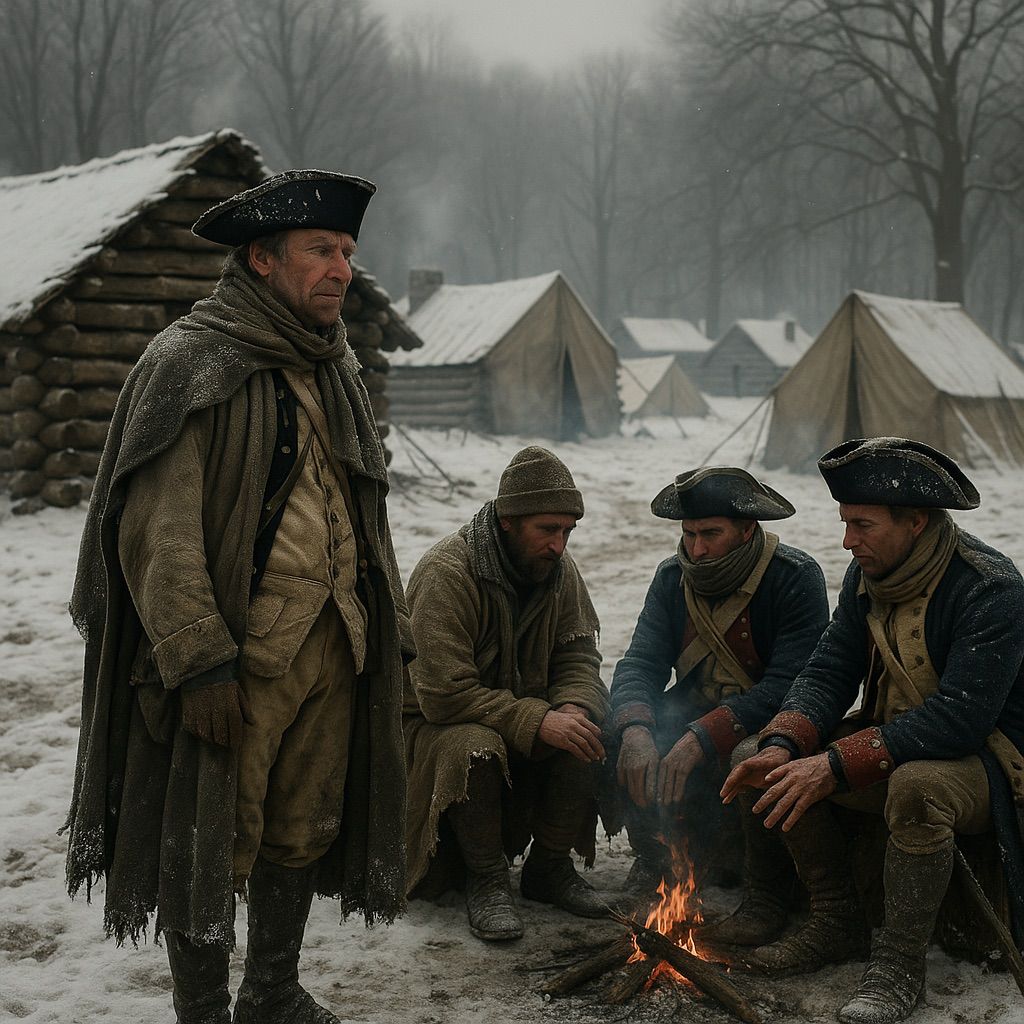
When George Washington chose Valley Forge as his winter encampment, he did so out of strategic necessity rather than comfort. The location offered protection from British surprise attacks while allowing the army to keep pressure on enemy-held Philadelphia. Still, strategy could not shield the men from the realities that awaited them. When the first soldiers arrived in December 1777, they found no shelter, no infrastructure, and little food. Snow blanketed the ground, and the wind cut through threadbare uniforms as if they did not exist.

The men of the Continental Army were not professional soldiers in the European sense. Many were farmers, laborers, and tradesmen who had volunteered or been drafted into service. They lacked consistent training, proper equipment, and often even basic supplies. At Valley Forge, these shortcomings became painfully visible. Soldiers marched barefoot through snow stained with blood. Others wrapped rags around their feet, knowing frostbite could claim toes or entire limbs.

Food shortages were relentless. Supply lines failed repeatedly due to poor organization, corruption, and lack of resources. Men survived on meager rations of flour and water, sometimes boiled into a thin paste known as firecake. Meat was rare. Hunger weakened bodies already battered by exposure, making disease spread rapidly through the encampment.

Typhus, dysentery, pneumonia, and influenza swept through the ranks. Makeshift hospitals overflowed with the sick and dying. Doctors worked with limited tools and supplies, often unable to do more than offer comfort. By the end of winter, nearly 2,000 men had died—not from British bullets, but from neglect, cold, and illness.

Morale sank dangerously low. Desertions increased as soldiers questioned whether independence was worth such suffering. Some officers openly criticized Washington, doubting his leadership and whispering of replacement. The so-called Conway Cabal revealed just how fragile unity had become. Yet Washington endured these attacks with restraint, refusing to abandon his post or his men.

Washington’s greatest strength at Valley Forge was not tactical brilliance, but moral authority. He shared in his army’s hardships, refusing special treatment and insisting on fairness wherever possible. He appealed constantly to Congress for aid, demanding accountability from corrupt quartermasters and reorganizing supply systems to ensure survival.

The turning point at Valley Forge did not come from improved weather or sudden abundance. It came from discipline. In February 1778, Friedrich Wilhelm von Steuben arrived at the encampment. A Prussian officer with experience in European warfare, von Steuben brought structure to chaos. Despite limited English, he communicated through example, drilling soldiers personally and instilling order where there had been confusion.

Von Steuben standardized training, taught soldiers how to march, load muskets efficiently, and fight as coordinated units. He introduced hygiene practices that reduced disease and reorganized camp layouts to improve sanitation. Slowly, painfully, the army began to change.

The men who had arrived at Valley Forge as desperate survivors began to leave as disciplined soldiers. Confidence replaced despair. Pride returned where humiliation had once ruled. When spring finally came, the Continental Army emerged not merely intact, but transformed.

This transformation was tested at the Battle of Monmouth in June 1778. There, Washington’s troops faced British forces in open battle and held their ground. Though the engagement was tactically inconclusive, its symbolic importance was immense. The Continental Army had proven it could stand against one of the world’s most powerful militaries.

Valley Forge became the emotional heart of the Revolution. It symbolized sacrifice without surrender, endurance without despair. The suffering endured there forged bonds between soldiers and solidified commitment to a cause larger than any individual hardship.

The winter also reshaped Washington’s legacy. His leadership during those months cemented his reputation as a commander not just of strategy, but of character. He understood that armies are sustained not only by supplies, but by belief. At Valley Forge, belief nearly failed—but did not break.

Today, Valley Forge stands as a reminder that victory is not always born on the battlefield. Sometimes it is forged in endurance, discipline, and the refusal to give up when defeat seems inevitable. The men who survived that winter carried its lessons into every campaign that followed, helping secure independence not through brilliance alone, but through resilience.

Valley Forge endures in American memory because it represents the cost of freedom stripped of romantic illusion. It was cold, painful, unjust, and nearly fatal. Yet from that suffering emerged an army capable of winning a nation.

Related Posts

The Mayflower Landing: Faith, Survival, and the Birth of Plymouth Colony

Elias Rowen

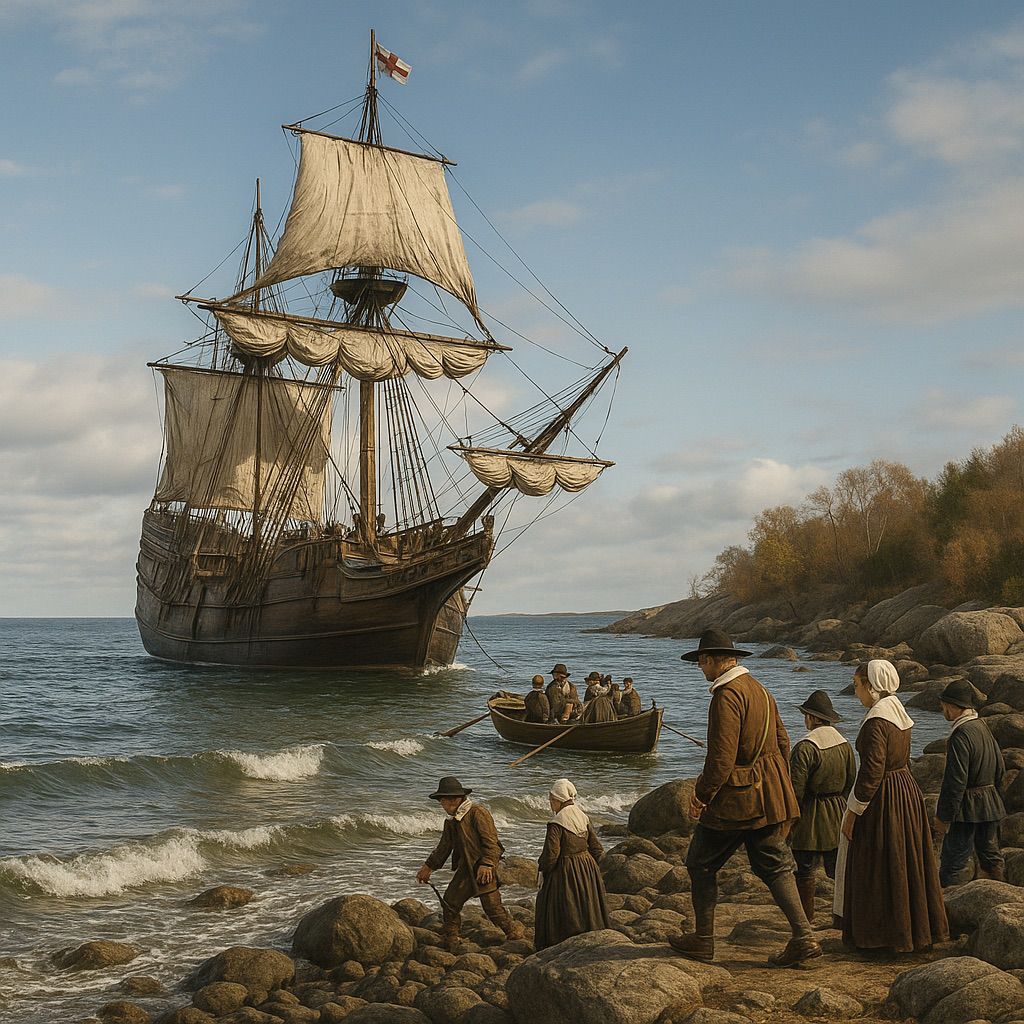
In the early seventeenth century, a single wooden ship crossing the Atlantic carried far more than passengers and cargo. The Mayflower carried fear, hope, desperation, faith, and ambition—elements that would collide on the shores of North America and help shape the future of an entire continent. When the ship finally dropped anchor off the coast of Cape Cod in November 1620, the people aboard were exhausted, uncertain, and unprepared for what lay ahead. Yet they were united by a shared belief that their survival depended on building something new in a land they barely understood.

The passengers of the Mayflower were not explorers in the traditional sense. They were families, craftsmen, laborers, and religious dissenters fleeing a world that no longer offered them security or freedom. Among them were the Separatists—later known as the Pilgrims—who had broken away from the Church of England in search of a simpler, more democratic form of worship. Their refusal to conform made them targets of persecution, forcing them first into exile and eventually toward the unknown.

Years before the voyage, these Separatists had settled in Leiden, Holland, where they enjoyed religious tolerance but struggled economically and culturally. While they were free to worship as they chose, their children began to lose English identity, and work was scarce. At the same time, political changes in England threatened to close even that fragile refuge. Faced with an uncertain future, the community made a decision that would alter history: they would leave Europe entirely.

The opportunity came through negotiations with English investors and the Virginia Company, which hoped to profit from new colonies in North America. The Pilgrims secured permission to settle in the New World, though their destination was meant to be farther south. On September 6, 1620, the Mayflower departed Plymouth Harbour carrying 102 passengers and a crew accustomed to the dangers of the sea.

The voyage was brutal. Storms battered the ship, forcing passengers below deck for weeks at a time. Food spoiled, illness spread, and morale wavered. Yet the travelers endured, bound together by necessity and belief. When land was finally sighted after more than two months at sea, relief quickly gave way to uncertainty. They had arrived far north of their intended destination, beyond the reach of their charter.

Before anyone set foot on land, the settlers faced a critical problem: authority. Without a valid charter, no one technically held legal power. In response, the adult men aboard drafted and signed the Mayflower Compact, an agreement that bound them to govern themselves through collective decision-making. This simple document became one of the earliest expressions of self-governance in American history.

On December 11, 1620, the settlers landed at what would become Plymouth. The land was cold, forested, and unforgiving. There were no towns, no fields, no supplies waiting. Winter came quickly, bringing hunger, disease, and death. Nearly half of the settlers would not survive their first year.

It was during this desperate period that the story of Plymouth Colony became inseparable from the story of the Wampanoag people. Long before the English arrived, Native communities had lived on this land, adapting to its rhythms and dangers. Among them was Tisquantum—known as Squanto—a man whose life had already been shaped by European intrusion. Kidnapped years earlier and taken to England, Squanto returned to find his village destroyed by disease.

Squanto’s knowledge of English and his understanding of both cultures placed him in a unique position. Despite personal loss and mistrust on all sides, he chose to help the settlers. He taught them how to plant corn using fish as fertilizer, how to hunt and fish, and how to survive the harsh New England environment. Without his guidance, the colony likely would have failed.

Relations between the Pilgrims and the Wampanoag were complex and fragile. An alliance formed with the Wampanoag leader Massasoit, driven as much by mutual survival as goodwill. For the English, Native knowledge meant survival. For the Wampanoag, an alliance offered protection against rival tribes and a chance to manage European expansion—though few could foresee the consequences that would follow.

As the seasons passed, Plymouth Colony slowly stabilized. Crops grew, shelters improved, and trade networks formed. Governance evolved as well, reflecting the Pilgrims’ belief in collective responsibility. Yet beneath these successes lay constant tension—between settlers and Native peoples, between faith and survival, and between ideals and reality.

Disease continued to haunt both communities. European illnesses devastated Native populations, while settlers faced recurring outbreaks that threatened to erase their fragile foothold. Each winter brought new uncertainty, reinforcing the understanding that survival depended on cooperation, adaptability, and resilience.

Over time, the colony expanded, drawing new settlers and reshaping the landscape. What began as a refuge gradually became a foothold for broader colonization. Agreements made in desperation became contested as power shifted, and alliances strained under pressure. The story of Plymouth Colony is therefore not one of simple triumph, but of layered complexity—hope entangled with loss, faith intertwined with conflict.

Squanto’s legacy, often reduced to a footnote, remains central to this story. He was neither villain nor savior, but a human being navigating an impossible position between worlds. His role reminds us that the survival of Plymouth Colony was not solely the result of European determination, but of Native knowledge, sacrifice, and compromise.

The arrival of the Mayflower marked a beginning, not a conclusion. It set into motion forces that would shape American identity for centuries, raising enduring questions about governance, faith, coexistence, and consequence. The Pilgrims sought freedom, but their story is inseparable from the land and people they encountered—a truth that complicates the legacy they left behind.

Plymouth Colony stands as both symbol and warning. It represents resilience in the face of adversity, but also the costs of expansion and misunderstanding. To remember it honestly is to acknowledge both the courage of those who crossed the ocean and the lives forever altered by their arrival.

Related Posts

Echo 1A and the Birth of Global Communication: When the World First Spoke Through Space

Elias Rowen

The moment humanity first learned how to speak to itself through space did not arrive with fanfare or celebration, but with quiet precision, careful planning, and a shimmering sphere drifting silently above Earth. When Echo 1A successfully launched on April 1, 1960, it marked the beginning of a revolution that would permanently reshape how people communicated, cooperated, and understood the world. Though often overshadowed by the drama of manned spaceflight and the Cold War rivalry between superpowers, Echo 1A quietly changed everything.

The roots of satellite communication stretch back decades before the first rocket ever left Earth. Visionaries like Konstantin Tsiolkovsky imagined artificial satellites long before technology could support the idea. Later, Arthur C. Clarke expanded that vision, proposing in 1945 that satellites placed in orbit could act as communication relays, bouncing signals across the globe. At the time, his ideas seemed like science fiction. Within fifteen years, they became reality.

The late 1950s were defined by urgency. The Soviet Union’s launch of Sputnik 1 in October 1957 stunned the world, proving that space was no longer theoretical. When Sputnik 2 followed with Laika aboard, the geopolitical implications became impossible to ignore. Space was now a strategic frontier, and communication within it was just as important as exploration itself. The United States responded not only with rockets, but with ideas focused on peaceful, practical applications of space technology.

Echo 1A emerged from this environment of innovation and competition. Developed through collaboration between NASA, the U.S. Army’s Ballistic Missile Agency, and RCA, Echo 1A was unlike any satellite before it. It had no transmitters, no onboard electronics for communication, and no propulsion system. Instead, it was essentially a giant reflective balloon—an enormous Mylar sphere designed to bounce radio signals back to Earth.

At nearly 100 feet in diameter, Echo 1A was astonishing to see. When sunlight struck its surface, it became one of the brightest objects in the night sky, visible to the naked eye. For many people around the world, seeing Echo glide overhead was a profound experience. It was a visible reminder that humanity had extended its reach beyond the atmosphere and into the vastness above.

The satellite’s simplicity was its brilliance. Engineers wanted to test whether radio signals could be reliably reflected off an orbiting object. If successful, this would prove that satellites could serve as global communication platforms. Echo 1A’s passive design eliminated many technical risks while allowing scientists to gather invaluable data about signal behavior, orbital mechanics, and atmospheric interference.

The launch itself was the culmination of years of trial and error. Previous attempts with Echo 1 had failed when the satellite did not properly deploy. Engineers refined the design, improved materials, and adjusted deployment mechanisms until Echo 1A was ready. When the Thor-Able rocket lifted off from Cape Canaveral on April 1, 1960, it carried more than hardware—it carried the future of communication.

Once in orbit, Echo 1A exceeded expectations. Radio transmissions sent from California were reflected back to receivers thousands of miles away. For the first time, voices and signals traveled around the curvature of Earth by touching space itself. The implications were staggering. Distance, once a fundamental limitation, had been fundamentally altered.

Beyond communication, Echo 1A contributed to scientific understanding. Researchers used the satellite to study atmospheric density, orbital decay, and solar radiation pressure. These experiments provided insights that would later support weather satellites, navigation systems, and deep-space missions. Echo was not just a tool—it was a classroom in orbit.

The geopolitical impact of Echo 1A was subtle but powerful. Unlike weapons-focused projects, Echo symbolized peaceful innovation. It demonstrated that space could connect rather than threaten. In an era defined by suspicion and rivalry, Echo offered a glimpse of cooperation and shared progress, even as Cold War tensions remained high.

Echo 1A also laid the groundwork for active communication satellites. While passive reflection had limitations, it proved the concept beyond doubt. Engineers quickly moved toward satellites capable of amplifying and retransmitting signals. This evolution led directly to Telstar, Syncom, and eventually the vast satellite networks that define modern telecommunications.

Within a decade, satellite communication enabled live transatlantic television broadcasts, global telephone networks, and real-time international news. What once took days or weeks now took seconds. Economies expanded, diplomacy evolved, and cultures connected in ways previously unimaginable.

The legacy of Echo 1A lives quietly beneath modern convenience. GPS navigation, satellite internet, disaster response coordination, and global broadcasting all trace their origins back to that reflective balloon drifting above Earth. It did not carry humans, but it carried humanity’s voice.

Echo 1A remained in orbit for several years, slowly descending as atmospheric drag pulled it closer to Earth. When it finally burned up in the atmosphere in 1968, its mission was already complete. The world it helped create no longer needed passive reflection—it had learned how to speak through the stars.

Today, thousands of satellites orbit Earth, forming an invisible web of communication that supports daily life. From video calls to emergency alerts, satellite communication has become so integrated that its absence is difficult to imagine. That seamless connectivity began not with complexity, but with simplicity.

Echo 1A reminds us that innovation does not always roar. Sometimes it whispers, reflects, and quietly changes everything. It stands as one of the most important yet understated milestones in human technological history—a moment when Earth first learned to listen to itself from space.

Related Posts