Category: Education

Hell Explained by a Chemistry Student on an Exam

Dave

Bonus Question: Is Hell exothermic (gives off heat) or endothermic (absorbs heat)?

Most of the students wrote proofs of their beliefs using Boyle’s Law (gas cools when it expands and heats when it is compressed) or some variant.
One student, however, wrote the following:

First, we need to know how the mass of Hell is changing in time. So we need to know the rate at which souls are moving into Hell and the rate at which they are leaving. I think that we can safely assume that once a soul gets to Hell, it will not leave. Therefore, no souls are leaving. As for how many souls are entering Hell, let’s look at the different religions that exist in the world today.

Most of these religions state that if you are not a member of their religion, you will go to Hell. Since there is more than one of these religions and since people do not belong to more than one religion, we can project that all souls go to Hell. With birth and death rates as they are, we can expect the number of souls in Hell to increase exponentially. Now, we look at the rate of change of the volume in Hell because Boyle’s Law states that in order for the temperature and pressure in Hell to stay the same, the volume of Hell has to expand proportionately as souls are added.

This gives two possibilities:

1. If Hell is expanding at a slower rate than the rate at which souls enter Hell, then the temperature and pressure in Hell will increase until all Hell breaks loose.

2. If Hell is expanding at a rate faster than the increase of souls in Hell, then the temperature and pressure will drop until Hell freezes over.

So which is it?

If we accept the postulate given to me by Teresa during my Freshman year that, ‘It will be a cold day in Hell before I sleep with you,’ and take into account the fact that I slept with her last night, then number two must be true, and thus I am sure that Hell is exothermic and has already frozen over. The corollary of this theory is that since Hell has frozen over, it follows that it is not accepting any more souls and is therefore, extinct……leaving only Heaven, thereby proving the existence of a divine being which explains why, last night, Teresa kept shouting ‘Oh my God.’

This student received an A+

Related Posts

Student Who Obtained a 0% on an Exam

Dave

Q1. In which battle did Napoleon die?
* his last battle

Q2. Where was the Declaration of Independence signed?
* at the bottom of the page

Q3. River Ravi flows in which state?
* liquid

Q4. What is the main reason for divorce?
* marriage

Q5. What is the main reason for failure?
* exams

Q6. What can you never eat for breakfast?
* Lunch & dinner

Q7. What looks like half an apple?
* The other half

Q8. If you throw a red stone into the blue sea what it will become?
* It will simply become wet

Q9. How can a man go eight days without sleeping?
* No problem, he sleeps at night.

Q10. How can you lift an elephant with one hand?
* You will never find an elephant that has only one hand.

Q11. If you had three apples and four oranges in one hand and four apples and three oranges in other hand, what would you have ?
* Very large hands

Q12. If it took eight men ten hours to build a wall, how long would it take four men to build it?
* No time at all, the wall is already built.

Q13. How can u drop a raw egg onto a concrete floor without cracking it?
*Any way you want, concrete floors are very hard to crack.

Related Posts

Where did Piss Poor Come From?

Dave

They used to use urine to tan animal skins, so families used to all pee in a pot & then once a day it was taken & sold to the tannery… if you had to do this to survive you were “Piss Poor.”

But worse than that were the really poor folk who couldn’t even afford to buy a pot ….they “didn’t have a pot to piss in” & were the lowest of the low.

The next time you are washing your hands and complain because the water temperature isn’t just how you like it, think about how things used to be. Here are some facts about the 1500s:

Most people got married in June because they took their yearly bath in May, and they still smelled pretty good by June. However, since they were starting to smell …. brides carried a bouquet of flowers to hide the body odor. Hence the custom today of carrying a bouquet when getting married.

Baths consisted of a big tub filled with hot water. The man of the house had the privilege of the nice clean water, then all the other sons and men, then the women and finally the children. Last of all came the babies. By then the water was so dirty you could actually lose someone in it. Hence the saying, “Don’t throw the baby out with the bath water!”

Houses had thatched roofs-thick straw-piled high, with no wood underneath. It was the only place for animals to get warm, so all the cats and other small animals (mice, bugs) lived in the roof. When it rained it became slippery and sometimes the animals would slip and fall off the roof… Hence the saying “It’s raining cats and dogs.”

There was nothing to stop things from falling into the house. This posed a real problem in the bedroom where bugs and other droppings could mess up your nice clean bed. Hence, a bed with big posts and a sheet hung over the top afforded some protection. That’s how canopy beds came into existence.

The floor was dirt. Only the wealthy had something other than dirt. Hence the saying, “Dirt poor.” The wealthy had slate floors that would get slippery in the winter when wet, so they spread thresh (straw) on floor to help keep their footing. As the winter wore on, they added more thresh until, when you opened the door, it would all start slipping outside. A piece of wood was placed in the entrance-way. Hence: a thresh hold.

In those old days, they cooked in the kitchen with a big kettle that always hung over the fire. Every day they lit the fire and added things to the pot. They ate mostly vegetables and did not get much meat. They would eat the stew for dinner, leaving leftovers in the pot to get cold
overnight and then start over the next day. Sometimes stew had food in it that had been there for quite a while. Hence the rhyme: “Peas porridge hot, peas porridge cold, peas porridge in the pot nine days old.” Sometimes they could obtain pork, which made them feel quite special. When visitors came over, they would hang up their bacon to show off. It was a sign of wealth that a man could, “bring home the bacon.” They would cut off a little to share with guests and would all sit around and “chew the fat.”

Those with money had plates made of pewter. Food with high acid content caused some of the lead to leach onto the food, causing lead poisoning death. This happened most often with
tomatoes, so for the next 400 years or so, tomatoes were considered poisonous.

Bread was divided according to status. Workers got the burnt bottom of the loaf, the family got the middle, and guests got the top, or the “upper crust.”

Lead cups were used to drink ale or whisky. The combination would sometimes knock the imbibers out for a couple of days. Someone walking along the road would take them for dead and prepare them for burial. They were laid out on the kitchen table for a couple of days and the family would gather around and eat and drink and wait and see if they would wake up. Hence the custom of holding a wake.

England is old and small and the local folks started running out of places to bury people. So they would dig up coffins and would take the bones to a bone-house, and reuse the grave. When reopening these coffins, 1 out of 25 coffins were found to have scratch marks on the inside and they realized they had been burying people alive. So they would tie a string on the wrist of the corpse, lead it through the coffin and up through the ground and tie it to a bell. Someone would have to sit out in the graveyard all night – “the graveyard shift” – to listen for the bell; thus, someone could be, “saved by the bell” or was considered a “dead ringer.”

Related Posts

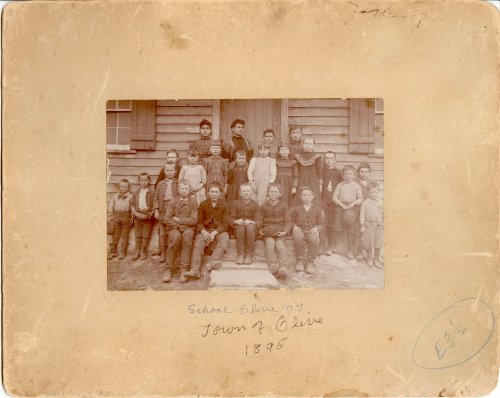
1895 8th Grade Final Exam

Dave

What it took to get an 8th grade education in 1895…

Remember when grandparents and great-grandparents stated that they only had an 8th grade education? Well, check this out. Could any of us have passed the 8th grade in 1895?

This is the eighth-grade final exam from 1895 in Salina , Kansas , USA . It was taken from the original document on file at the Smokey Valley Genealogical Society
and Library in Salina , and reprinted by the Salina Journal.

8th Grade Final Exam: Salina , KS – 1895

Grammar (Time, one hour)
1. Give nine rules for the use of capital letters.
2. Name the parts of speech and define those that have no modifications.
3. Define verse, stanza and paragraph
4. What are the principal parts of a verb? Give principal parts of ‘lie,”play,’ and ‘run.’
5. Define case; illustrate each case.
6 What is punctuation? Give rules for principal marks of punctuation.
7 – 10. Write a composition of about 150 words and show therein that you understand the practical use of the rules of grammar.

Arithmetic (Time,1 hour 15 minutes)
1. Name and define the Fundamental Rules of Arithmetic.
2. A wagon box is 2 ft. Deep, 10 feet long, and 3 ft. Wide. How many bushels of wheat will it hold?
3. If a load of wheat weighs 3,942 lbs., what is it worth at 50cts/bushel, deducting 1,050 lbs. For tare?
4. District No 33 has a valuation of $35,000.. What is the necessary levy to carry on a school seven months at $50 per month, and have $104 for incidentals?
5. Find the cost of 6,720 lbs. Coal at $6.00 per ton.
6. Find the interest of $512.60 for 8 months and 18 days at 7 percent.
7. What is the cost of 40 boards 12 inches wide and 16 ft.. Long at $20 per metre?
8. Find bank discount on $300 for 90 days (no grace) at 10 percent.
9. What is the cost of a square farm at $15 per acre, the distance of which is 640 rods?
10. Write a Bank Check, a Promissory Note, and a Receipt

U.S. History (Time, 45 minutes)
1. Give the epochs into which U.S. History is divided
2. Give an account of the discovery of America by Columbus
3. Relate the causes and results of the Revolutionary War.
4. Show the territorial growth of the United States
5. Tell what you can of the history of Kansas
6. Describe three of the most prominent battles of the Rebellion.
7. Who were the following: Morse, Whitney, Fulton , Bell , Lincoln , Penn, and Howe?
8. Name events connected with the following dates: 1607, 1620, 1800, 1849, 1865.

Orthography (Time, one hour)
[Do we even know what this is??]
1. What is meant by the following: alphabet, phonetic, orthography, etymology, syllabication
2. What are elementary sounds? How classified?
3. What are the following, and give examples of each: trigraph, subvocals, diphthong, cognate letters, linguals
4. Give four substitutes for caret ‘u.’ (HUH?)
5. Give two rules for spelling words with final ‘e.’ Name two exceptions under each rule.
6. Give two uses of silent letters in spelling. Illustrate each.
7. Define the following prefixes and use in connection with a word: bi, dis-mis, pre, semi, post, non, inter, mono, sup.
8. Mark diacritically and divide into syllables the following, and name the sign that indicates the sound: card, ball, mercy, sir, odd, cell, rise, blood, fare, last.
9. Use the following correctly in sentences: cite, site, sight, fane, fain, feign, vane , vain, vein, raze, raise, rays.
10. Write 10 words frequently mispronounced and indicate pronunciation by use of diacritical marks
and by syllabication.

Geography (Time, one hour)
1 What is climate? Upon what does climate depend?
2. How do you account for the extremes of climate in Kansas ?
3. Of what use are rivers? Of what use is the ocean?
4. Describe the mountains of North America
5. Name and describe the following: Monrovia , Odessa , Denver , Manitoba , Hecla , Yukon , St. Helena, Juan Fernandez, Aspinwall and Orinoco
6. Name and locate the principal trade centers of the U.S. Name all the republics of Europe and give the capital of each..
8. Why is the Atlantic Coast colder than the Pacific in the same latitude?
9. Describe the process by which the water of the ocean returns to the sources of rivers.
10. Describe the movements of the earth. Give the inclination of the earth.

Related Posts

Sequoyah Birthplace Museum

Dave

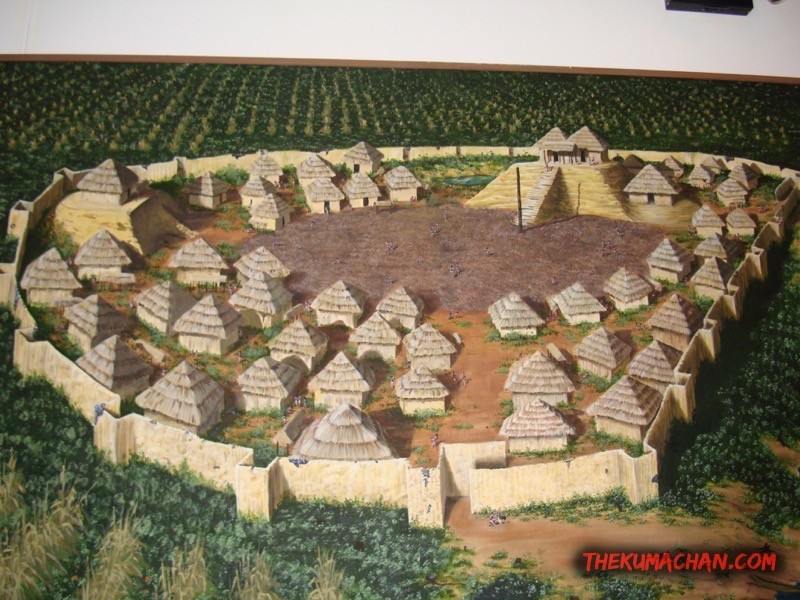
Today I went to the Sequoyah birthplace museum near Vonore, Tennessee. This was a very interesting museum because it talked about Sequoyah and the Cherokee Indians. In the museum they talked about the Trail of Tears which relocated the Cherokee indians from Tennessee to Oklahoma. There was all sorts of artifacts and information. Here are my photos from that experience. If you are interested in visiting or learning more, please click this link: http://www.sequoyahmuseum.org

Related Posts

What is the main ingredient of WD-40?

Dave

Before you read to the end, does anybody know what the main ingredient of WD-40 is? Don’t lie and don’t cheat. WD-40. Who knew; I had a neighbor who bought a new pickup. I got up very early one Sunday morning and saw that someone had spray painted red all around the sides of this beige truck (for some unknown reason). I went over, woke him up, and told him the bad news. He was very upset and was trying to figure out what to do…. probably nothing until Monday morning, since nothing was open. Another neighbor came out and told him to get his WD-40 and clean it off. It removed the unwanted paint beautifully and did not harm his paint job that was on the truck. I’m impressed! WD-40 who knew? ‘Water Displacement #40’. The product began from a search for a rust preventative solvent and degreaser to protect missile parts. WD-40 was created in 1953 by three technicians at the San Diego Rocket Chemical Company. Its name comes from the project that was to find a ‘water displacement’ compound.. They were successful with the fortieth formulation, thus WD-40. The Convair Company bought it in bulk to protect their atlas missile parts. Ken East (one of the original founders) says there is nothing in WD-40 that would hurt you… When you read the ‘shower door’ part, try it. It’s the first thing that has ever cleaned that spotty shower door. If yours is plastic, it works just as well as glass. It’s a miracle! Then try it on your stove top…Voila! It’s now shinier than it’s ever been. You’ll be amazed.

WD-40 uses:
1. Protects silver from tarnishing.
2. Removes road tar and grime from cars.
3. Cleans and lubricates guitar strings.
4. Gives floors that ‘just-waxed’ sheen without making them slippery.
5.. Keeps flies off cows.
6. Restores and cleans chalkboards.
7. Removes lipstick stains.
8.. Loosens stubborn zippers.
9. Untangles jewelry chains.
10. Removes stains from stainless steel sinks.
11. Removes dirt and grime from the barbecue grill.
12. Keeps ceramic/terra cotta garden pots from oxidizing.
13. Removes tomato stains from clothing.
14. Keeps glass shower doors free of water spots.
15. Camouflages scratches in ceramic and marble floors.
16. Keeps scissors working smoothly..
17. Lubricates noisy door hinges on vehicles and doors in homes.
18. It removes black scuff marks from the kitchen floor! Use WD-40 for those nasty tar and scuff marks on flooring. It doesn’t seem to harm the finish and you won’t have to scrub nearly as hard to get them off. Just remember to open some windows if you have a lot of marks.
19. Bug guts will eat away the finish on your car if not removed quickly! Use WD-40!
20. Gives a children’s playground gym slide a shine for a super fast slide.
21. Lubricates gear shift and mower deck lever for ease of handling on riding mowers…
22.. Rids kids rocking chairs and swings of squeaky noises.
23. Lubricates tracks in sticking home windows and makes them easier to open..
24. Spraying an umbrella stem makes it easier to open and close.
25. Restores and cleans padded leather dashboards in vehicles, as well as vinyl bumpers.
26. Restores and cleans roof racks on vehicles.
27. Lubricates and stops squeaks in electric fans
28. Lubricates wheel sprockets on tricycles, wagons, and bicycles for easy handling.
29. Lubricates fan belts on washers and dryers and keeps them running smoothly.
30. Keeps rust from forming on saws and saw blades, and other tools.
31. Removes splattered grease on stove.
32. Keeps bathroom mirror from fogging.
33. Lubricates prosthetic limbs.
34. Keeps pigeons off the balcony (they hate the smell).
35. Removes all traces of duct tape.
36. Folks even spray it on their arms, hands, and knees to relieve arthritis pain.
37. Florida ’s favorite use is: ‘cleans and removes love bugs from grills and bumpers.’
38. The favorite use in the state of New York , WD-40 protects the Statue of Liberty from the elements.
39. WD-40 attracts fish. Spray a little on live bait or lures and you will be catching the big one in no time. Also, it’s a lot cheaper than the chemical attractants that are made for just that purpose. Keep in mind though, using some chemical laced baits or lures for fishing are not allowed in some states.
40. Use it for fire ant bites.. It takes the sting away immediately and stops the itch.
41. WD-40 is great for removing crayon from walls. Spray on the mark and wipe with a clean rag.
42. Also, if you’ve discovered that your teenage daughter has washed and dried a tube of lipstick with a load of laundry, satur ate the lipstick spots with WD-40 and rewash. Presto! The lipstick is gone!
43. If you sprayed WD-40 on the distributor cap, it would displace the moisture and allow the car to start.
P.S. The basic ingredient is FISH OIL.

Related Posts

Topsy Turvy

Dave

I bought one of those Topsy Turvy’s like what you see on T.V. It looked like an interesting design and I wanted to see how well it worked. I planted some tomatoes in it and kept it watered very nicely. The cool thing about this design is that you are taking the dirt out of the ground and putting it above ground so the sun can keep it warm in order to allow the plant to grow nicely. The other nice thing is that you can’t over water this. If you over water it, the water just drips right out the bottom. The concept of this is really good because when you think about what some of the biggest polluters on the planet are it is shipping plants and vegetables from the country to the city. This is doing two things. 1. It is cutting down on pollution because you no longer need to ship to the city. 2. It is good for the planet by converting carbon dioxide into oxygen. By having vertical farms like this you are maximizing efficiency of places where you can grow.

thekumachan_topsy_turvy-1
This first photo is taken from June 26th, 2010.


These two photos were taken from July 1st, 2010.

A couple of downsides to the Topsy Turvy is that the tarp cloth construction of it rots out over time. This isn’t a prolonged solution. Also, after 1 year the dirt inside become really hard, so you need to periodically change the dirty. I would say that if you use it for just one year it is a good thing, but you probably won’t be able to get a prolonged usage out of it. Nice concept, nice design, construction needs some improvement if you want any type of long term solution.

Related Posts

Management Challenges

Dave

[Abstract]
The purpose of this document is to describe what types of management challenges can be incurred based upon a scenario of Kucera Clothier‚ introducing a collaboration system into their organization. Also included within this document are methods that can be used to manage change with expectations of other personnel. This document is intended for anybody looking to gain a basic understanding or knowledge of managing challenges within an organization and providing solutions for problems.

[Content]
Kucera Clothiers is implementing a collaboration system into their organization in order to improve communications, increase efficiency, and to improve customer relations, however they will most likely incur management challenges throughout the implementation of the new system. When managing people, products, or even projects there is a great probability that problems will occur and in order to effectively manage the challenge is important to address any issues immediately and move forward with the desired objective. Some of the challenges that can arise can come from people such as personality differences, power struggles, training issues, or even the lack of manpower. Other business challenges that can arise from a global company like Kucera Cothiers are religious, cultural, time related, and even legal issues. It is important for Kucera Clothiers to address any issues that may arise quickly and then refocus on the collaboration system project.

To better understand how Kucera Cothiers can deal with different challenges it is important to look at different management challenges that could arise and then consider possible solutions. First and foremost the most valuable asset to any organization are the employees of that organization. People management is instrumental to ensuring Kucera Clothier’s success (Frenzel, Frenzel, 2004 P.524). When managing people it is important for a manager to maintain a positive attitude and deal with any issues on a case-by-case basis. For a manager of people it is necessary to provide employees the tools that are needed to do their job and empower their employees to be creative to complete a task, however it is important for the manager to follow up on a task to ensure it has been completed according to requirements. A manager is also able to gain support and respect of their employees by being proficient in their job and by being proficient as a manager. This is important because an employee’s willingness to do a better job can come from feeling like they belong to a successful team. A manager can create and maintain a high level of morale by fostering a positive and competitive environment for which employee’s want to be a part of. One example of how a manager can foster a positive work environment is by sticking to the rule of thumb of “praising in public, punishing in private.” By following this rule of thumb a manager does not make an employee feel embarrassed or humiliated for making a mistake. In order to be an effective manager of people there are expectations that are required from others in order to effectively manage people. One of the expectations of employees is to provide feedback and effective communication in order to keep the manager aware of any challenges so that the manager can effectively manage the issues. Another expectation is to be respectful of others to aid in creating a positive work environment. Lastly another expectation of an employee is for the employee to do the best job they are able to with the resources that they have available.

Change management is another management that may be required by Kucera managers in order to deal with different challenges of implementing the collaboration system that could affect the delivery of the collaboration system service. Change management is a technique that is used to handle changes of the system such as hardware changes, software changes, environmental changes, management changes, or any other type of change to the system that can affect directly on the system or the service of the system that is being provided. In order to effectively manage changes there are five different elements that can help a manager effectively manage the change. A change request can be submitted that identifies what change is necessary to the system. After the change request has been submitted the manager can conduct a change analysis and then prioritize the change request based upon a risk assessment (Frenzel, Frenzel, 2004 P.390). The manager can then plan for the change, which may require some additional research. Then the manager can get authorization to implement the change. By following this process managers can effectively manage changes and minimize risks that could adversely affect the system. An expectation of employees is that they follow the change request procedure so that the manager can manage the change accordingly.

In conclusion, there are numerous possible challenges that could arise for Kucera Clothiers, while they are implementing the collaboration system, however by addressing the challenges effectively allows for Kucera to maintain focus on the implementation of the collaboration system, which can lead to the success of the system. When managing people it is important for a manager to create and maintain a positive environment for employees, while empowering them and challenging them to complete their tasks quickly and completely. Managers can also effectively manage any change to the system by following a process, which gives the manager necessary information to complete the process. No matter whether people, processes, or even change is being managed there are expectations of others that aid the managers in having the ability to properly managing the challenges.

References
Frenzel, Frenzel, C. W., J. C. (2004). Management of Information Technology Fourth Edition. Boston, Massachusetts: Thomas Learning Inc..

Related Posts

Security Concerns of a Collaboration System

Dave

[Abstract]
The purpose of this document is to analyze the collaboration system that is to be migrated into the Kucera Clothier’s company and identify security concerns with the system, as well as, identify methods to minimize the risk of an incident of unauthorized access to company information. This document is intended for anybody looking to gain a basic knowledge or understanding of security concerns with an introduction of a new technology into an organization.

[Content]
Kucera Clothiers is considering incorporating a collaboration system into their organization, however they want to ensure the collaboration system will resolve communication issues the organization is having without introducing new problems or concerns into the organization. When analyzing the security of a network system it is helpful to use the Open Source Interconnect (OSI) model by starting from the lowest layer of the model and working through each layer to the top while considering security techniques at each layer. The seven layers of the OSI model from the bottom to the top layer are the physical layer, data link layer, network layer, transport layer, session layer, presentation layer, and application layer (Teare, 1999). Using the OSI model aids as a guide to ensure a network or networked systems are secure at different levels of computer networking.

The physical layer is the most basic layer of ensuring networked devices are secured. By ensuring physical security of networked devices can ensure that unauthorized personnel do not have unauthorized access to network resources, computers, and even data that reside on the network. One way to ensure physical security of a collaboration system is by keeping the active equipment locked in a server room where only authorized personnel have access. If the ability exists it adds an additional layer of physical security by locking the equipment in an equipment rack. A method for protecting the network connectivity within the corporate headquarters and also within the satellite offices is by locking doors and offices during non business hours and by using security systems such as cameras, alarmed doors, and security personnel. Physical security enables owners of equipment and network resources to maintain control and management of their systems and equipment.

The data link layer is a layer that pertains to network devices, such as network switches, and although this layer doesn’t allow for a lot of security it does provide one additional layer of security. A technique for providing security at the data link layer for the collaboration system as well as other network resources is by using managed switches to the network. As part of the policy of the organization it should be mandated that all unused ports on a switch be disabled. This prevents unauthorized personnel to connect unauthorized devices to existing network resources in attempt to gain access to these resource and data. Another technique to providing security at the data link layer is to enable port security on a managed switch. Port security allows for a device to be connected, however if for some reason, that device is disconnected and different device is plugged in then the port will automatically disable and prevent use of this network resource (Davis, 2006). The data link layer of the OSI model does not provide many means of security, but applying security techniques that are available provide an additional level of security.

The network layer of the OSI model is where most routing takes place and there are different devices and techniques that can be used to ensure only authorized access to networks and network resources is obtained. Kucera Clothier’s will need to use network routers to ensure there are communications between the corporate headquarters in Chicago and the different satellite offices around the world. A security technique that can be applied on a router is to create access control lists (ACL) that prevent unauthorized access to a network from untrusted hosts or networks. In addition to using ACLs on routers, network firewalls can be installed and configured to inspect every packet that is either entering or exiting a network and then determine if the source of that packet is authorized to send the packet to the destination. In addition to inspecting every packet entering or leaving a network a network firewall can close all unused network service ports in order to prevent unauthorized access through an unused port. Router access control lists and network firewalls prevent unauthorized access to network resources by blocking unused ports, maintaining a list of trusted hosts or networks, and by inspecting packets to ensure it is authorized. Another method of ensuring security at the network layer is to use Internet Protocol Security, otherwise known as IPSec. IPSec provides packet encryption by encrypting the data that is contained within a packet, but leaving the source and destination information unencrypted so that the packet can be routed, but the data is secured. Because IPSec functions at the network layer of the OSI model the upper layers and data is protected. For remote satellite offices, IPSec can ensure that data transmitted from a satellite office to Kucera corporate headquarters is being transmitted securely. Network layer security can protect networks by checking access control lists, blocking ports, inspecting packets and even by providing encryption.

Security at the transport layer of the OSI model can be found in many different types of web traffic. One method of security the transport layer of the OSI model is by using transport layer security, otherwise known as TLS. TLS is a cryptographic protocol that provides data integrity and security. Another method that superseded TLS is secure sockets layer. Both TLS and SSL function by providing an end-to-end encryption between different network segment connections. Either TLS or SSL can be used in conjunction with the online collaboration system no matter if a user is using a voice over IP service, web service, e-mail service, or even an instant messaging service. The use of TLS and SSL provides transport layer security by ensuring point-to-point encryption is provided.

The presentation layer of the OSI model is less often used by most users, however there are certain ways to ensure security. The presentation layer provides the ability to connect different operating systems and different types of systems together while hiding the differences between these different systems. Arguably the presentation layer also provides the means to provide compression so that data passing along an encrypted path can be transmitted in less amount of time. Some, but not all of SSL encryption takes place at the presentation layer. The presentation layer is most likely the least used layer of the OSI model because not all of the network communications that take place at the presentation layer are needed. In many cases the options for presentation layer communications are optional as opposed to being required or better security techniques are provided at the transport layer or the application layer of the OSI model.

The application layer of the OSI model encompasses many different protocols that can be used during application development to ensure security at the application layer. When using an application there are ways to ensure data is being protected. Developers and system administrators can choose to use methods of secure communication within their applications such as secure FTP (SFTP), secure shell (SSH), lightweight directory access protocol (LDAP), time stamp protocol, simple mail transfer protocol, and the list can go on and on. Administrators can ensure a system, such as a collaboration system, maintains high levels of security by making small configurations to systems such as configuring a database server to only accept encrypted connections between trusted devices. Another method is to employ the use of a LDAP server to query a directory server to ensure a user is authorized and authenticated on a network. When transferring files a system administration can make a configuration to a system to only allow SFTP connections. This guarantees all data in transit is encrypted. Application layer security can be taken into consideration during the development of an application, application configurations can be made to maintain high levels of security, or even specific applications can be used to provide different security practices.

In conclusion, Kucera Clothier’s are considering using a collaboration system to resolve communication issues without inducing new problems into the organization, while protecting their data and by using the OSI model as a guideline Kucera Clothier’s can ensure all data and communications are being protected. Kucera can provide a layered approach to security by employing security techniques at each layer of the OSI model. Providing security techniques at each layer of the OSI model help to compliment each other so that data, network resources, and systems are safe and sound within their organization. If the layered approach is used Kucera can maintain peace of mind that all data, either in transit or residential on their networks, is safe and sound and waiting for the organization to use it at will.

References
1. Teare, D. (1999). Internetworking Basics. Internetworking Technology Handbook, Retrieved May 30th, 2009, from http://www.cisco.com/en/US/docs/internetworking/technology/handbook/Intro-to-Internet.pdf
2. Davis, D. (2006, October 5th). Lock down Cisco switch port security. Retrieved May 31, 2009, from Tech Republic Web site: http://articles.techrepublic.com.com/5100-10878_11-6123047.html

Related Posts

Problems Incurred When Implementing New Technology

Dave

[Abstract]
The purpose of this document is to describe what types of problems are most likely to be incurred while implementing a technology into an organization, such as the collaboration system into the organization for Kucera Clothiers scenario. Also included within this document are recommendations for how the problems can be resolved. This document is intended for anybody looking to gain a basic understanding or knowledge of managing challenges within an organization and providing solutions for problems.

[Content]
Kucera Clothiers is implementing a collaboration system into their organization in order to improve communications, increase efficiency, and to improve customer relations, however they will most likely incur problems throughout the implementation of the new system. When managing people, products, or even projects there is a great probability that problems will occur and in order to effectively manage it is important to address any issues and press forward with the objective at hand. Some of the issues that can arise can come from people such as personality differences, power struggles, training issues, or even the lack of manpower. Other issues that can arise from a global company like Kucera Cothiers are religious, cultural, time related, and even legal issues. It is important for Kucera Clothiers to address any issues that may arise quickly and then refocus on the collaboration system project.

To better understand how Kucera Cothiers can deal with different issues it is important to look at the different issues that could arise and then consider possible solutions. Since Kucera Clothiers has chosen to implement a new collaboration system one of the possible issues that could arise from this system is training for all employees from around the world. In order to Kucera corporate headquarters to ensure all of its employees have been trained and understand how to use the system, it would cost too much in time and money to send all employees to training or seminars that may be generic or not specific to the company’s mission or goals anyway. One possible solution is to provide a web-based training either by using websites, downloadable videos, or even through the use of the collaboration system. This solution would be cost effective and most efficient for training all 100,000 employees from around the world (Frenzel, Frenzel, 2004 P.338). Another issue that could arise from the centralized location of the collaboration system is that different regions around the world may want to manage their own data. Kucera corporate headquarters identifying specific responsibilities in organizational policies can easily resolve this issue. An example of a legal issue that could arise could be that an employee is gathering company data and selling it to competitors because the employee thinks that they are in a foreign land that the United States laws do not apply to them. This issue may need to be prevented, but also addressed on a couple different levels. The first would be that the corporate headquarters, where the collaboration system is location, should be tracking all employees to ensure they are following corporate policies and then for employees, like this one, should be held accountable by being terminated or prosecuted according to corporate policies (Frenzel, Frenzel, 2004 P.341). A management issue that could arise could be that the project is falling behind and not being implemented as planned, which leads to delays, loss of revenue, and loss of customer satisfaction. In order to resolve an issue like this, the manager of the project may have to reconsider the milestones that have been previously identified, talk with the technicians to identify issues that are causing the delays, conduct a meeting with the installation team to get everybody organized and refocused, and potentially set more realistic milestones based upon the issues that have been identified.

In conclusion, there are numerous possible issues that could arise for Kucera Clothiers, while they are implementing the collaboration system, however by addressing the issues swiftly and concisely allows for Kucera to maintain focus on the task at hand so that it can be completed in a timely manner. When addressing any of the issue that arise, it is important to ensure that the issues to not build up and lead to larger issues which in turn can lead to the loss of time, resources, and revenue. It is important that all issues are dealt with on a case-by-case basis and given an equal amount of consideration in order to ensure the issue is resolved quickly and fairly. Dealing with issues quick and concise ensures that they are resolved at the lowest possible level of the organization and that control over the issues is maintained at all times.

References
Frenzel, Frenzel, Carroll W., John C. (2004). Management of Information Technology Fourth Edition. Boston, Massachusetts: Thomas Learning Inc..

Related Posts

Collaboration System

Dave

[Abstract]
The purpose of this document is to provide an implementation and management plan, as part of a scenario, for implementing a collaboration system into Kucera Clothiers. Included within this document is a definition of the organizational goals or communication issues the collaboration system will resolve. Also included within this document is an explanation of some of the key players who will be part of the implementation or management of the system, as well as, an explanation of what type of input should be gathered from these key personnel. An explanation of developing a technology or purchasing the technology is best suited to benefit the company. A recommendation for which type of training should be provided and how it will be provided to either key Kucera employees or all employees. A plan explaining how the implementation of the collaboration system into the organization can be executed, as well as, a plan for system maintenance included any software upgrades or security patches that need to be applied to the system. Finally a plan describing how and when periodic audits will be conducted on the system.

[Content]
Kucera Clothiers is a large business with 100,000 employees spread out over 3,500 locations around the world with their corporate headquarters in Chicago, Illinois who is looking to invest in a collaboration system to align with their business strategy and resolve some communication issues they are incurring. The collaboration system that Kucera is looking at investing in provides the ability to communicate either by using a web-based or network-based interface. The collaboration system provides the ability to improve communications between the corporate headquarters and the satellite offices throughout the world and it also provides travelling employees the ability to communicate by using either synchronous or asynchronous communication methods. The benefits of the collaboration system falls directly in line with Kucera’s corporate strategy as they wish to improve communications between their corporate and satellite offices, as well as, reducing the time it takes for inventories to get to the distribution centers so that the products can get from the distribution centers to the customers in a shorter amount of time while travelling employees can still have access to customer and company information.

When introducing a new system into an organization, such as the collaboration system into Kucera Clothier’s, there are key players who help to make the system successful for implementing and managing the system. Due to the collaboration system being installed into the corporate headquarters communications room the IT staff is responsible for installing all of the equipment, testing it, and maintaining it once the system is up and running. This makes the IT staff key players for the implementation of the project. Once the system is installed the corporate headquarters staff will most be likely to be the initial users of the system to ensure user to smooth rollout and implementation of the system. Key players who work in the corporate headquarters are the managers of the different departments such as accounting, shipping, billing, personnel, and support. It is important to have the managers ensure the collaboration system is being populated with current business data so that when the system is being used by all locations then all employees will have access to current and correct information. Additional key players are the managers or even site leads for the different satellite locations. The satellite location managers are key players because they need to be initially trained on the system so that they can ensure all employees at their location know how to use the system according to company protocol and policies. The key players are the staff that is directly or indirectly responsible for ensuring the system is installed, operating, being maintained, and then being used according to company policy. The key players are instrumental in ensuring the collaboration system is successful within the organization by providing valuable input to ensure the system meets each of their specific requirements or needs based upon their specific areas of expertise. Input that can be gathered from the IT staff is the technical information pertaining to the system such as network connectivity and configuration information, IT security information, network policy information, data migration information, and even user account management information. The input that can be gathered from each of the department managers is the specific information that pertains to the respective department. For example accounting may need to ensure that only accounting personnel have access to accounting specific data whereas personnel data may need to be accessed by each manager, but also by accounting, corporate, and the IT staff. Input that may be gathered from each satellite location manager may pertain to site-specific information such as which network connectivity method best suites the needs of their specific site.

When Kucera Clothier’s is trying to make an initial determination whether to purchase and existing technology or develop their own there are some different factors that they need to predetermine. One question that can be asked is, “when is the system needed?” If the system is needed on a short timetable then there may not be an option to develop the technology if a similar technology like already exists (Frenzel, Frenzel, 2004 P.305). Another factor that may come into play is the size of the IT team and what level of experience they have developing the needed technology. Since Kucera is a clothing company they may not have the IT staff to develop IT products, their IT staff may only be experienced in maintaining and administering systems. Another consideration may be that if the company is looking to get into other markets by selling the technology they are considering developing. There are numerous collaboration systems on the current market so Kucera Clothier’s may want to consider purchasing one of the existing technologies to benefit their needs and that their own IT staff can support. There are different considerations to take into account when making a determination whether to develop a technology or purchase an existing technology and since Kucera is in the retail business it may best suite their business model to purchase an existing technology and allow their own IT staff to support it.

With the implementation of the new system Kucera Clothier’s needs to plan the who, what, why, when, where, and how of training for its personnel so that they will be familiar and comfortable with the new system. Initially after the system has been installed, tested, and all relevant data has been migrated over to the system it would be beneficial to the organization for all of the department leads to learn the system first. That way if any subordinate personnel, offices, or organizations have questions about the system they can contact their department head to try to initially resolve any issues they have. If the division lead has identified a system training or support person or persons for their division, it may be more beneficial to have them attend the initial training that can be conducted onsite at the corporate office in Chicago. Each division lead should determine which is a better method, either the division head or division support team, for their division respectively. The training rollout for the collaboration system should initially begin with the corporate headquarters, since that is where the division heads and or the division support personnel are located. Upon training of the Kucera headquarters, the department heads should set a schedule a time for the training of each satellite lead personnel to be able to utilize the collaboration system in order to receive training. The schedules of this remote training method should be scheduled to best suite the business hours of the satellite offices in a particular region. All training should be conducted during normal business hours and the initial remote training method may take a bit longer than on site training due to remotely training personnel. Once the satellite office leads feel comfortable with the system they can schedule training times for their employees at their respective satellite office. The method of starting from the top of the organization and working to the bottom, until all personnel have been trained should satisfy any system training requirements for the entire organization. Also, due to the nature of the online collaboration system, refresher videos may be posted on the system so any employees who feel they need either a annual training or just a refresher training, can be accessed at their leisure.

The collaboration system can start to be implemented as soon as all of the equipment has arrived at the corporate headquarters and has been inventoried and tested for any hardware failure issues that may have been caused during shipping. Due to the collaboration system not replacing another system, it can be implemented immediately without being intrusive to the organization. The implementation should be broken down into a three-part implementation process. The initial phase of the process will be receiving the equipment, testing the equipment, installing the equipment, and then testing the physical hardware of the system again. The second phase of the implementation plan should be where the configuration of the system takes place. This includes configuring the system to support all network services that the system will support. The last part of the second, or configuration, phase should be to apply any security to the system that is necessary. The last part of the second phase is to test the system to ensure that everything is functioning properly and locked down according to any security policies. The final phase of the implementation of the system should be to start creating user accounts for the initial personnel who will be responsible for training and being trained on the system. The second part of the third phase is complete the rest of the user accounts based on the hierarchical structure of the organization, starting from the top and working down until all user accounts have been completed. The last step of the third phase is to provide any user support for users who are having issues with the system and completing documentation. Completing the implementation of the system in a three-part process can assist with setting milestones for the project so that the implementation of the system can be a success.

Once the collaboration system has been completely implemented and personnel have been trained, system hardware and software maintenance schedules will need to be completed. Due to Kucera Clothiers being a global organization, it is virtually impossible to complete maintenance during a time when nobody is using the system, however system maintenance can be completed during non-peak hours of use. The most ideal time for system maintenance should be during a Saturday morning between the hours of 8 AM and 2 PM. This means that for 12 hours ahead of Chicago time zone is either late Saturday night or early Sunday morning and 12 hours behind Chicago time zone is late Friday night and therefore Saturday morning until mid day should be the most ideal time to conduct system maintenance. Prior to any system maintenance, either hardware or software, system audits should be completed so that the exact state of the system prior to any maintenance, can be identified so that in the event of a software maintenance causing a problem on the system the system can be restored to its previous condition (Frenzel, Frenzel, 2004 P.492). System maintenance should include once a month hardware preventative maintenance such as cleaning any dust from the internal chassis of the servers. Weekly checks of security or software patches should be conducted and applied to the system as necessary. Finally weekly complete backups of the system should be conducted and then the backups should be stored off-site so that in the event of a natural disaster the system can be recovered with no data loss.

References
Frenzel, Frenzel, C. W., J. C. (2004). Management of Information Technology Fourth Edition. Boston, Massachusetts: Thomas Learning Inc..

Related Posts

Project “Phasing In”

Dave

[Abstract]
The purpose of this document is to explain the term “phase in” and how it relates to phasing in a server cluster. Also included within this document is an explanation of what type of risk analysis needs to be conducted in order to phase in the cluster. This document is intended for anybody looking to gain a basic understanding or knowledge of risk analysis and how to merge a new system with an existing system and how it impacts operations.

[Content]
In order for Kucera Clothiers to integrate a server cluster into their organization, it should be a goal to decide how to integrate the new system with any current systems while minimizing any interruptions of operations. It is important for Kucera to “phase in” the new system by using a three-step plan in order to reduce any interference with company operations (Microsoft, 2008). Trying to incorporate an entire system all at one time without impacting operations can be rather cumbersome, therefore it is recommended to phase in the system in a few different steps. The initial step of the phase in plan is to physically install all of the hardware and test it to ensure everything is functioning correctly. The second step of the phase in plan is to migrate network services, one by one, onto the server cluster and test each service to ensure it is functioning correctly. The final step of the phase in plan is to migrate user data in small groups until all users have been migrated to the new system and then test to ensure there is no data lost and everything is functioning correctly. Once the new system has been completely phased in Kucera Clothiers can power down and reallocate the legacy system as necessary.

Prior to phasing in any new system into current operations it is important for Kucera Clothiers to conduct a risk analysis to determine how operations can be affected in the event something does not go as planned. When conducting a risk analysis, it is important to identify what types of risks are involved whether the risk is a human risk, operational risk, procedural risk, technical risk, natural risk, or even a political risk (Mind Tools Ltd, 2009). The risk analysis should determine how the phase in plan has the largest impact on the organization and then try to manage that risk. Due to network services affecting the majority of users at one time, it is recommended to migrate the network services one at a time in order to minimize the potential for an issue to affect the vast majority of users. Also, because network services affect the vast majority of users within the organization it is recommended to migrate the services, either during non-business hours or during hours of minimal network traffic. Once the risk analysis has been conducted and a plan has been devised in order to deal with the majority of users, then the risk analysis can be conducted in order to devise a plan how to migrate uses with minimal impact. Due to Kucera being a global company, it is recommended to migrate user data during non-business hours starting with users in the Greenwich Median Time (GMT) zone and progressing through the rest of the time zones moving groups of users and then testing the migration of user data prior to the start of the business day for those users.

In conclusion, Kucera Clothiers can minimize operational impact by first conducting a risk analysis in order to identify how the organization can be impacted and devising a plan to minimize that risk. Kucera can also “phase in” the server cluster into their organization by using a three-step plan. Step one ensures the hardware is installed, configured, and tested. Step two involves migrating network services from the old system to the server cluster and testing it. Step three involves migrating user data in increments of users during non-business hours and testing to ensure no data has been lost. By conducting a risk analysis and using a phase in plan, Kucera Clothiers can successfully implement the use of a network server cluster to support their IT goals.

References
1. (2008, November). Configuring Integration Services in a Clustered Environment. Retrieved May 17, 2009, from Configuring Integration Services in a Clustered Environment Web site: http://technet.microsoft.com/en-us/library/ms345193(SQL.90).aspx

2. (2009). Risk Analysis & Risk Management. Retrieved May 17, 2009, from Project Risk Analysis Techniques – Risk Management from Mind Tools Web site: http://www.mindtools.com/pages/article/newTMC_07.htm

Related Posts

Problems a Business Can Incur

Dave

[Abstract]
The purpose of this document is to describe what types of problems are most likely to be incurred while implementing a technology into an organization, such as the collaboration system into the organization for Kucera Clothiers scenario. Also included within this document are recommendations for how the problems can be resolved. This document is intended for anybody looking to gain a basic understanding or knowledge of managing challenges within an organization and providing solutions for problems.

[Content]
Kucera Clothiers is implementing a collaboration system into their organization in order to improve communications, increase efficiency, and to improve customer relations, however they will most likely incur problems throughout the implementation of the new system. When managing people, products, or even projects there is a great probability that problems will occur and in order to effectively manage it is important to address any issues and press forward with the objective at hand. Some of the issues that can arise can come from people such as personality differences, power struggles, training issues, or even the lack of manpower. Other issues that can arise from a global company like Kucera Cothiers are religious, cultural, time related, and even legal issues. It is important for Kucera Clothiers to address any issues that may arise quickly and then refocus on the collaboration system project.

To better understand how Kucera Cothiers can deal with different issues it is important to look at the different issues that could arise and then consider possible solutions. Since Kucera Clothiers has chosen to implement a new collaboration system one of the possible issues that could arise from this system is training for all employees from around the world. In order to Kucera corporate headquarters to ensure all of its employees have been trained and understand how to use the system, it would cost too much in time and money to send all employees to training or seminars that may be generic or not specific to the company’s mission or goals anyway. One possible solution is to provide a web-based training either by using websites, downloadable videos, or even through the use of the collaboration system. This solution would be cost effective and most efficient for training all 100,000 employees from around the world (Frenzel, Frenzel, 2004 P.338). Another issue that could arise from the centralized location of the collaboration system is that different regions around the world may want to manage their own data. Kucera corporate headquarters identifying specific responsibilities in organizational policies can easily resolve this issue. An example of a legal issue that could arise could be that an employee is gathering company data and selling it to competitors because the employee thinks that they are in a foreign land that the United States laws do not apply to them. This issue may need to be prevented, but also addressed on a couple different levels. The first would be that the corporate headquarters, where the collaboration system is location, should be tracking all employees to ensure they are following corporate policies and then for employees, like this one, should be held accountable by being terminated or prosecuted according to corporate policies (Frenzel, Frenzel, 2004 P.341). A management issue that could arise could be that the project is falling behind and not being implemented as planned, which leads to delays, loss of revenue, and loss of customer satisfaction. In order to resolve an issue like this, the manager of the project may have to reconsider the milestones that have been previously identified, talk with the technicians to identify issues that are causing the delays, conduct a meeting with the installation team to get everybody organized and refocused, and potentially set more realistic milestones based upon the issues that have been identified.

In conclusion, there are numerous possible issues that could arise for Kucera Clothiers, while they are implementing the collaboration system, however by addressing the issues swiftly and concisely allows for Kucera to maintain focus on the task at hand so that it can be completed in a timely manner. When addressing any of the issue that arise, it is important to ensure that the issues to not build up and lead to larger issues which in turn can lead to the loss of time, resources, and revenue. It is important that all issues are dealt with on a case-by-case basis and given an equal amount of consideration in order to ensure the issue is resolved quickly and fairly. Dealing with issues quick and concise ensures that they are resolved at the lowest possible level of the organization and that control over the issues is maintained at all times.

References
Frenzel, Frenzel, Carroll W., John C. (2004). Management of Information Technology Fourth Edition. Boston, Massachusetts: Thomas Learning Inc..

Related Posts

Scenario Proposal of a Server Cluster

Dave

[Abstract]
The purpose of this document is to provide a proposal for a server cluster that will be introduced to Kucera Clothiers. This proposal is based upon a scenario of Kucera Clothiers is looking to improve communications between their corporate headquarters that is located in Chicago and its 3,500 other locations throughout the world. Kucera employs over 100,000 employees at their different locations throughout the world. Included within the proposal that will be proposed to Kucera Clothiers are some system requirements, costs, anticipated return on investment, security issues, and information management. This document is intended for anybody looking to gain a basic knowledge or understanding of how a project proposal can be introduced to a company.

[Content]
Kucera Clothiers should maximize use of current resources in order to provide a network service that can accommodate any and all IT services today, but also well into the future. Kucera can maximize their return on investment of the existing network infrastructure and yet still provide scalable solutions for years to come. The use of a network server cluster can allow Kucera Clothiers to provide network services to all employees throughout the world with a 99.99% uptime guarantee. Providing services with a 99.99% reliability will greatly improve customer service, sales/customer relations, and efficiency throughout the company. The ability for employees to access data from anywhere at any time throughout the world is vital in today’s globalized markets.

A networked server cluster allows multiple servers to share valuable resources in order to handle any request, at anytime, from anyone. A server cluster functions by having multiple network interface cards (NICs) installed in multiple servers. One NIC allows users to access services and resources from the public network, however the 2nd NIC allows the different servers to communicate with each other and share valuable resources on a private network without interfering with any requests coming from the public network. Clustered servers can provide services such as: e-mail, web, file sharing, collaboration, database, and other specialized services. In the event that an additional service is needed, the service simply needs to be enabled on the cluster to allow the organization to grow with future needs or requirements. Server clusters provide much value to an organization by providing a high availability so that users in different time zones can access the servers as needed, thus allowing the company to maximize productivity. Due to the use of multiple servers, if one server or device should fail, the others can share the load until the device can be repaired or replaced (RedHat Inc., 2009). The design of a server cluster allows for the computing power to be located in one centralized location, in contrast to incurring high costs to locate the high performance computing out to each of the 3,500 locations worldwide. A server cluster can provide much value to an organization by providing all services from one centralized location with high performance servers that can easily handle the processing workload of all the company’s employees from around the world while maintaining a 99.99% uptime guarantee to allow the users to be more productive.

Prior to installing a server cluster there are some requirements that need to be met so that the cluster can easily mesh with the organizations requirements. There needs to be enough server rack space to accommodate the cluster. There also needs to be enough power provided to the server racks to meet all the power needs of the system. The location where the cluster is going to be housed needs to be an environmentally controlled climate. The facility that the cluster will be located needs to have diversified network paths so that in the even one should go down; other paths are able to handle the network traffic. The facility where the cluster is going to be located also needs a managed network switch with enough available ports to handle the configuration of multiple virtual LANs (VLANs) in order to support the cluster. The location where the servers will reside needs to be a physically secure location. When supporting any system it is important to ensure all of the system requirements can be met before obtaining the system.

The cost estimate of the system includes all necessary peripherals to include hardware, software, licensing, and support. The total cost of the system is $22,235. This cost is for the purchase of 5 Dell PowerEdge 1950 III servers with Redhat Linux installed on the systems and a 3-year basic on-site support. The exact system options are listed below (Dell, 2009):
PowerEdge 1950 III Quad Core Intel® Xeon® E5405, 2x6MB Cache, 2.0GHz, 1333MHz FSB
Additional Processors Single Processor only
Memory 32GB 667MHz (8x4GB), Dual Ranked DIMMs
Operating System Red Hat Enterprise Linux 5.2, 2S, FI x64, 1yr, Auto-Entitle, Lic & Media
Multipack Operating System None
Operating System Addition None
OS Partitions None
Chassis Configuration Rack Chassis with Static RapidRails
Backplane 1×2 Backplane for 3.5-inch Hard Drives and SATA Optical
Primary Controller SAS 6/iR Integrated Controller
2nd Controller and HBAs None
Hard Drive Configuration Integrated SAS/SATA No RAID, SAS 6/iR Integrated
Primary Hard Drive 1TB 7.2K RPM Universal SATA 3Gbps 3.5-in HotPlug Hard Drive
2nd Hard Drive Discounted Upgrade! 1TB 7.2K RPM Universal SATA 3Gbps 3.5-in HotPlug Hard D
3rd Hard Drive None
4th Hard Drive None
PCI Riser Riser with 2 PCIe Slots
Power Supply Energy Smart Redundant Power Supply with Y-Cord
Power Cords Power Cord, NEMA 5-15P to C14, 15 amp, wall plug, 10 feet / 3 meter

Utilizing current network infrastructure, facility environment, and networking devices, the total cost of ownership for the server cluster can be identified by the total cost of all necessary hardware and support.

The return on investment for the system can be immediately identified by the design of the system. Even though the initial cost of the system may seem high to managers who are unaware of IT costs, the total cost of the system is miniscule compared to the cost if the processing power was decentralized and located at each individual location. An additional return on investment can be clearly seen because the centralized location of the servers ensures the servers are physically secured and the servers are centrally managed to ensure the data on the servers is secured. Also due to the servers being centrally located the need for IT support personnel at each of the locations is non-existent. All IT support will be provided in one centralized location, which saves the company money from paying for support at multiple locations and varying fees. The scalability of the system provides much added value to grow as the company grows. The server cluster provides an immediate return on investment by cutting IT support costs, improving overall system and data security, and being scalable to grow as the company demands.

In conclusion, a centralized server cluster can provide much value to Kucera Clothiers by allowing all employees to have access to valuable data at anytime from anywhere. The cluster provides necessary IT services today, but it is also scalable to meet the IT needs of the future too. The server cluster will provide an immediate return on investment by cutting IT costs at multiple locations by housing the high performance servers in one centralized location. Due to the centralized design of the system, all security concerns of the systems and their data will be easily addressed. By using current resources that are available, the total cost of the system includes nothing more than the hardware and support costs. Kucera Clothiers wishes to improve communications throughout the organization and this server cluster provides the means to do so.

References
1. redhat.com | Red Hat Cluster Suite. Retrieved May 16, 2009, from redhat.com | The World’s Open Source Leader Web site: http://www.redhat.com/cluster_suite/
2. The Dell Online Store: Build Your System. Retrieved May 16, 2009, from Dell Laptops, Desktop Computers, Monitors, Printers & PC Accessories Web site: http://configure.us.dell.com/dellstore/config.aspx?c=us&cs=04&fb=1&kc=productdetails~pedge_1950_3&l=en&oc=becwxk1&s=bsd&vw=classic

Related Posts

Proposed Server Cluster for Scenario Business

Dave

[Abstract]
The purpose of this document is to provide a proposal for a server cluster that will be introduced to Kucera Clothiers. This proposal is based upon a scenario of Kucera Clothiers is looking to improve communications between their corporate headquarters that is located in Chicago and its 3,500 other locations throughout the world. Kucera employs over 100,000 employees at their different locations throughout the world. Included within the proposal that will be proposed to Kucera Clothiers are some system requirements, costs, anticipated return on investment, security issues, and information management. This document is intended for anybody looking to gain a basic knowledge or understanding of how a project proposal can be introduced to a company.

[Content]
Kucera Clothiers should maximize use of current resources in order to provide a network service that can accommodate any and all IT services today, but also well into the future. Kucera can maximize their return on investment of the existing network infrastructure and yet still provide scalable solutions for years to come. The use of a network server cluster can allow Kucera Clothiers to provide network services to all employees throughout the world with a 99.99% uptime guarantee. Providing services with a 99.99% reliability will greatly improve customer service, sales/customer relations, and efficiency throughout the company. The ability for employees to access data from anywhere at any time throughout the world is vital in today’s globalized markets.

A networked server cluster allows multiple servers to share valuable resources in order to handle any request, at anytime, from anyone. A server cluster functions by having multiple network interface cards (NICs) installed in multiple servers. One NIC allows users to access services and resources from the public network, however the 2nd NIC allows the different servers to communicate with each other and share valuable resources on a private network without interfering with any requests coming from the public network. Clustered servers can provide services such as: e-mail, web, file sharing, collaboration, database, and other specialized services. In the event that an additional service is needed, the service simply needs to be enabled on the cluster to allow the organization to grow with future needs or requirements. Server clusters provide much value to an organization by providing a high availability so that users in different time zones can access the servers as needed, thus allowing the company to maximize productivity. Due to the use of multiple servers, if one server or device should fail, the others can share the load until the device can be repaired or replaced (RedHat Inc., 2009). The design of a server cluster allows for the computing power to be located in one centralized location, in contrast to incurring high costs to locate the high performance computing out to each of the 3,500 locations worldwide. A server cluster can provide much value to an organization by providing all services from one centralized location with high performance servers that can easily handle the processing workload of all the company’s employees from around the world while maintaining a 99.99% uptime guarantee to allow the users to be more productive.

Prior to installing a server cluster there are some requirements that need to be met so that the cluster can easily mesh with the organizations requirements. There needs to be enough server rack space to accommodate the cluster. There also needs to be enough power provided to the server racks to meet all the power needs of the system. The location where the cluster is going to be housed needs to be an environmentally controlled climate. The facility that the cluster will be located needs to have diversified network paths so that in the even one should go down; other paths are able to handle the network traffic. The facility where the cluster is going to be located also needs a managed network switch with enough available ports to handle the configuration of multiple virtual LANs (VLANs) in order to support the cluster. The location where the servers will reside needs to be a physically secure location. When supporting any system it is important to ensure all of the system requirements can be met before obtaining the system.

The cost estimate of the system includes all necessary peripherals to include hardware, software, licensing, and support. The total cost of the system is $22,235. This cost is for the purchase of 5 Dell PowerEdge 1950 III servers with Redhat Linux installed on the systems and a 3-year basic on-site support. The exact system options are listed below (Dell, 2009):

PowerEdge 1950 III Quad Core Intel® Xeon® E5405, 2x6MB Cache, 2.0GHz, 1333MHz FSB
Additional Processors Single Processor only
Memory 32GB 667MHz (8x4GB), Dual Ranked DIMMs
Operating System Red Hat Enterprise Linux 5.2, 2S, FI x64, 1yr, Auto-Entitle, Lic & Media
Multipack Operating System None
Operating System Addition None
OS Partitions None
Chassis Configuration Rack Chassis with Static RapidRails
Backplane 1×2 Backplane for 3.5-inch Hard Drives and SATA Optical
Primary Controller SAS 6/iR Integrated Controller
2nd Controller and HBAs None
Hard Drive Configuration Integrated SAS/SATA No RAID, SAS 6/iR Integrated
Primary Hard Drive 1TB 7.2K RPM Universal SATA 3Gbps 3.5-in HotPlug Hard Drive
2nd Hard Drive Discounted Upgrade! 1TB 7.2K RPM Universal SATA 3Gbps 3.5-in HotPlug Hard D
3rd Hard Drive None
4th Hard Drive None
PCI Riser Riser with 2 PCIe Slots
Power Supply Energy Smart Redundant Power Supply with Y-Cord
Power Cords Power Cord, NEMA 5-15P to C14, 15 amp, wall plug, 10 feet / 3 meter
Utilizing current network infrastructure, facility environment, and networking devices, the total cost of ownership for the server cluster can be identified by the total cost of all necessary hardware and support.

The return on investment for the system can be immediately identified by the design of the system. Even though the initial cost of the system may seem high to managers who are unaware of IT costs, the total cost of the system is miniscule compared to the cost if the processing power was decentralized and located at each individual location. An additional return on investment can be clearly seen because the centralized location of the servers ensures the servers are physically secured and the servers are centrally managed to ensure the data on the servers is secured. Also due to the servers being centrally located the need for IT support personnel at each of the locations is non-existent. All IT support will be provided in one centralized location, which saves the company money from paying for support at multiple locations and varying fees. The scalability of the system provides much added value to grow as the company grows. The server cluster provides an immediate return on investment by cutting IT support costs, improving overall system and data security, and being scalable to grow as the company demands.

In conclusion, a centralized server cluster can provide much value to Kucera Clothiers by allowing all employees to have access to valuable data at anytime from anywhere. The cluster provides necessary IT services today, but it is also scalable to meet the IT needs of the future too. The server cluster will provide an immediate return on investment by cutting IT costs at multiple locations by housing the high performance servers in one centralized location. Due to the centralized design of the system, all security concerns of the systems and their data will be easily addressed. By using current resources that are available, the total cost of the system includes nothing more than the hardware and support costs. Kucera Clothiers wishes to improve communications throughout the organization and this server cluster provides the means to do so.

References
redhat.com | Red Hat Cluster Suite. Retrieved May 16, 2009, from redhat.com | The World’s Open Source Leader Web site: http://www.redhat.com/cluster_suite/

The Dell Online Store: Build Your System. Retrieved May 16, 2009, from Dell Laptops, Desktop Computers, Monitors, Printers & PC Accessories Web site: http://configure.us.dell.com/dellstore/config.aspx?c=us&cs=04&fb=1&kc=productdetails~pedge_1950_3&l=en&oc=becwxk1&s=bsd&vw=classic

Related Posts

“Phase In” Equipment into Business Operations

Dave

[Abstract]
The purpose of this document is to explain the term “phase in” and how it relates to phasing in a server cluster. Also included within this document is an explanation of what type of risk analysis needs to be conducted in order to phase in the cluster. This document is intended for anybody looking to gain a basic understanding or knowledge of risk analysis and how to merge a new system with an existing system and how it impacts operations.

[Content]
In order for Kucera Clothiers to integrate a server cluster into their organization, it should be a goal to decide how to integrate the new system with any current systems while minimizing any interruptions of operations. It is important for Kucera to “phase in” the new system by using a three-step plan in order to reduce any interference with company operations (Microsoft, 2008). Trying to incorporate an entire system all at one time without impacting operations can be rather cumbersome, therefore it is recommended to phase in the system in a few different steps. The initial step of the phase in plan is to physically install all of the hardware and test it to ensure everything is functioning correctly. The second step of the phase in plan is to migrate network services, one by one, onto the server cluster and test each service to ensure it is functioning correctly. The final step of the phase in plan is to migrate user data in small groups until all users have been migrated to the new system and then test to ensure there is no data lost and everything is functioning correctly. Once the new system has been completely phased in Kucera Clothiers can power down and reallocate the legacy system as necessary.

Prior to phasing in any new system into current operations it is important for Kucera Clothiers to conduct a risk analysis to determine how operations can be affected in the event something does not go as planned. When conducting a risk analysis, it is important to identify what types of risks are involved whether the risk is a human risk, operational risk, procedural risk, technical risk, natural risk, or even a political risk (Mind Tools Ltd, 2009). The risk analysis should determine how the phase in plan has the largest impact on the organization and then try to manage that risk. Due to network services affecting the majority of users at one time, it is recommended to migrate the network services one at a time in order to minimize the potential for an issue to affect the vast majority of users. Also, because network services affect the vast majority of users within the organization it is recommended to migrate the services, either during non-business hours or during hours of minimal network traffic. Once the risk analysis has been conducted and a plan has been devised in order to deal with the majority of users, then the risk analysis can be conducted in order to devise a plan how to migrate uses with minimal impact. Due to Kucera being a global company, it is recommended to migrate user data during non-business hours starting with users in the Greenwich Median Time (GMT) zone and progressing through the rest of the time zones moving groups of users and then testing the migration of user data prior to the start of the business day for those users.

In conclusion, Kucera Clothiers can minimize operational impact by first conducting a risk analysis in order to identify how the organization can be impacted and devising a plan to minimize that risk. Kucera can also “phase in” the server cluster into their organization by using a three-step plan. Step one ensures the hardware is installed, configured, and tested. Step two involves migrating network services from the old system to the server cluster and testing it. Step three involves migrating user data in increments of users during non-business hours and testing to ensure no data has been lost. By conducting a risk analysis and using a phase in plan, Kucera Clothiers can successfully implement the use of a network server cluster to support their IT goals.

References
(2008, November). Configuring Integration Services in a Clustered Environment. Retrieved May 17, 2009, from Configuring Integration Services in a Clustered Environment Web site: http://technet.microsoft.com/en-us/library/ms345193(SQL.90).aspx

(2009). Risk Analysis & Risk Management. Retrieved May 17, 2009, from Project Risk Analysis Techniques – Risk Management from Mind Tools Web site: http://www.mindtools.com/pages/article/newTMC_07.htm

Related Posts

Analyze Trends and Technologies

Dave

[Abstract]
The purpose of this document is to analyze trends and technologies based upon the recommendation I made for a company to utilize a collaboration system in order to improve communications throughout their organization. The recommendation was made based upon a scenario of a company called Kucera Clothiers whose IT strategy was to improve IT communications throughout the organization of 3,500 locations with 100,000 employees worldwide. The company narrowed down the options to three projects under consideration. One project is to use wireless networks in order to access data faster. Another project involves using a collaborative system that allows for synchronous and asynchronous communications. The third project involves using a customer resource management system, however this project requires replacing previous systems and a lot of lead-time to deliver the system for operations. This document utilizes a scenario and a recommendation that was made based upon the scenario to analyze trends of technologies that are currently being used today in order to find the technologies merits and shortcomings. This document is intended for anybody looking to gain a basic knowledge or understanding of merits and shortcomings of a collaboration system technology that can be used to improve communications throughout an organization.

[Content]
The collaboration system was chosen as the most ideal solution that aligned with the Kucera Cothiers corporate IT strategy to improve communications between all of the field offices and the corporate headquarters. Since this technology was chosen it is important to understand how well this technology aligns with current trends of businesses using different technologies. There are different trends that many different businesses are using, some are software-based trends, others are hardware-based trends, and some are even in the methods of which data is accessed. These trends can help keep Kucera clothing on the cutting edge of the market in order to keep up with any competitors.

When analyzing business trends as they apply to different software technologies it becomes apparent that companies are looking for solutions that will provide a multi-platform solution with ease of modification. A programming technology that meets these business requirements is Java. Java is an open-source object oriented programming language that provides a great solution for multi-platform support. This means that an application written in Java can easily be executed on a computer that is running Microsoft Windows, Apple OS X, Linux, BSD, or numerous mobile devices. By cross-platform functioning Java proves itself to be a valuable asset to many businesses as the businesses are able to provide solutions that meet their business needs without rewriting software applications to function on each individual platform. Due to Java being open source many business are moving the direction of utilizing Java in more enterprise applications because there are no high priced licensing costs involved with developing software that is written in Java. Java can be found anywhere from mobile devices to super computers and is especially strong in web applications and enterprise applications (Preimesberger, 2002). Java provides a platform for enterprise applications to be written in and meets many business needs of being a cross platform solution that can be ran on anything from low-end handheld devices to high-end supercomputers.

Trends in computer hardware have identified that many businesses are moving to scalable high performance computing where multiple servers are clustered together to act as a single server. Clustered servers provide businesses a low-cost solution for providing services throughout the organization. Virginia Technical University was able to cluster 1,100 Apple computers together and rank as high as 7th on the world’s 500 list of the most powerful computers in the world, computing a whopping 12.25 teraflops, at only one-fifth the cost (Gibson). Although this may seem too realistic for most business needs, it does illustrate that a low-cost server cluster can produce extremely high performance that can handle almost any businesses computing needs. Having multiple computers clustered together, sharing network load, process load, memory, hard drive space, and other resources allows these computers to act as a single system in order to provide services, such as web service, e-mail service, or even services that are needed for a collaboration system. When an organization grows larger and there becomes too much of a load on the cluster, the company can simply add additional servers to scale with their business needs. Clustered servers are not isolated to one specific vendor of servers and they can vary from Apple, Dell, IBM, Intel, AMD, HP, Sun Solaris, and the list goes on. Centralized clusters of servers provide an advantage of having services, security, files, users, permissions, etc. of the systems managed from one centralized location. Long are past of the days of mainframe computers, however the information technology trend seems to be going full-circle back to high performance computing from one centralized location. Business trends show that many computers clustered together in order to appear as one large high-performance computer that is scalable to meet any business needs is where companies are turning in order to enhance their IT strategies.

With globalization what it is today many companies are looking at collaboration systems their top priorities. Collaboration systems provide many companies the ability to reduce corporate process latency times. Collaboration systems provide companies the ability for subject matter experts to communicate directly or indirectly with personnel needing their expertise. Through the use of online collaboration companies are able to provide better customer service that can lead to more sales or increased revenue. When companies purchase an online collaboration system they are able to reduce their total cost of ownership and increase their return on investment (Cisco, 2009). Collaboration systems provide companies the ability to communicate in real-time from anywhere in the world, across multiple platforms, and securely accessing critical data. Many businesses have turned to collaboration systems to provide a means of communication, in conjunction with current network infrastructure, so that products can be purchased or sold in a globalized market and providing fast and efficient customer service.

In conclusion, the decision to use a collaboration system for Kucera Clothiers provides the company a cutting-edge solution to meet their IT corporate strategy, while having the ability to improve their customer service. With viewing current trends of businesses Kucera Clothiers is on the right track to follow IT trends of providing a cross platform system that is capable of high performance computing and is able to be easily modified to meet any current or future needs of the organization. If Kucera Clothiers were to have chosen any other option rather than the collaboration system the company would have been crippling their business goals, customer service, IT strategy, and allowing any competition to gain a major advantage in today’s globalized market.

References
Preimesberger, Chris (2002, June 5th). Five emerging Java development trends. Retrieved May 9, 2009, from Tech Republic Web site: http://articles.techrepublic.com.com/5100-10878_11-1046208.html

Gibson, Barbara System X Takes on the Grand Challenge. Retrieved May 9, 2009, from Apple – Science – Profiles – Virginia Tech Web site: http://www.apple.com

Collaboration-Enabled Business Transformation. Retrieved May 10, 2009, from Cisco Web site: [URL Removed Broken link]

Related Posts

Business Trends

Dave

[Abstract]
The purpose of this document is to describe two different business trends and determine if current business trends have a positive or negative affect on the company by utilizing a scenario of a store that has multiple sites and locations to deliver products in a fast and efficient manner. The corporate IT strategy of Kucera Clothiers is to improve IT communications throughout the organization. There are three projects under consideration to assist the organization in communications. One project is to use wireless networks in order to access data faster. Another project involves using a collaborative system that allows for synchronous and asynchronous communications. The third project involves using a customer resource management system, however this project requires replacing previous systems and a lot of lead-time to deliver the system for operations. This document is intended for anybody looking to gain a basic knowledge or understanding of business trends and how they can affect a business.

[Content]
There are many different trends in business that can affect different companies in different ways, in order to better understand how a couple of the trends will affect Kucera Clothiers, it is best to look analyze a couple and apply them to Kucera’s current business strategy. Kucera Clothier’s current business IT strategy is to improve communications between the corporate office and all of the 3,500 different locations throughout the world. With any business strategy it is important to utilize a product, service or technology to benefit the company in as many ways as possible. One major result from a well-designed business strategy is an increase in revenue or an increase in customer satisfaction. Another major result from a business strategy is to maximize a total return of investment on a good, service, or even technology the company has invested in. When a company allocates resources to provide a product, service, or technology based upon their business strategy they want to ensure they are able to maximize the amount of revenue it can generate for the company, as well as, knowing how business trends can affect their business.

Computer software and how the software is written is an example of a business trend that can affect how a company conducts business. The object-oriented software platform Java is a technology that can greatly impact a company. By cross-platform functioning Java proves itself to be a valuable asset to many Kucera as Kucera is able to provide solutions that meet their business needs without rewriting software applications to function on each individual computing platform. Many businesses have been utilizing Java, not only because of its cross-platform abilities, but also because of its ease of use to write applications in as opposed to some of the other and more difficult programming languages like C, C++, Cobalt, Fortran, etc. Java benefits companies because it does not have high priced licensing costs as other programming languages due to its open-source nature. Java has the flexibility to support applications on low-end systems like handheld devices, but it also can support applications on super computers, however it is especially strong in web and enterprise applications (Preimesberger, 2002). By Kucera having an enterprise application written in Java, Kucera can easily support the application on a wide variety of devices and maximize their overall return on investment while improving communications throughout the organization.

Many businesses have been trying to be more environmentally conscious by reducing their network server footprint and turning to a clustered server architecture. A cluster is a series of computer hardware devices that function as a single system. The server cluster allows servers to share valuable resources like memory, storage space, network connectivity, and even processing cycles in order to serve user demands (Dubash, 2006). A server cluster can prove to be a valuable asset to Kucera Clothiers because it provides a low-cost solution that has the ability to be flexible and grow with the organization. Server clusters provide additional value to a business because they do not rely on a single vendor as a single server manufacturer or multiple manufacturers can be used to create a cluster. Businesses use server clusters to provide many IT services such as e-mail, web, file sharing, or other enterprise services. With businesses choosing to have a centralized cluster of servers, the amount of IT support personnel needed to maintain and administer the cluster is greatly reduced, resulting in a high rate of return on a relatively low-cost of investment. Business trends show that many organizations are turning to server clusters to provide a low-cost business solution that has the ability to grow with the organization and requiring a smaller amount of IT support staff, while having a greater impact on the environment.

In conclusion, when a Kucera Clothier’s decide to invest in a product, service, or even a technology, they are looking to maximize their revenue and obtaining a higher rate of return on their investment. Being aware of business trends that exist in the market can help the company to maintain their competitive edge. A couple business trends that can greatly benefit Kucera Clothiers is to utilized a network server cluster that can be administered from a centralized location, while writing business applications in Java in order to provide a cross-platform solution to support a wide range of devices and ideally align with their corporate IT business strategy.

References
Preimesberger, Chris (2002, June 5th). Five emerging Java development trends. Retrieved May 10th, 2009, from Tech Republic Web site: http://articles.techrepublic.com.com/5100-10878_11-1046208.html
Dubash, Manek (2006, June 9th). Microsoft releases Windows Compute Cluster Server 2003. Retrieved May 10, 2009, from Tech World Web site: http://www.techworld.com/news/index.cfm?newsID=6189

Related Posts

Strategic Information Management in Corporate Strategy

Dave

[Abstract]
The purpose of this document is to critically examine the role of information management in corporate strategy by utilizing a scenario of a store that has multiple sites and locations to deliver products in a fast and efficient manner. The corporate IT strategy is to improve IT communications throughout the organization. There are three projects under consideration to assist the organization in communications. One project is to use wireless networks to access data faster. Another project involves using a collaborative system that allows for synchronous and asynchronous communications. The third project involves using a customer resource management system; however, this project requires replacing previous systems and a lot of lead-time to deliver the system for operations. This document is intended for anybody looking to gain a basic knowledge or understanding of strategic information management.

[Content]
The retail clothing company Kucera Clothiers, with over 100,000 employees in 3500 locations, is looking to improve its corporate IT strategy. The company’s desired corporate strategy is to improve communications between the corporate headquarters, satellite offices, and distribution centers while enhancing access to corporate records and customer accounts, both in the office and during travel. This will result in shorter times for purchase orders to be sent to distribution centers and for products to reach customers. The company has narrowed down the options to three projects that will best suit their needs. The first option involves providing wireless network connectivity with associated devices to provide access to all necessary data and services at all locations. The second option involves providing a collaboration system accessible on the Intranet or over the Internet, using both synchronous and asynchronous forms of communication. However, this system requires deploying new software and employee training. The third option involves implementing a customer resource management system throughout the organization, replacing previous systems, and requiring a substantial lead-time for implementation and employee training.

When considering the corporate strategy alongside the proposed projects, it becomes evident that the use of a collaboration system best aligns with the company’s goals and is also the most cost-effective solution. Synchronous and asynchronous forms of communication can be viewed as active or passive communication methods. This aligns directly with the corporate strategy, as employees at physical locations or on the road can actively engage in communication or post messages for others to view in the collaboration system. This can significantly enhance communication between sites and corporate offices. For instance, a traveling salesman can quickly communicate a customer’s needs through the collaboration system, initiating an efficient order process that involves the sales manager, accounting, and the distribution center, all before the salesman returns from the trip. This example illustrates the value of the collaboration system and its direct relevance to the corporate strategy. Moreover, as the system can be accessed via the Internet or Intranet, communication and information access are possible from anywhere in the world. The online collaboration system aligns well with the corporate strategy, meeting both company and customer needs.

Comparing the collaboration system proposal to the wireless network and the customer resource management system proposals, it is evident that the conditions for success are more favorable for the collaboration system. The collaboration system can be accessed via the company’s Intranet or the Internet using a network-based or web-based interface. When employees travel, they can communicate synchronously or asynchronously. The system can be deployed swiftly through software installation and web-based training, ensuring efficient global employee training. The only drawback is that delaying the realization of this solution could result in revenue loss and decreased customer satisfaction. In contrast, the wireless network proposal presents multiple drawbacks. The costs associated with wireless networking equipment, computers, PDAs, and their distribution, installation, and training are prohibitively high. The time required for purchasing, inventorying, testing, and installing this equipment is also impractical, resulting in potential revenue and customer losses. Furthermore, this proposal does not align with the corporate strategy due to limited wireless access points. The customer resource management (CRM) system appears promising in aligning with the corporate strategy, providing efficient data access, but it has significant drawbacks. Replacing current systems and the time and resources needed for implementation and training make this option unsuitable for an established company like Kucera Clothiers.

In conclusion, applying strategic information management to the role of information management in corporate strategy requires a thorough evaluation of available options to determine the most suitable solution based on company goals and strategies. Factors such as time, cost, resources, legacy support, training methods, communication, and return on investment have been considered in selecting the ideal solution. Applying strategic information management techniques has determined that the collaboration system best suits the company’s current and future goals while aligning with the desired corporate strategy.

Related Posts

Strategic Information Management

Dave

[Abstract]
The purpose of this document is to provide a basic understanding of managing information systems by utilizing a scenario of a store that has multiple sites and locations to deliver products in a fast and efficient manner. The corporate IT strategy is to improve IT communications throughout the organization. There are three projects under consideration to assist the organization in communications. One project is to use wireless networks in order to access data faster. Another project involves using a collaborative system that allows for synchronous and asynchronous communications. The third project involves using a customer resource management system, however this project requires replacing previous systems and a lot of lead-time to deliver the system for operations. There are specific questions that are answered within this document as it pertains to the scenario. How is the project you selected consistent with Kucera Clothiers’ IT strategy? Why would Kucera Clothiers consider implementing your selected project at this time? Why not later? What issues would arise by not implementing the other projects first? This document is intended for anybody looking to gain a basic knowledge or understanding of strategic information management.

[Content]
The retail clothing company Kucera Clothiers with over 100,000 employees in 3500 locations is looking to improve their corporate IT strategy. The company’s desired corporate strategy is to improve communications between the corporate headquarters and the satellite offices while improving access to corporate records and customer accounts as personnel are either in the office or travelling. The company has narrowed the options down to three projects that will best suite their needs. The first option involves providing wireless network connectivity with associated devices in order to provide access to all necessary data and services at all of their locations. The second option involves providing a collaboration system that is either accessible on the Intranet or over the Internet, but the system involves a deployment of a new software system and training for employees. The third option involves the implementation of a customer resource management system throughout the organization, which replaces any previous systems, and there is a lot of lead-time that is needed to both implement the system and train employees.

The company has requested assistance with analyzing the options and making a managerial decision of which one to implement, it is best to first choose the option that aligns well with the corporate IT strategy. The option that best aligns with the desired corporate strategy is the second option where a collaboration system will be installed and utilized throughout the organization. A reason this best aligns with the corporate strategy is because it is going to meet all of the requirements that have been identified by the company by allowing everybody to have access to the desired information both while they are at a brick and mortar location and while they are travelling (Frenzel, Frenzel, 2004 P.71). This method is also the best choice because the company has so many locations, that all the different site locations cannot be treated the same because their network connectivity costs may differ from location to location and this puts the responsibility in each location’s hands to determine which method of access the Intranet or Internet will best suites their needs. This also allows personnel who are travelling to choose which method to connect to the Internet best suites their needs and they can still have access to the desired information. Also due to the use of the collaboration system the training costs and time it takes to train all the employees will be minimal. The collaboration system may utilize online training to inform all the employees of how to use the system in which each employee can access the training as their schedules allow. The overall software costs of a collaboration system are minimal compared to the costs that would entail network infrastructure upgrades for every location, as seen in the first option. The time it takes to implement and train all employees to use the collaboration system is minimal compared to the time needed for the implementation of the customer resource management, as seen in the third option. The second option best aligns with the corporate IT strategy because it is easy to implement with minimal costs and minimal training time required to train all employees while still meeting all requirements that have been identified by the company.

The implementation of a collaboration system can easily be and should be implemented immediately in contrast to the other options. It is imperative to implement the collaboration system immediately because the company will be able to function much more efficiently with low costs and little training time needed (Frenzel, Frenzel, 2004 P.82). The time and money needed for both implementation and training for the first and third options is so great that it would be a poor business decision to wait to implement the collaboration system. Although the collaboration system could be implemented after the installation of the wireless network, as seen in the first option, however by doing so each of the locations do not have access to corporate records, customer accounts, and the just-in-time inventories will be delayed which will result in loss of customers and revenue for the company. The collaboration system best aligns with the corporate IT strategy, it is able to be implemented immediately, and by delaying the implementation of the system can result in loss of customers and revenue.

In conclusion, when making strategic managerial decisions there are many considerations to take into account. Some of the considerations include how well the chosen options align with the business objectives, how much will each option cost the company in both return on investment or loss of revenue, how much time is needed for both implementation of the option and how much time is needed train all the necessary personnel, and finally are there any organization considerations that could affect the implementation of any of the options. After taking all of the considerations into account, one can weigh the options and it may be apparent to see that for this scenario the collaboration system is truly the best choice for the Kucera retail clothing company.

References
Frenzel, Frenzel, Carroll W., John C. (2004). Management of Information Technology Fourth Edition. Boston, Massachusetts: Thomas Learning Inc..

Related Posts